

Cooling Fan Safety
 5 min read
Cooling fans are an affordable way to stay comfortable during hot weather, particularly as heatwaves become more common across the UK. Unlike many warmer countries, most UK homes and workplaces are not designed with air conditioning, meaning fans are commonly used. While fans are generally safe, they are still electrical appliances and should be used correctly to reduce the risk of accidents, electrical faults and overheating. Understanding how to use a fan safely can help you stay cool while protecting yourself, your family and your property.

What is a Cooling Fan?
A cooling fan is an electrical appliance that creates airflow to help you feel cooler. Rather than lowering the temperature of the room, a fan circulates air around the space and across the skin, helping sweat evaporate more quickly, improve ventilation and make indoor spaces feel less stuffy during hot conditions.
Cooling fans are commonly used in homes, offices and other indoor environments throughout the UK. As temperatures continue to rise during the summer months and heatwaves become increasingly common, fans are essential for helping people manage the heat. This is particularly true in the UK, where many buildings were designed to retain heat during colder weather and often lack built-in cooling systems, such as air conditioning.
Types of Cooling Fans
There are several different types of cooling fans available, each designed for different environments and cooling needs. Understanding the differences can help you choose the most suitable option for your home or workplace:
- Desk fans are compact fans designed to sit on a desk, table or other surface. They’re ideal for providing personal cooling in small areas.
- Pedestal fans are freestanding fans mounted on an adjustable stand. They can often be raised or lowered and are suitable for cooling larger areas, like a bedroom.
- Tower fans are tall, slim units that distribute airflow through a vertical housing. They’re popular because they take up less floor space and often include additional features such as timers and remote controls.
- Floor fans are powerful fans designed to sit directly on the floor. They’re commonly used to circulate air around larger rooms, like offices.
- Wall-mounted fans are fixed to a wall and help save floor space. They’re often used in workplaces, gyms and commercial spaces.
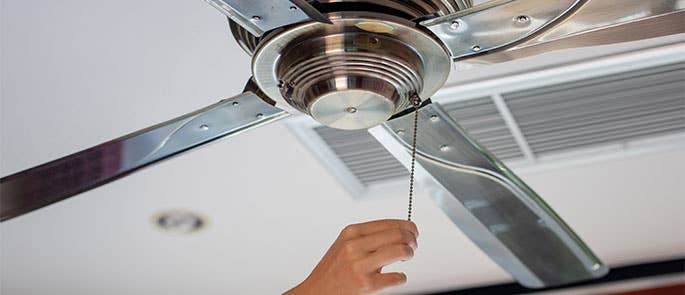
- Ceiling fans are installed permanently on the ceiling and circulate air throughout an entire room.
- Bladeless fans use technology to create a smooth airflow without exposed blades. They’re often chosen for their modern design and additional safety benefits.
How to Use a Fan
Using a cooling fan correctly can help improve its performance, extend its lifespan and reduce safety risks. Before using a fan, it’s always important to check that it’s in good condition and positioned appropriately.
Follow these steps to use a fan safely:
- Place the fan on a flat, stable surface where it cannot easily tip over.
- Position the fan away from curtains, bedding, clothing and other loose materials that could obstruct airflow or become caught in the fan.
- Check the plug, cable and fan housing for signs of damage before use.
- Ensure the safety guard or housing is securely fitted and undamaged.
- Plug the fan directly into a suitable wall socket wherever possible.
- Switch the fan on and select the appropriate speed setting.
- Monitor the fan during use and stop using it immediately if you notice unusual smells, crackling noises, buzzing sounds or excessive heat.
- Switch the fan off and unplug it when cleaning, moving or inspecting the unit.
- Turn the fan off when it’s no longer needed.
- Follow the manufacturer’s instructions at all times.
How Long Can a Fan Run Continuously?
Most modern cooling fans are designed to run for extended periods when they are well maintained and used according to the manufacturer’s instructions. However, it’s generally recommended that fans are not left running unattended for long periods or while you’re asleep. Regular breaks can help reduce wear on the motor and allow you to check for any signs of overheating or electrical faults.
Fan Safety Tips
Although cooling fans are low-risk appliances, there are still important safety considerations to keep in mind. Taking a few simple precautions can help prevent injuries, electrical hazards and damage to the fan itself.
General Fan Safety
Good maintenance and sensible use can help keep your fan operating safely throughout periods of hot weather. General fan safety tips include:
- Clean fan blades and air vents regularly to prevent dust build-up, which can place additional strain on the motor.
- Always unplug the fan before cleaning or carrying out maintenance.
- Keep the fan away from water, sinks, baths and other sources of moisture.
- Avoid covering the fan or blocking its airflow.
- Follow the manufacturer’s cleaning, maintenance and operating instructions.
- Stop using the fan if it becomes damaged or develops a fault.
- Register a new fan with the manufacturer where possible so that you can be notified of any safety recalls.
Fan Safety Around Children and Pets
Children and pets may be naturally curious about fans, so extra precautions may be needed to prevent injuries. When using a fan around young children and pets:
- Choose a fan with a secure safety guard that prevents access to moving parts.
- Position fans where children and pets cannot easily knock them over.
- Keep cables out of walkways and away from areas where they could create a trip hazard.
- Do not allow children to play with fan controls, cables or plugs.
- Supervise young children around fans and other electrical appliances.
Fan Safety in the Workplace
Employers have a duty to provide a safe working environment in hot weather under UK health and safety law. Whilst fans can help improve comfort during hot weather, they should be used appropriately within the workplace. When using a fan at work:
- Ensure fans are positioned where they do not create trip hazards from trailing cables.
- Keep emergency exits, walkways and access routes clear.
- Inspect workplace fans regularly for signs of damage or wear.
- Avoid positioning fans where they could blow dust, debris or contaminants into work areas.
- Consider additional measures to manage heat, such as improving ventilation, providing drinking water and allowing appropriate rest breaks.
Electrical Safety When Using a Fan
As cooling fans are electrical appliances, they should always be used safely to reduce the risk of electric shock, electrical burns, overheating or fire. Electrical safety tips to follow include:
- Inspect the plug and power cable for damage before each use. Never use a fan with frayed cables, damaged plugs or visible defects.
- Use extension leads only when necessary and ensure they are suitable for the fan’s power requirements.
- Avoid overloading extension leads and adaptors.
- Switch the fan off immediately if you notice unusual noises, burning smells or excessive heat.
- Seek advice from a qualified electrician if you suspect an electrical fault.
- Never attempt to repair electrical faults yourself unless you are qualified to do so.
Cooling fans are a simple and effective way to stay comfortable during hot weather, particularly in UK homes and workplaces where air conditioning is uncommon. By choosing the right type of fan, using it correctly and following basic safety precautions, you can reduce risks while keeping cool throughout the warmer months.
Further Resources:
- Online Health and Safety Courses
- Portable Heater Safety
- Hot Water Bottle Safety
- Working in Hot Weather: Legal Requirements, Guidance, and Tips




Post Author