

Portable Heater Safety
 5 min read
In a time of rising energy prices, portable heaters are becoming increasingly popular. Enabling you to heat just one room at a time, they are cost effective, space saving and they can help to keep your energy bills down. However, when used incorrectly portable heaters can pose significant safety risks. In this article, we will explore what portable heaters are, the different types available and how to use them safely in the home.
What is a Portable Heater?
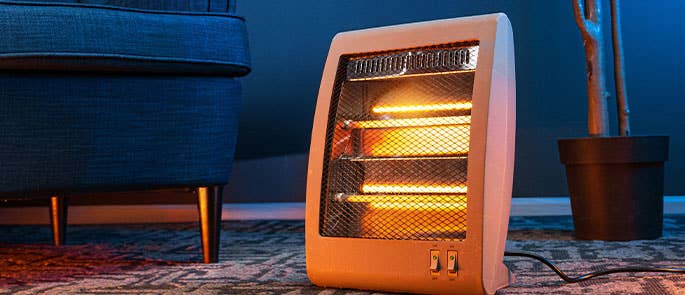
Portable heaters, much like it says on the tin, are heaters that are completely portable and can therefore be moved around the house to any location of your choice. Unlike household heaters, portable heaters can be controlled individually, enabling you to heat one room at a time instead of the entire house.
Portable Heater vs. Space Heater
The terms portable heater and space heater are often used interchangeably and both typically refer to the same thing; a small, mobile heater designed to heat a small space rather than an entire house. Portable heater is the phrase most commonly used in the UK, whilst space heater is more commonly used in the United States. This article will predominantly use the term portable heater.
Different Types of Heaters
There are many different types of portable heaters to suit different needs, spaces and budgets. Common types of portable heaters include:
Ceramic Heaters 

Ceramic heaters use ceramic heating elements with a positive temperature coefficient (PTC) to conduct heat. The thermal ceramic element works as the source of heat whilst an aluminium alloy sheet as a radiator. Ceramic heaters are energy efficient and considered to be more environmentally friendly as they do not produce gas emissions and consume a low amount of electricity. They also offer quicker heat distribution meaning they can quickly heat a small space.
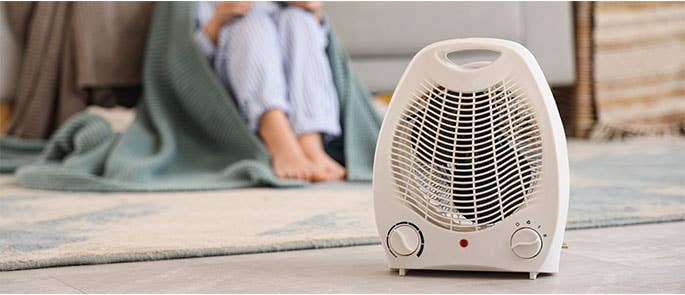
Fan Heaters
Fan heaters convert electrical energy into heat. Once the heater is turned on electricity flows through the heating element which generates heat. This heat is then transferred to the room by a fan which blows air across the heating element and projects it into the room. Fan heaters are effective at generating heat quickly however the fan component can make them noisier than other portable heaters.
Infrared Heaters
Infrared heaters use electromagnetic radiation to heat up objects rather than the air. Infrared heaters create a similar heat to that of the sun, transferring thermal energy to the surrounding environment thereby increasing the temperature of a space.
Quartz Heaters
A quartz heater is a type of infrared heater, however unlike normal infrared heaters they use quartz material instead of carbon wires. The heating elements of a quartz heater are sealed in quartz glass tubes to produce infrared radiation which is then reflected into a space by reflective backing.
Gas Heaters
Gas heaters burn natural gas, propane or butane to heat a room. They can be portable or fixed and they are known for their quick heating abilities.
Oil-Filled Heaters
Oil-filled heaters, also known as oil-filled radiators, use an electrical heating element to heat thermal oil inside the radiator. Once the oil is heated, the heat is transferred to the metal wall of the radiator and then to the surrounding air. Oil-filled radiators are incredibly energy efficient and are well known for their ability to retain heat as the heated oil cools down slowly.
Convector Heaters
Convector heaters use convection currents to heat the air. Warm air rises on a convection current and is replaced by colder air which is then warmed up by the heater. This heated air is then circulated around a space to heat the environment.

Want to Learn More?
Portable heaters offer quick and affordable heating, however they are not without their risks. Our wide range of Fire Safety Courses, such as Lithium-Ion Battery Safety Training and Electrical Safety Training, will teach you all about fire risks and electrical hazards, enabling you to use portable heaters and similar appliances confidently and competently.
How to Use a Portable Heater
As shown above, there are a wide range of portable heaters available. Each portable heater will have its own instructions and these will vary depending on the type of heater, where you intend on using it and its size. As such, you should always refer to the manufacturer’s instructions for your individual portable heater before use to ensure you are using it correctly.
However, regardless of the type of portable heater that you have, to use it safely you should follow these steps:
- Before turning it on, check your portable heater for any signs of wear or, if using an oil-filled heater, signs of leaking.
- Ensure that the heater is on a hard, level and nonflammable surface. Portable heaters should not be placed on beds, sofas or tables.
- Keep the heater at least 3 feet away from flammable material such as curtains, bedding or furniture. It’s also a good idea to prevent children and pets from getting too close to the heater.
- When you have finished with the heater, turn it off and unplug it. Allow the heater to cool fully before attempting to move it.
Portable Heater Safety Tips
Portable heaters can be a quick and affordable way to heat your home and their mobility enables you to heat smaller spaces rather than the entire house. However, as with many electrical appliances they pose certain safety risks. Notable risks to consider when using a portable heater include:
- Fire risks – Portable heaters can pose a serious fire hazard, especially if not used correctly. When placed too close to flammable materials such as bedding, curtains or furniture, portable heaters can cause a fire to ignite which can quickly spread throughout the home. Some portable heaters are seen as greater fire risks than others. For example, the fan in fan heaters can easily cause items to catch fire if placed too close to household items. Comparatively, oil-filled heaters don’t have exposed heating elements and so are a relatively low risk in terms of causing ignition.
- Burns – Part of the appeal of portable heaters is their ability to heat small spaces quickly. To be able to do this, portable heaters generate a lot of heat and therefore become very hot themselves. This can pose a serious burn risk, especially for children and vulnerable adults. Moreover, some portable heaters have exposed heating elements which can cause immediate and severe burns upon contact.
- Carbon monoxide poisoning – Gas heaters pose a significant carbon monoxide (CO) poisoning risk as they burn fuel directly in the room in order to work. When gas burns, it produces CO, which is colourless, odourless and deadly. Without proper ventilation, CO can build up inside your home. Low levels of CO exposure can cause headaches, dizziness and confusion whilst high levels of exposure can be fatal.
It’s worth noting that as gas heaters use gas canisters to work, there is also the risk of leaks from the canisters or even explosions if the gas cylinders are damaged or stored incorrectly.
Despite the risks, portable heaters are perfectly safe to use when used correctly. To ensure that you are using your portable heater safely follow these safety tips:
- Always follow the manufacturer’s instructions when using a portable heater.
- Place portable heaters on stable, level ground.
- Avoid placing a portable heater where it will block any emergency exits or escape routes.
- Check cables for signs of wear or damage before use.
- Check the batteries carefully before using a lithium-ion battery-powered portable heater.
- Don’t power portable heaters with an extension cord, always plug the heater directly into the wall.
- Never use a portable heater to dry clothes or put wet clothes on top of the heater.
- Always ensure that your heater is off before going to bed or leaving your house.
- Keep portable heaters at least 3 feet away from flammable materials such as bedding, soft furnishings or curtains.
- Ensure that portable heaters are unplugged when not in use.
- Do not attempt to move a portable heater whilst in use.
- Avoid sitting or standing too close to a portable heater as this can cause burns.
- Always ensure the room is well-ventilated when using a portable heater.
- Avoid using portable heaters in damp environments such as bathrooms. Instead use a bathroom-safe portable heater that can cope with the extra moisture.
- Ensure that your portable heater has a CE marking to show that the product meets EU safety requirements.
- Ensure that children and pets are supervised when near a portable heater.
When used correctly portable heaters are a safe, affordable and efficient way to heat the home. By following the steps listed above you can safely cut down on energy consumption and add a toasty boost of warmth to your home without breaking the bank.
Further Resources:
- Fire Safety Awareness Training
- Lithium-Ion Battery Safety Training
- Electrical Safety Training
- A Guide to Lithium-Ion Battery Fire Safety
- Electrical Safety Quiz
- Fire Safety Quiz
- Hot Water Bottle Safety
- Cooling Fan Safety


Post Author