
How to Develop a Rescue Plan for Working at Height
 6 min read
According to the Health and Safety Executive (HSE), falls from height are consistently the most common cause of fatal injuries to workers and one of the main causes of major injuries. These incidents can happen in any sector, from construction and warehousing, to maintenance and facilities management. If working at height is carried out in your workplace then it’s essential you have robust safety measures in place, including a clear and effective rescue plan. In this article, we’ll explain what a rescue plan is, why it matters and how to create a rescue plan for working at height alongside a free template.
What is a Rescue Plan?
A rescue plan is a pre-planned strategy that explains how to safely recover a person who has fallen from height or become stranded while working above ground level. It ensures that, in the event of an incident, there is a clear and immediate response to reduce harm and prevent further risk.

Employers must ensure there are suitable emergency and rescue procedures in place for all work at height activities. These arrangements are commonly referred to as a working at height rescue plan. Importantly, a rescue plan should not rely solely on the emergency services as, in many cases, waiting for external help could take too long, increasing the risk of serious injury.
A rescue plan should:
- Outline how a casualty will be reached and recovered safely.
- Identify the equipment needed for the rescue.
- Specify who is responsible for carrying out the rescue.
- Ensure the process can be completed quickly to reduce the risk of suspension trauma.
Why is a Rescue Plan Important?
A rescue plan is not just best practice, it’s also a legal requirement in the UK. Under the Work at Height Regulations 2005, employers must properly plan all work at height, including planning for emergencies and rescue.
In addition, the Health and Safety at Work etc. Act 1974 places a duty on employers to ensure, so far as is reasonably practicable, the health, safety and welfare of their employees.

Having a rescue plan in place is essential for several reasons:
- It ensures a fast and effective response in an emergency.
- It reduces the risk of serious injury, including suspension trauma.
- It helps employers meet their legal responsibilities.
- It provides workers with confidence that their safety is being prioritised.
Employer Responsibilities
Employers must take a proactive approach to safety when working at height. This includes not only preventing falls, but also planning for what happens if something goes wrong. Key responsibilities include:
- Carrying out a thorough working at height risk assessment before work begins.
- Putting appropriate control measures in place to prevent falls.
- Providing suitable rescue equipment.
- Ensuring workers are trained and competent to carry out rescues.
- Regularly reviewing and updating rescue procedures.

Want to Learn More?
By law, anyone working at height must be competent and trained to do so. Our online Working at Height Training Course is designed for employees at all levels to learn more about the potential risks when working at height and how to carry out their work safely.
How to Create a Rescue Plan for Working at Height
All rescue plans should be pre-prepared before any type of work at height is carried out. They must also be specific to the task, location and equipment being used, rather than a generic document. While it is the employer’s responsibility to create the rescue plan, anyone involved in rescue operations must be familiar with it and able to follow it effectively in an emergency. The following steps will help you develop a practical and effective rescue plan:
1. Carry out a risk assessment
Before creating your rescue plan, you need to understand the risks involved in the work at height activity. Consider the height and location of the work, the equipment being used, such as ladders, scaffolding or harness systems, and the potential hazards, including weather conditions and nearby structures.
2. Identify possible emergency scenarios
Think about what could go wrong and how it might happen. This will help you plan appropriate responses. Examples include a worker falling and being suspended in a harness, equipment failure or a worker becoming unconscious at height.
3. Decide on rescue methods
Once you understand the risks, you can determine the safest way to carry out a rescue. Your plan should clearly describe how the casualty will be accessed, whether they will be lowered, raised or moved to a safe platform, and the steps involved in the rescue process.

4. Select appropriate rescue equipment
The equipment you choose must be suitable for the specific rescue scenario and readily available when needed. This may include harnesses and lanyards, rescue kits and lowering devices or access equipment, such as mobile elevating work platforms (MEWPs).
5. Assign roles and responsibilities
Everyone involved in the rescue must know exactly what they are expected to do. Your plan should identify who will lead the rescue, who will assist and who will contact emergency services if required.
6. Provide training and practice
A rescue plan is only effective if people know how to use it. Workers must be trained and confident in carrying out the procedures. You should ensure all relevant staff receive appropriate training, rescue drills are carried out regularly and any issues identified during practice runs are addressed. Relevant training includes Safety Harness Training, Working at Height Training and Ladder and Stepladder Safety.
7. Review and update the rescue plan
Work environments and tasks can change over time, so your rescue plan should be reviewed regularly. Update the plan when there are changes to equipment or processes, new risks are identified and after an incident or near miss.
Working at Height Rescue Plan PDF
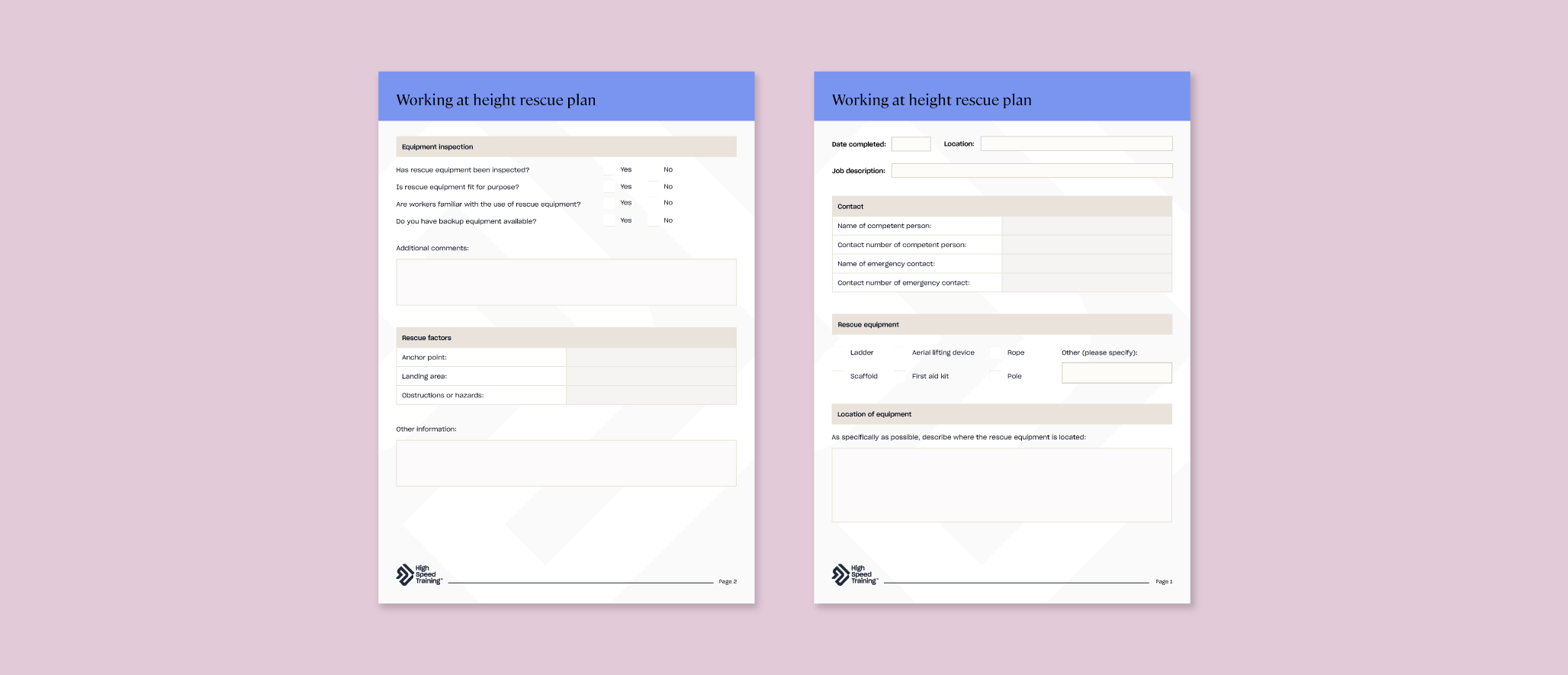
A working at height rescue plan template can help you structure your approach and ensure you don’t miss out any important details. The free rescue plan template below provides a clear format for documenting your rescue procedures and can be tailored to your specific workplace and work tasks.
Falls from height can have serious consequences so a well-prepared rescue plan is a vital part of any work at height activity. Taking the time to develop, train and review your procedures will help keep your workforce safe and ensure you can respond quickly and effectively in an emergency.
Further Resources:
- Working at Height Regulations – Hierarchy of Control Measures
- Working at Height Risk Assessment: Free Template
- Working at Height Course


Post Author

You may also like