

Hot Water Bottle Safety
 5 min read
Hot water bottles are a comfort to many people, especially during the colder months or when soothing aches and pains. While they are simple to use, they can pose serious risks if they are old, damaged or used incorrectly. Hot water bottles also have a limited lifespan, which is often overlooked. In this article, we’ll explain how to use a hot water bottle safely, how to check its condition and age and how to reduce the risk of accidents for adults, children and vulnerable people.
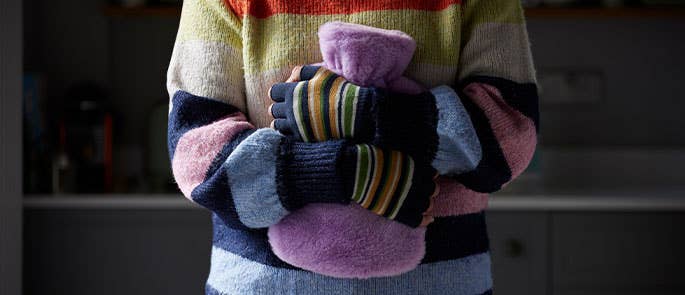
How to Fill a Hot Water Bottle
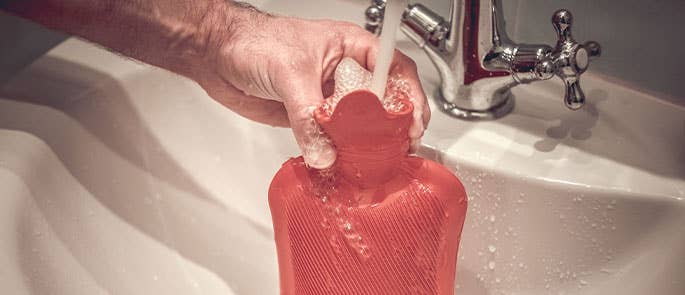
Filling a hot water bottle properly is one of the most important steps in preventing leaks, bursts, burns and scalds. Many accidents happen at this stage due to boiling water, overfilling or trapped air. Taking a few moments to prepare and fill the bottle correctly can significantly reduce the risk of injury.
A step-by-step guide for how to fill a hot water bottle is as follows:
- Before filling, check the bottle for any noticeable damage or signs of wear and tear.
- Do not use boiling water, as this can damage the internal seams. Instead, use hot water from the tap or allow freshly boiled water to cool slightly before filling the bottle.
- Fill the bottle to around two-thirds full, not to the top.
- Carefully expel excess air by gently lowering the bottle onto a flat surface until the water reaches the neck.
- Screw the stopper on firmly to ensure it’s tight and secure.
- Check for leaks by holding the bottle upside down over a sink before use.
How to Use a Hot Water Bottle
Using a hot water bottle correctly is just as important as filling it properly as incorrect use can place stress on the bottle or expose skin to prolonged heat, increasing the risk of burns. Always use some type of cover on a hot water bottle as this helps prevent contact burns on the skin.
There are a few main ways to keep warm with a hot water bottle:
- Use it to warm your bed before you get in: place the bottle under the covers for 5 to 10 minutes before getting in. Remove it before you lie down or fall asleep, as body weight and prolonged heat can cause burns or bursting. Never use a hot water bottle in a bed with an electric blanket.
- Place the hot water bottle next to you when sitting on the sofa or relaxing around the house, being careful not to place too much of your weight against it.
- Carry one under your coat when commuting or walking in cold weather.
Always avoid leaning on, pressing against or sitting on a hot water bottle, including with your feet, as this can weaken the material and increase the risk of failure.
Can You Microwave a Hot Water Bottle?
Microwaves can seem like a convenient option to heat a hot water bottle, but in most cases they shouldn’t be used. Hot water bottles should not be placed in a microwave unless the manufacturer clearly states that the bottle itself is microwave safe. Most traditional rubber hot water bottles are not designed for microwave use.
Microwaving a hot water bottle can cause the rubber to degrade, melt or weaken. Even if the bottle looks unchanged afterwards, the material may have been compromised, making it more likely to split or burst during future use.
If you don’t have access to a kettle or hob, you can heat water in the microwave using a suitable container and then carefully pour it into the hot water bottle.
How Long Does a Hot Water Bottle Last?
Hot water bottles are not meant to last indefinitely. Over time, exposure to heat, pressure and storage conditions can weaken the material, even if the bottle looks fine on the outside. Knowing when to replace a hot water bottle is key to staying safe.
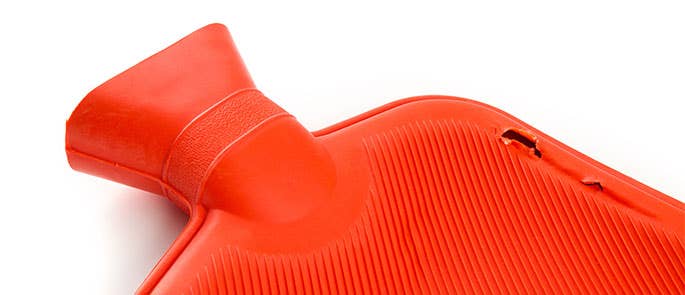
Most hot water bottles should be replaced every 2 to 3 years. You should also replace a bottle immediately if you notice cracks, leaks, thinning areas, stickiness or a strong rubber smell. If you are unsure how old a bottle is, it’s safer to replace it rather than risk injury.
How to Check a Hot Water Bottle’s Expiry Date Using the ‘Flower’ Code
Many people are unaware that hot water bottles often include a built-in way to identify their age. Learning how to read this code makes it easier to decide when a bottle should be replaced.
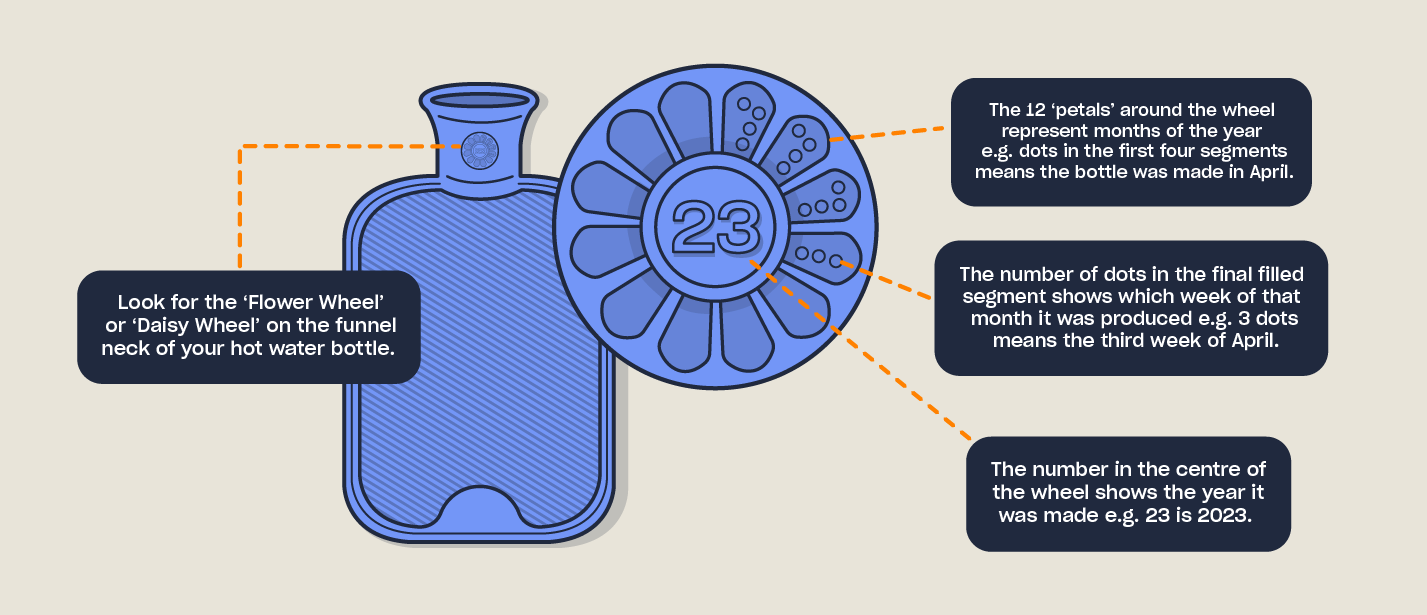
You can identify when your hot water bottle was made by finding a flower-shaped symbol, known as the daisy wheel, embossed on the neck or body of the bottle. The number in the centre shows the year it was made, and the twelve petals represent the months of the year. The number of segments with dots indicates the month of manufacture.
For example, if the symbol has a 25 in the middle and dots in the first six segments, the bottle was made in June 2025. The number of dots in the final filled segment shows which week of that month it was produced, for example, three dots means the third week.
In general, your hot water bottle should be replaced 2 to 3 years after its date of manufacture.
Hot Water Bottle Safety Tips
In addition to correct filling and use, there are several general safety measures that can further reduce the risk of accidents when using a hot water bottle. These simple precautions are especially important in homes with children or older adults who may not be as conscious of the risks:
- Choose a bottle that meets the BS 1970:2012 safety standard.
- Consider a rubber hot water bottle, as rubber retains heat well and is more flexible.
- Always use a well-fitting cover to reduce the risk of burns and scalds.
- Check that the stopper is fully tightened before each use.
- Never overfill or use boiling water.
- When not in use, drain the bottle and store it with the stopper removed in a cool, dry place such as a cupboard.
- If a burn occurs, remove the heat source immediately and cool the area under running water for at least 20 minutes, then seek medical advice if needed.
Safety tips for parents and carers giving hot water bottles to children:
- Young children should never be given a hot water bottle to use on their own, they should always be supervised.
- If a hot water bottle is used to warm a child’s bed, it should be removed before the child gets in. Don’t allow children to sleep with a hot water bottle.
- Store hot water bottles out of reach and teach older children that they are not toys.
- Use a thick, well-fitted cover and check the bottle’s condition regularly to help reduce the risk of burns and leaks.
Safety tops for carers and health professionals giving hot water bottles to patients:
- When supporting older adults or patients, especially those with reduced mobility, reduced sensation or cognitive impairment, hot water bottles should be used with caution.
- Never place a hot water bottle directly against bare skin and avoid prolonged contact.
- Regularly check the skin for signs of redness or discomfort and remove the bottle if there are any concerns.
- Alternative methods of keeping warm may be safer for some patients, such as electric blankets.
Hot water bottles can provide comfort and warmth when used safely and correctly. By taking care when filling and using them, checking their age and condition and following simple storage and safety advice, the risk of burns and injuries can be greatly reduced. A little awareness goes a long way in ensuring hot water bottles remain a safe and helpful household item.
Further Resources
- Health and Safety Courses
- Burns and Scalds: First Aid Advice
- What Should Be In A First Aid Kit?
- Portable Heater Safety
- Cooling Fan Safety



Post Author