

- Trusted by 4 million learners
- 24/7 online training
- Money back guarantee
- Fully accredited courses
CQC Ratings Report
A state of play analysis of care home ratings in England
Introduction
We are High Speed Training, leading providers of health and social care training in the UK. Since 2008, we have supported over 4 million learners worldwide, including hundreds of thousands of dedicated professionals working in adult social care. We aim to empower care providers with the knowledge to deliver safe, compassionate, and high-quality care, helping to keep everyone safe in the workplace.
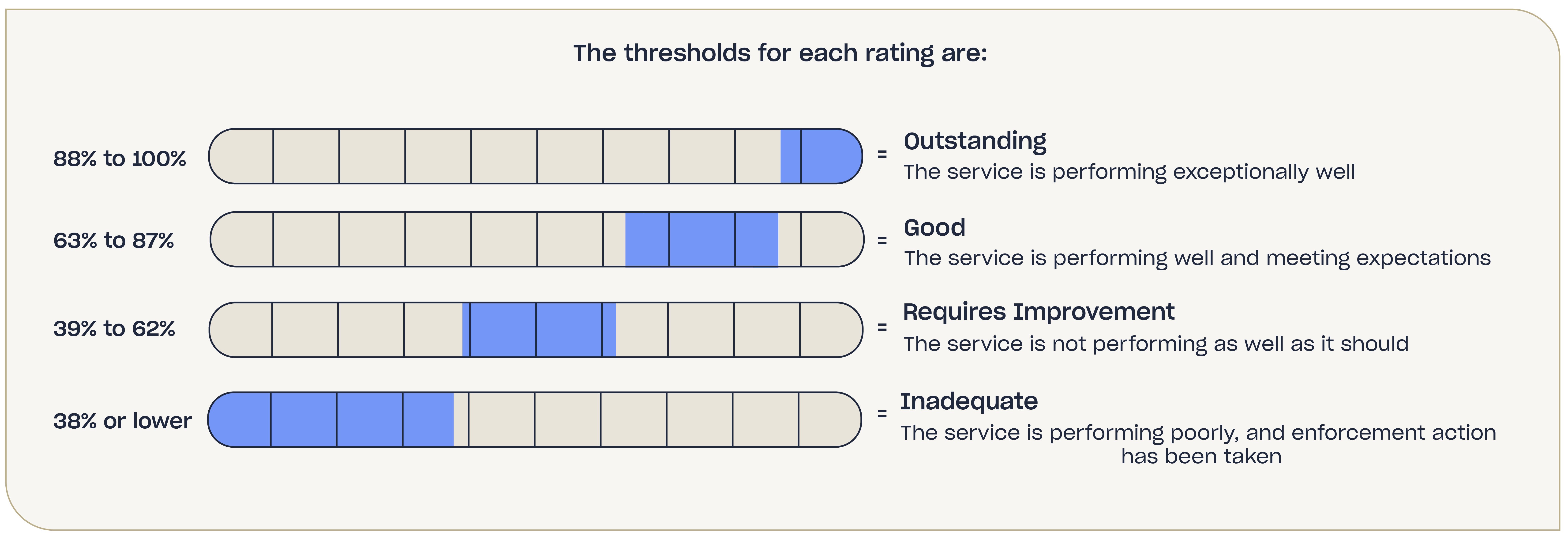
In England, care homes are regulated and rated by the Care Quality Commission (CQC). These ratings are an indicator of safety and quality for residents and their families. Services are awarded one of four ratings:
Outstanding: The service is performing exceptionally well.
Good: The service is performing well and meeting expectations.
Requires Improvement: The service is not performing as well as it should.
Inadequate: The service is performing poorly, and enforcement action has been taken.
To understand the current state of play, we have analysed the most recent CQC data for 13,657 care homes across England. This 2026 report explores the current quality of care, identifying regional and local trends, and highlighting the challenges facing providers today. Whilst the CQC assesses a wide range of providers, this report will focus on the care and support services for adults in care homes.
Key Findings
The Results
Our Winners

Top local authorities (good or outstanding)
1. Westminster - 100%
1. Islington - 100%
1. Merton - 100%
1. Bristol - 100%
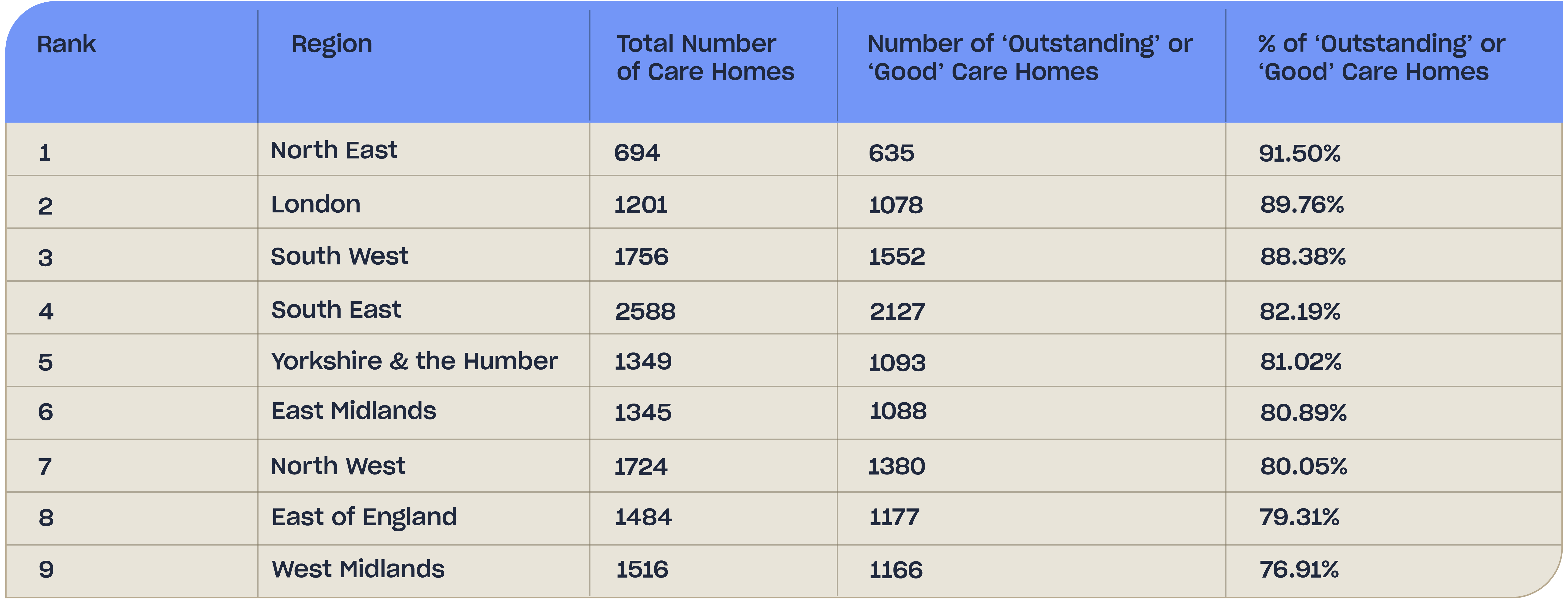
Top regions (good or outstanding)
1. North East - 91.50%
2. London - 89.76%
3. South West - 88.38%

Highest % outstanding
1. Windsor and Maidenhead - 15.38%
2. Trafford - 13.73%
3. Bracknell Forest - 13.33%
3. South Gloucestershire - 13.33%
Analysis
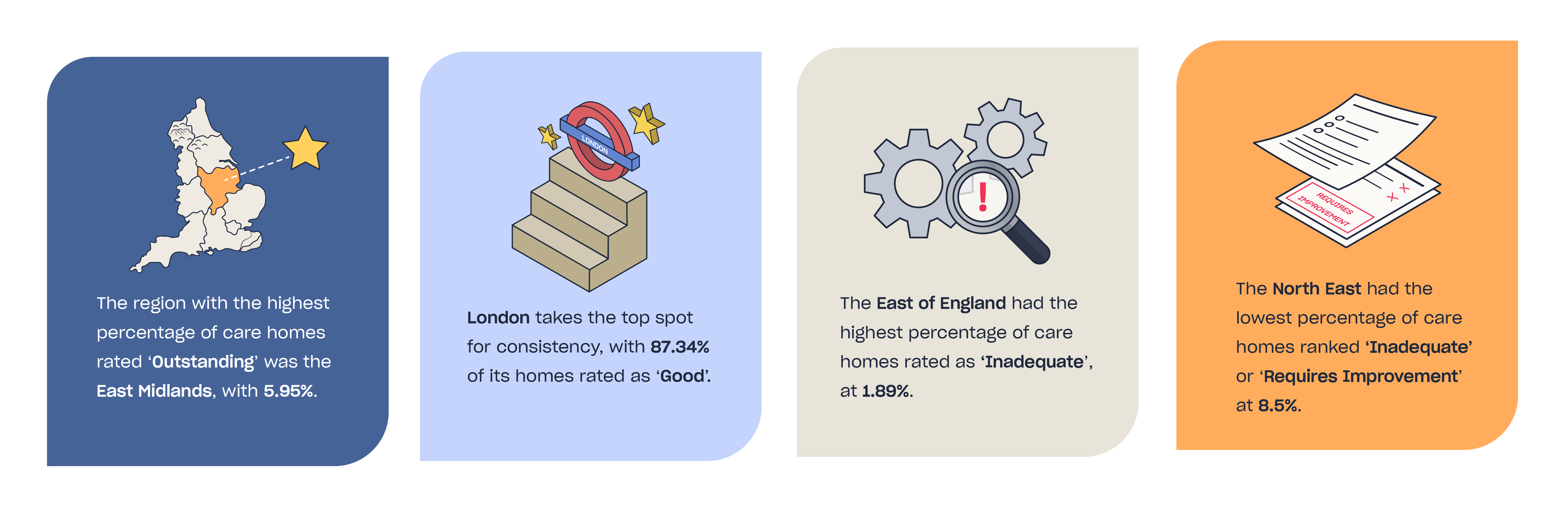
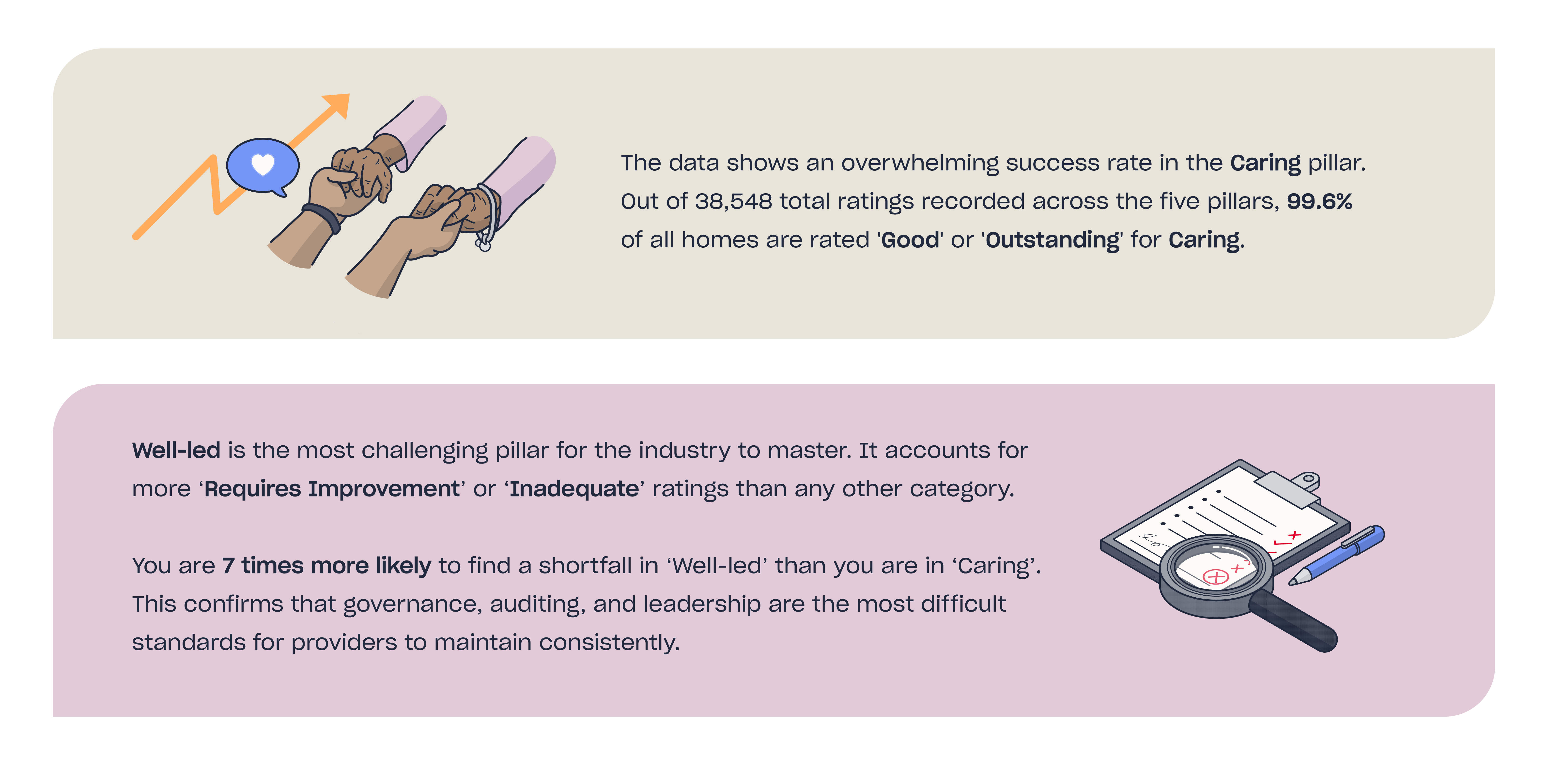
Our analysis of 13,657 care homes reveals that the sector has demonstrated significant resilience against many regulatory changes. Currently, 82.7% of care homes in England are rated ‘Good’ or ‘Outstanding.’
The data also shows regional disparities regarding access to care. For example, the North East reveals high levels of excellence (91.5% rated ‘Good/Outstanding’), and the West Midlands struggles with a higher-than-average volume of 'Requires Improvement' ratings (22.5%). These disparities can often be driven by:
- Workforce pressures: Regions with higher staff turnover may see a corresponding decrease in 'Well-led' and 'Safe' scores.
- Investment levels: Areas with more purpose-built facilities and technology such as digital record-keeping systems may perform better. These homes can provide real-time evidence of safe care, which aligns with the CQC’s current data-led assessment style.
What is the CQC Rating Scheme?
The Care Quality Commission is the independent regulator of health and adult social care in England.
They regulate health and social care, working with the public, systems and providers of care to protect people and to prompt and improve the quality of care given.
The CQC is an executive non-departmental public body sponsored by the Department of Health and Social Care. It was established in 2009 by the Health and Social Care Act which unified three separate organisations; the Healthcare Commission, the Commission for Social Care Inspection and the Mental Health Act Commission. Prior to the CQC these organisations had respectively driven up improvements in the quality of health care and public care, inspected and regulated social care services and safeguarded those who had been detained under the Mental Health Act 1983.

The development of the CQC helped to ensure safer and more consistent care across the country and the newly formed body absorbed the responsibilities of its predecessors along with the duty to monitor, inspect and regulate services and activities that include:
- Treatment, care and support provided by hospitals, GPs, dentists, ambulances and mental health services.
- Treatment, care and support services for adults in care homes and in people’s own homes (both personal and nursing care).
- Services for people whose rights are restricted under the Mental Health Act.
Across the country, health and social care providers are inspected by teams of specialists. Inspection teams may also include ‘Experts by Experience,’ individuals who have recent personal experience of a care service either from their own experience or the experiences of someone they care for.
Inspection teams vary in size depending on the type of service being inspected. Care home inspection teams typically consist of a single inspector and an Expert by Experience.
When assessing the quality of a care home, the CQC will gather a range of information beforehand to inform the scope of the assessment. This information influences what the team looks at, who they talk to and how the team is put together. This information can include:
|  |

|
Inspection teams will also use evidence gathered from four sources. These sources are different for care homes than for establishments such as hospitals and include:
|
The frequency of care home inspections depends on the information the CQC receives and the evidence it collects. As such, assessments can either be planned or in response to concerning information that the CQC receives. Feedback from staff, those using care services and the family of those using care services plays an incredibly important role in the work of the CQC and can easily influence the frequency of visits.
What Makes Up a Rating?
The Five Key Questions
During an inspection, the CQC assesses a provider against five core pillars, known as the Five Key Questions. These questions ensure that every aspect of a resident's experience and the provider's clinical safety is inspected and evaluated.
Previous inspections used Key Lines of Enquiry (KLOEs) which have changed to the current assessment framework and now focus on Quality Statements. These are "we" statements that set out the specific expectations of a provider to ensure they are meeting the required standards.
The five key questions asked of every service are:

Safe
Are residents protected from abuse and avoidable harm?
Effective
Does the care, treatment, and support achieve good outcomes and promote a good quality of life?

Caring
Do staff treat residents with kindness, dignity, and respect?

Responsive
Are services organised to meet the individual needs of residents?
Well-led
Does the leadership and management of the organisation ensure the delivery of high-quality, person-centred care?
Rating Thresholds
Under the new framework, a score gets assigned to each relevant Quality Statement. The scores are then combined into a single percentage to determine the service's overall rating.
After an assessment, CQC ratings are published on the regulator's website.
Displaying Ratings
Once a rating is published, care providers must comply with Regulation 20A of the Health and Social Care Act 2008. It is a legal requirement for care providers to display their rating.
This includes:
At the premises: A legible poster must be displayed at every entrance where it can be easily seen by residents and visitors.
On the website: The rating must be clearly visible on the care providers website, often by using the CQC’s official widget.
The failure to display CQC ratings is a regulatory breach and can lead to fixed penalty notices and in some cases, prosecution. Ensuring a rating is visible is a vital part of maintaining transparency and trust with residents and their families.
Where Do Services Fall Short?
2,361 homes are currently rated as 'Requires Improvement' or ‘Inadequate’. Our review of 2026 ratings shows that the most common barriers to a 'Good' rating fall within the Safe and Well-led categories. To lower these barriers, care homes can work on:
- Proactive quality assurance: Moving beyond standard checks toward robust internal auditing. This equips staff to identify and resolve potential risks early on, ensuring a safer environment for both residents and staff.
- Competency-led development: By supporting staff to move beyond just ‘ticking the box,’ providers can build the confidence required to navigate complex, real-world care scenarios effectively.
- Strategic governance: Building resilient leadership structures that move away from reactive management. This fosters a workplace culture where continuous improvement is celebrated and every team member feels supported by a clear, long-term vision.
For Residents, Families and Relatives
For care residents and their families, the CQC provides vital information on the quality of care that they receive.
This information helps individuals and their families pick care homes that suit their needs and to rest assured that their care will be safe, effective, caring and responsive.
CQC ratings help people to maintain their independence and have choice and control over the care they receive. As mentioned, CQC inspection teams will use a framework of quality statements to assess whether a provider is safe, effective, caring, responsive and well-led.
These statements ensure that people:
|  |
Quality statements are an integral part of the assessment framework and reiterate the CQC’s person-centred approach. By assessing care providers through this lens, the CQC is able to provide people with information that can help them access care that will treat them with dignity and respect.
Quality statements also focus on the real experiences and outcomes for people using care services, ensuring that the rating that a provider receives accurately reflects lived experiences. This supports people to make the right choice for them based on the real experiences of others. In England, patients have the Right to Choose which provider delivers their care and CQC ratings can play a vital role in this choice.
After an inspection the CQC will collate the gathered evidence and produce a report. In most cases that report will include a rating that shows their overall judgment of the quality of care. Whilst a CQC rating results in one single rating, reports go into more detail of the inspection team’s findings on each of the five key questions. Reports also describe good practices that they found and any concerns that the inspection team may have ensuring that prospective patients, and those already using the services, have a comprehensive insight into how a provider is performing.
Using Ratings to Choose a Care Home
While a CQC rating is an important starting point, it isn’t the only thing to consider when choosing care. It is important to check the date of the last inspection as the CQC prioritises inspections based on risk. Some services may not have been inspected for several years, meaning their current rating may not reflect the home's current condition.
For members of the public seeking care for a loved one, the rating should be the starting point of your research. Consider these key areas during your visit:
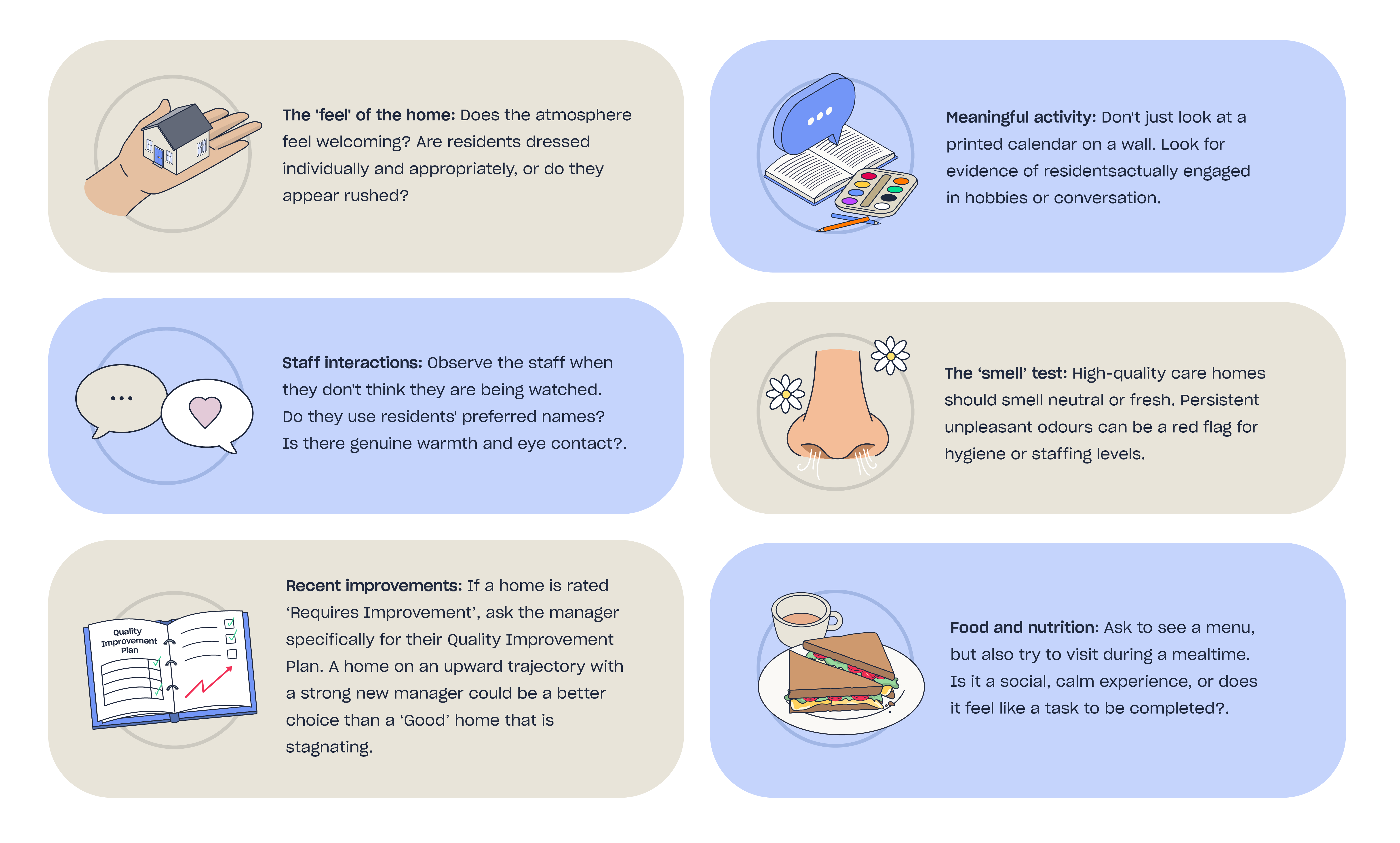
By combining the CQC’s data with your own observations, you can make an informed decision about where your loved one will feel most at home.
As mentioned, it is a legal requirement for a provider to display their CQC rating in order to meet Regulation 20 of the Health and Social Care Act. Care providers should display their overall quality rating at the location or on their website. Ratings can also be found on the CQC website.
For Care Homes
The importance of the CQC ratings for care homes
 | The CQC has been a key driver of improvement in health and social care across England, establishing high standards for safety and quality. With care providers striving for a ‘Good’ or ‘Outstanding’ rating, the CQC has helped implement rigorous audits and staff training to ensure compliance. As well as the adoption of digital care records to modernise the health and social care industry, the CQC has challenged health inequalities, prioritising safer, more dignified living for all residents and the highest standard of care. Safeguarding protocols must be monitored closely to achieve a high CQC rating, therefore risks are identified faster and mitigated with greater transparency. In addition, there has been a greater shift towards person-centred care, with care facilities encouraged to tailor their services to the individual needs and preferences of the residents. |
How can care facilities achieve (and maintain) a ‘Good’ or ‘Outstanding’ CQC rating?
Invest in staff training and development to ensure a stable and well-trained workforce. Going beyond mandatory training requirements is directly linked with a higher CQC rating. Explore our Health and Social Care course catalogue and key courses like our Care Certificate Course, Introduction to Safeguarding Adults (Level 1), Advanced Safeguarding Adults Training (Level 2), and Level 3 Safeguarding Adults Training to see how our training can support you and your team.
Ensure dignity and person-centred care is at the heart of operations. Failure to respect dignity and person-centred care are highlighted by the CQC as common pitfalls. Our Dignity in Care Training and Person-Centred Care Training is expertly created and CPD Certified to equip those working in health and social care.
Maintain effective governance and leadership. ‘Good’ and ‘Outstanding’ care homes require stable leadership focused on long-term sustainable practices that evidence outstanding care and consistently demonstrate safety, effectiveness, strong leadership and values-driven culture.
Skills for Care found that organisations with lower turnover rates, lower vacancy rates and higher levels of staff undertaking learning and development were more likely to receive higher CQC ratings in the Health and Social Care White Paper.
Complete daily or weekly audits to identify issues early on. Using digital tools for incidents, care plans and medication tracking, as well as person-centred documentation ensures detailed care records, resident feedback and evidence of meaningful activities.
High-performing homes build strong relationships with external professionals, including GPs, pharmacists, and community teams, to improve clinical outcomes and reduce emergency admissions.
Useful Links
How to Prepare for a CQC Inspection: Free Checklist
CQC inspections play a key role in maintaining high standards across the health and social care sector. Download your free CQC inspection checklist here.

Health and Social Care Courses
Our range of Health and Social Care courses are designed to support learners whether they're just starting in the industry or are experienced practitioners.
CQC Inspections Explained: Answering Your FAQs
CQC inspections play a vital role in ensuring that health and social care services remain safe, effective and accountable. Find your questions answered here.
Methodology
Data
Data was downloaded in March 2026 from the official Care Quality Commission (CQC) data hub, using their ‘Care Directory with Ratings’ data sheet. This provides information about care homes and establishments across England, including their latest official CQC rating.
The data was filtered to only include locations labelled as care homes, as defined by the data sheet. The latest rating that was analysed for the national and regional statistics was the ‘Overall’ domain rating of each care home location, which is made up of a combination of ratings covering different assessment areas.
Included were care homes that had an official rating of:
- Outstanding
- Good
- Requires Improvement
or
- Inadequate
Not included were locations that had an official rating of:
- Not all regulations met.
- Not applicable
- Regulations met
- Insufficient evidence to rate
- Not Rated
- No Approved Rating
- Not yet assessed
This resulted in a filtered total of 13,657 establishments which were then used for the overall ranking analysis.
Locations
The regions selected for analysis in this report are the same nine regions as used by the CQC, and so locations were split according to their assigned regions. These were:
- North West
- North East
- Yorkshire & Humber
- West Midlands
- East Midlands
- East of England
- South East
- South West
- London
The local authorities selected for analysis in this report are the same as used by the CQC, and so locations were split according to their assigned local authority.
Procedure
Following data cleaning and organisation, lists were created for each region and local authority, showing both the number of locations that scored each of the analysed ratings, and the percentage of locations within that region or local authority that achieved each of the analysed ratings.
Regions and local authorities were then ranked according to the percentage scores for each rating, as well as a combined percentage of ‘Outstanding or Good’ and ‘Requires Improvement or Inadequate’.
Open Government Licence (OGL)
CQC location ratings information, data and services are subject to the terms of the Open Government Licence (OGL). This report contains public sector information licensed under the Open Government Licence v3.0.
The ratings are subject to change as they are regularly updated to reflect the standards found when a location is assessed. The CQC updates its ratings on a monthly basis.
Our study contains public sector information licensed under the Open Government Licence v3.0.
Acknowledgements
High Speed Training would like to thank the CQC for providing the data.