

The COSHH Hazard Symbols & Their Meanings
 6 min read
Many workplaces use substances that can be harmful to health if they are not handled correctly, such as cleaning chemicals, paints, solvents, adhesives and industrial gases. As a result, chemical products like these must feature clear warning labels and pictograms to help people quickly identify potential dangers before using, storing or disposing of them. In this article, we’ll explain the COSHH hazard symbols and their pictograms, what each one means and why COSHH hazard symbols matter in the workplace. You can also download our free poster.
What are the COSHH Symbols?
COSHH symbols, also known as hazard pictograms, are the warning signs used on chemical labels and packaging to identify hazardous substances. COSHH stands for the Control of Substances Hazardous to Health, a set of regulations which help protect workers and others from harm caused by dangerous substances in the workplace.
The hazard labels found on chemical substances warn people about their potential dangers. They often include pictograms: simple illustrated symbols designed to communicate risks quickly and clearly.

These symbols help people recognise that a substance may cause harm to human health, damage property or negatively affect the environment. They’re designed to be understood easily, even from a distance or by people who speak different languages.
You may see COSHH symbols on products such as:
- Cleaning chemicals.
- Paints and varnishes.
- Fuels and oils.
- Laboratory chemicals.
- Pesticides.
- Industrial gases.
All employers have a legal duty to assess the risks from hazardous substances and ensure employees understand the dangers involved. Employees also have a responsibility to follow all safety procedures and ensure they always use substances correctly.

Want to Learn More?
Our online COSHH Training Course will teach you how to identify hazards, carry out risk assessments and work safely with hazardous substances.
The Transition to CLP Regulations
Before the current hazard pictograms were introduced, the UK used the older CHIP system. CHIP stood for the Chemicals (Hazard Information and Packaging for Supply) Regulations. These symbols featured black images on an orange background and were widely used for many years.
In 2015, the old CHIP symbols were phased out and replaced with the newer red diamond pictograms used today. The updated system was introduced to create a more consistent international approach to chemical classification and labelling.
The newer symbols form part of the Globally Harmonized System of Classification and Labelling of Chemicals (GHS). This international system helps ensure that chemical hazards are communicated clearly across different countries.
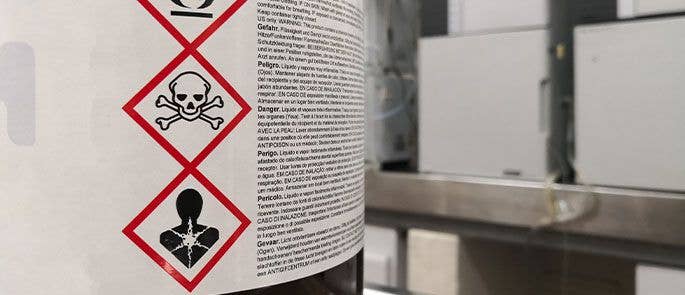
Following the UK’s departure from the European Union (EU), Great Britain now follows the GB Classification, Labelling and Packaging Regulation, commonly known as GB CLP. These regulations set out requirements for the classification, labelling and packaging of hazardous chemicals used at work.
Although the appearance of the symbols has changed, their purpose remains the same: to help people identify hazards quickly and work safely with dangerous substances.
Understanding the 9 COSHH Hazard Symbols
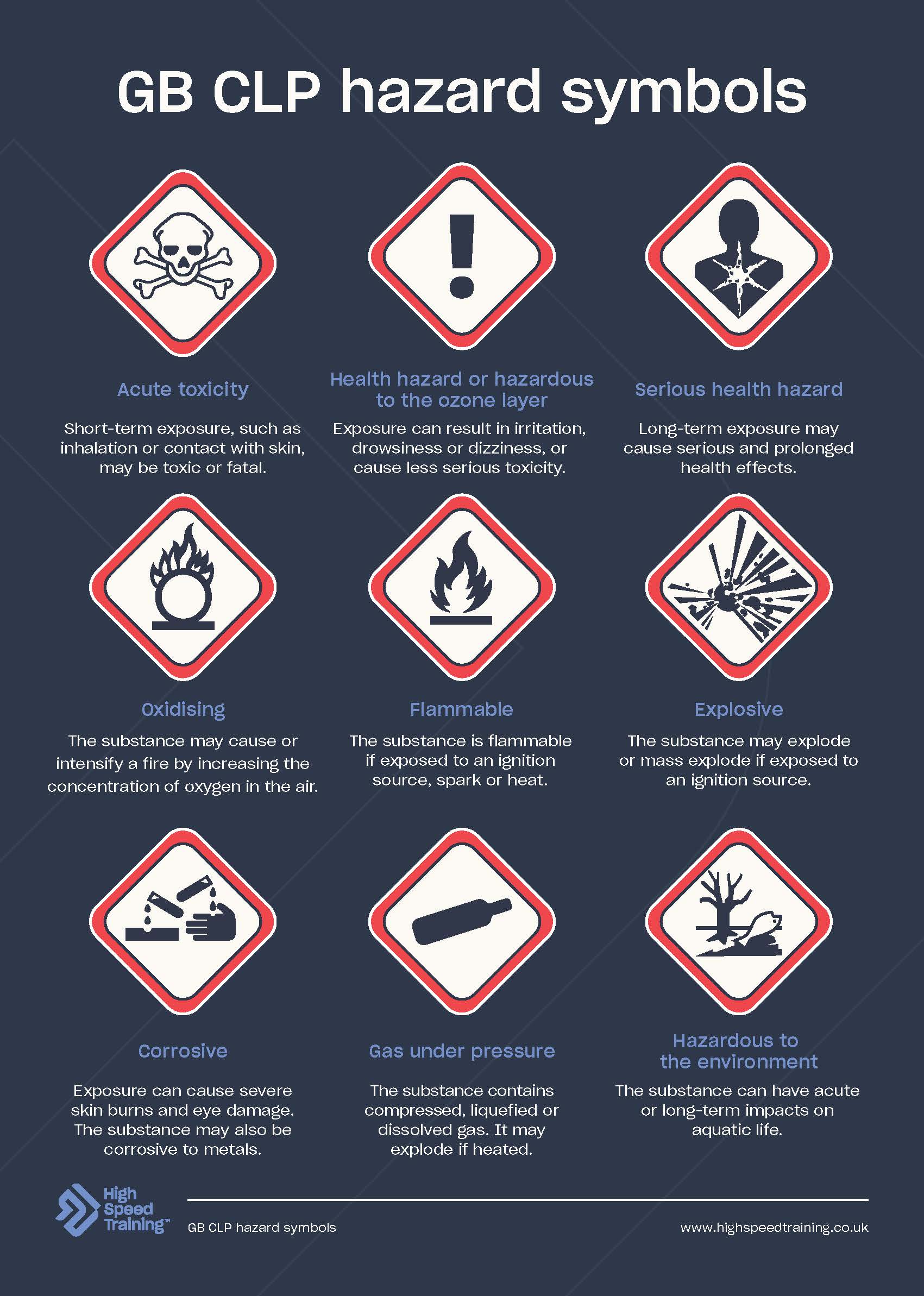
There are nine main CLP hazard symbols used in the UK. Each pictogram highlights a different type of danger and helps users understand the risks associated with a substance. Here’s what each symbol means, plus examples of where they may appear:
Acute Toxicity

The Acute Toxicity symbol shows a skull and crossbones. It warns that a substance can cause serious harm or even death if swallowed, inhaled or absorbed through the skin. This symbol is used for highly toxic substances that can have immediate effects on health. Common examples include:
- Certain pesticides.
- Industrial chemicals.
- Toxic laboratory substances.
Health Hazard or Hazardous to the Ozone Layer

This symbol features an exclamation mark and is used for substances that may cause less severe health effects. It can also indicate substances that are hazardous to the ozone layer. This is one of the most commonly seen hazard symbols and may appear on cleaning products, solvents and adhesives. Products carrying this symbol may cause:
- Skin irritation.
- Eye irritation.
- Allergic skin reactions.
- Drowsiness or dizziness.
Serious Health Hazard

The Serious Health Hazard symbol shows the outline of a person with a star shape on the chest. It warns about substances that may cause serious or long-term health problems. Substances with this label require careful handling and appropriate control measures to reduce exposure. These hazards can include:
- Cancer.
- Respiratory sensitisation.
- Reproductive toxicity.
- Organ damage.
- Genetic defects.
Flammable

The Flammable symbol shows a flame and warns that a substance can easily catch fire. Flammable substances should always be kept away from heat sources, sparks and naked flames. This symbol may appear on:
- Petrol and diesel.
- Aerosols.
- Solvents.
- Paint thinners.
Oxidising

The Oxidising symbol displays a flame above a circle. Oxidising substances may not be flammable themselves, but they can intensify fires and cause other materials to ignite more easily. These substances should be stored carefully and kept separate from flammable materials. Examples include:
- Hydrogen peroxide.
- Certain bleaching agents.
- Industrial oxidising chemicals.
Explosive

The Explosive symbol shows an exploding bomb. It warns that a substance may explode if exposed to heat, shock, pressure or friction. Strict storage and handling controls are essential when working with explosive materials. Explosive substances can include:
- Fireworks.
- Certain industrial chemicals.
- Some self-reactive substances.
Corrosive

The Corrosive symbol shows liquid damaging a hand and a metal surface. It indicates that a substance can cause severe skin burns, eye damage or corrosion to other metals. Suitable protective equipment, such as gloves and eye protection, should always be used when handling corrosive products, such as ammonia. Corrosive substances are commonly found in:
- Strong acids.
- Drain cleaners.
- Industrial cleaning chemicals.
Gas Under Pressure

The Gas Under Pressure symbol shows a gas cylinder. It warns that the container holds compressed, liquefied or refrigerated gas. This symbol is commonly seen on industrial and medical gas cylinders which can become dangerous if damaged, heated or stored incorrectly. Hazards may include:
- Explosion from pressure build-up.
- Cold burns from refrigerated gases.
- Suffocation in confined spaces.
Hazardous to the Environment

The Environmental Hazard symbol shows a dead tree and fish. It warns that a substance may cause harm to wildlife, aquatic life or the wider environment. Substances with this label should be disposed of correctly to prevent environmental contamination. Examples include:
- Pesticides.
- Fuels.
- Certain cleaning agents.
CLP Hazard Symbols Poster
Our free CLP hazard symbols poster is a useful visual reference for workplaces that use hazardous substances. It allows employees to quickly recognise each symbol and understand the risks associated with different chemicals.
The poster is particularly useful for:
- Staff training and inductions.
- Refreshing employee knowledge.
- Supporting COSHH risk assessments.
- Promoting workplace safety compliance.
Understanding COSHH hazard symbols is an important part of workplace safety. The pictograms help employers and employees identify dangerous substances quickly and take the correct precautions when handling, storing or disposing of chemicals. By recognising the symbols and following COSHH guidance, workplaces can reduce risks and create a safer working environment for everyone.
Further Resources:
- What is Ammonia?
- What is COSHH Training and Why is it Important for Cleaners?
- Control of Substances Hazardous to Health (COSHH) Training Course


Post Author