

What’s The Best Way to Store Fruits and Vegetables?
 7 min read
It’s the age old question, do potatoes go in the fridge or the cupboard-under-the-stairs? What about apples? Do they follow the same rule or can they be left out like the hearty onion? Knowing how to store fruits and vegetables properly preserves their longevity and reduces food waste. Love Food Hate Waste notes that 4.4 million tonnes of edible food is thrown away each year in the UK, with 60% of that waste coming from UK homes. Storing fruits and vegetables properly can help them to stay fresher for longer, keeping them away from landfills and saving a few pounds at the same time. In this article we will outline the best ways to store your fruit and vegetables.
How to Store Fruits and Vegetables
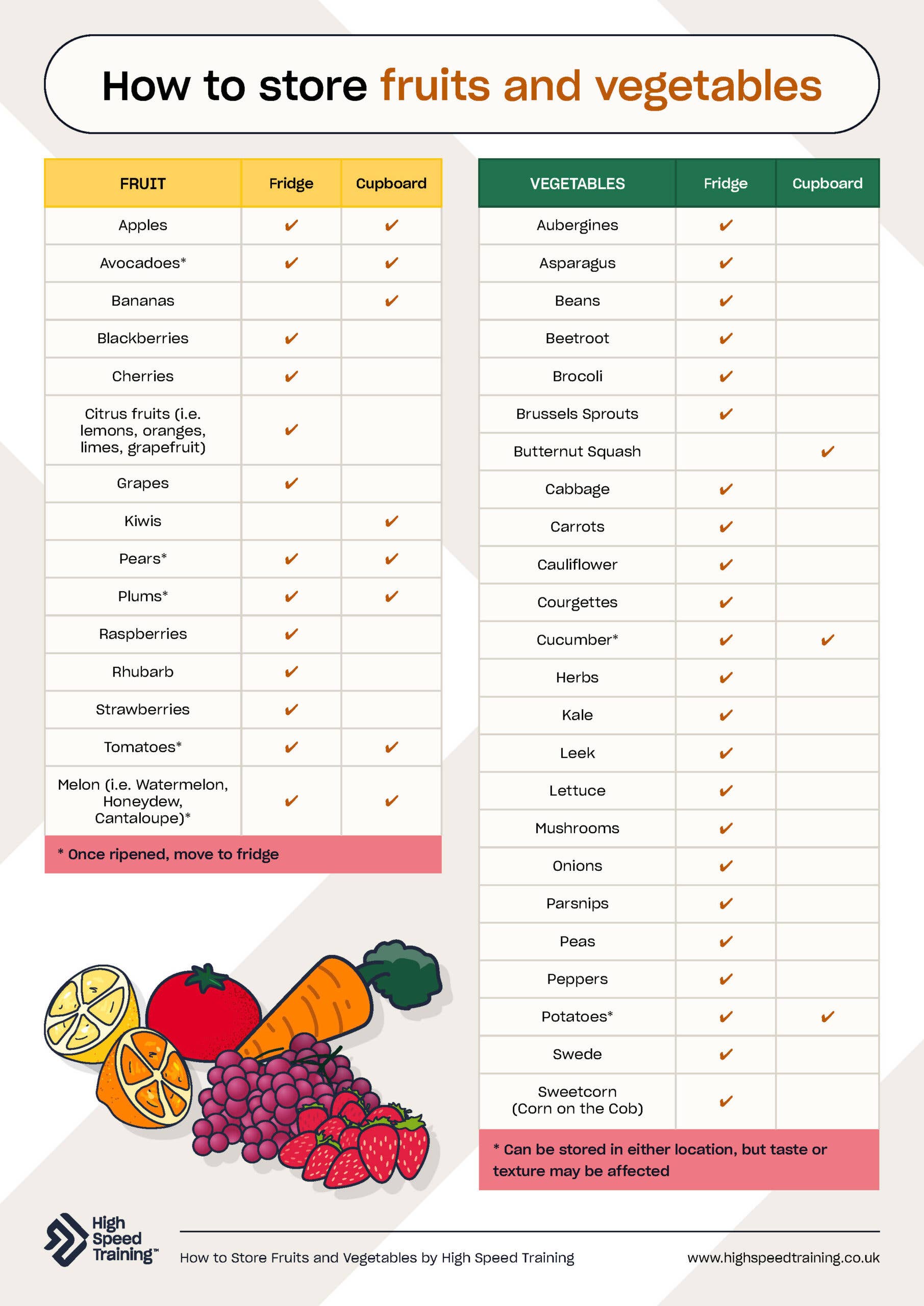
Below you will find a handy chart that shows you the best places to store fruits and vegetables. This checklist is by no means exhaustive however it offers useful guidance on the best places to store common fruits and veg.
Some fruits and vegetables can be stored at room temperature either in a cupboard, a pantry or simply on the counter out of direct sunlight. Items that have ‘cupboard’ listed as the best place to store them can effectively be stored in any such location as long as the temperature is ambient, there is decent air circulation and no direct sunlight. When storing foods at room temperature it’s important to consider the overall temperature of the room that you will be storing them in. If you know that your kitchen gets very hot throughout the day, leaving your bananas hanging up by the window may not be the best idea. As such, the specific location that you decide to store ‘cupboard’ items will depend on your needs and the space available to you.
Some items have both ‘fridge’ and ‘cupboard’ listed as the suitable places to store them. This is because whilst storing some foods in the fridge can make them last longer, it can also change their taste and texture. Fruits and vegetables such as tomatoes and cucumbers last longer in the fridge, however cold temperatures can change their flavour or make them mushy. In these instances you should be guided by personal preference, when you plan on using the item and the quantity that you have.
Finally, remember that some fruits can be kept out of the fridge until ripe. However, once ripened they should be moved to the fridge.
In the past it was considered best practice to keep potatoes out of the fridge. However, in 2023 the Food Standards Agency (FSA) changed its guidance and they now state that potatoes can be stored in the fridge. However, it should be noted that storing potatoes in the fridge can cause them to undergo a chemical process called cold-induced sweetening (CIS). This process prolongs the shelf life of potatoes, but it also converts starches into reducing sugars which can make them taste sweeter than normal. As with cucumbers and tomatoes, personal preference may therefore influence where you store potatoes.
Tips for Keeping Fruits and Vegetables Fresh
Here are some handy tips on how you can keep your fruits and vegetables fresher for longer through effective storage.
- Fruits that produce ethylene, such as apples, bananas and avocados, should be stored separately as this can cause other produce to over-ripen and spoil.
- Hang bananas to extend their shelf life. Hanging bananas prevents bruising whilst the air circulation helps them to stay fresher for longer.
- Avoid storing oranges in closed bags or containers as trapped moisture can cause them to quickly mould.
- When storing leafy greens, such as a bagged salad, rocket or spinach, add a piece of kitchen towel to the original packaging once opened or put it in a container lined with kitchen towel to absorb moisture and keep them fresher for longer.
- Don’t store onions and potatoes together as they can cause one another to sprout quicker.
- Remove the leafy tops of vegetables such as beetroot, carrots and radishes to stop them drying out.
- Wrap the white root of spring onions in damp kitchen paper to keep them fresher for longer.
- Wait till you are about to eat your fruits and vegetables before you wash them as the extra moisture from washing them beforehand can cause them to quickly spoil.
- Store mushrooms in a paper bag in the fridge as the paper soaks up excess moisture which helps to keep them dry.
- Keep cut herbs, such as coriander and parsley, upright in a jar in the fridge. This works better with tender herbs such as coriander, parsley and dill.
Storing fruits and vegetables in the proper place extends their shelf life and reduces food waste. By keeping fruits and vegetables in the best environment possible you can reduce the risk of spoilage and mould, ensuring they remain fresh and appetising for as long as possible.
Further Resources:
- Food Hygiene Courses
- Food Preservation Methods and Guidance
- Do You Know Which Fridge Shelves You Should Store Your Food On?




Post Author

You may also like


