

How to Respond to Disclosure of Abuse from a Child
 4 min read
Anyone who works with children and has safeguarding responsibilities must know what to do in the event of a disclosure of abuse. A disclosure can be a distressing occurrence for all involved. Children may struggle to share details of what they are experiencing out of fear of punishment, fear of not being believed or because they don’t have the language to express what is happening to them; this can unsurprisingly make the prospect of disclosing abuse overwhelming. For adults, it can be incredibly disturbing to hear details of the abuse that a child is experiencing. However, it’s imperative that disclosures of abuse are dealt with efficiently and professionally in order to provide timely and comprehensive support. In this article we will explain what a disclosure is, the different types of disclosure that you may encounter and provide a free downloadable poster highlighting key dos and don’ts when responding to a disclosure.
What is a Disclosure?
A disclosure refers to when a child or young person shares details of abuse that they are experiencing or have experienced. There are many different reasons why a child or young person may not disclose that they are being abused. They may feel shame, they may be worried no one will believe them or they may not recognise that they are being abused. Subsequently, when a child or young person discloses what is happening to them, it should be recognised that it has taken considerable courage for them to speak up.

When a child makes a disclosure, it’s vital that they are allowed to speak and given the time to express everything they want to. Ensure that you give them your full attention and that the environment is quiet and private so that they feel safe to speak freely. It’s also important to consider the language that you use. Avoid asking leading questions or trying to finish their sentences for them. Instead, help them open up with encouraging body language and reassuring words that show they are in a safe, non-judgemental environment. This will help them feel comfortable to go at their own pace and use their own words.
It’s advisable to make objective and comprehensive notes after a disclosure. Try to avoid taking notes during the conversation as your full attention should be on the person in front of you and what they are saying. As you will need to keep track of key facts so that they can be recorded properly, it can be beneficial to repeat back what has been said to you. This shows the child that you are listening to what they have said and gives you the chance to check your own understanding. Moreover, reflecting their language reaffirms that you are focused on their personal experience.
Types of Disclosures of Abuse
A disclosure of abuse can be made in many different ways and staff should understand that not every child or young person will directly tell them what has happened to them. As mentioned, there are several reasons why a child may not disclose that they are being abused. Those same reasons can also impact how a child may go about making a disclosure. For some, a direct disclosure may be too overwhelming and therefore not feel like a realistic option. Subsequently, they may try to disclose what has happened to them indirectly such as through hints or asking someone else to do it for them. It’s important to recognise that children may make disclosures in different ways so that these incidents can be recognised as disclosures. A child hinting that their home life situation is tense could be a desperate cry for help, however if this is dismissed as a random throwaway comment and no further action is taken, they are unlikely to expand on what is happening to them.

Five common types of disclosure include:
- Direct Disclosure – When a disclosure is made by clearly stating the abuse that someone is facing.
- Indirect Disclosure – When a disclosure is made via ambiguous statements that allude to something being wrong.
- Third-Party Disclosure – When a disclosure is made by someone, such as a friend or family member, as they suspect that someone is being abused or at risk of being abused. This can also refer to when a disclosure is made on someone else’s behalf after they have asked someone to do it for them.
- Non-Verbal Disclosure – When a disclosure is made without speaking such as by drawing a picture, writing a letter or posting on social media.
- Behavioural Disclosure – This type of disclosure does not necessarily involve direct confirmation of abuse. However, significant changes in a child or young person’s behaviour, such as becoming more withdrawn or fearful of going home, may indicate that a child is being abused.
The way in which a child discloses abuse does not reflect the severity of the abuse that they are experiencing. As such, adults should not view the type of disclosure as reflective of whether they are telling the truth. For example, an indirect disclosure or non-verbal disclosure must not be viewed as less credible than a direct disclosure.

Looking for More?
Our wide range of Safeguarding Courses, including courses such as Advanced Safeguarding Children (Level 2) and Child Mental Health Training, will provide you with the tools to confidently support children and uphold your safeguarding responsibilities.
Responding to a Safeguarding Disclosure Procedure
Having a clear procedure to follow in response to a safeguarding disclosure ensures that staff know what to do, who to contact and how best to support the children and young people in their care.
The NSPCC advises the following steps on how to respond appropriately to a safeguarding disclosure. Each environment will have their own unique policy however the NSPCC guidance establishes a solid foundation which can be tailored to suit your particular setting.

To respond to a safeguarding disclosure:
- Listen carefully to what they’re saying – be patient and focus on what you’re being told. Try not to express your own views and feelings. If you appear shocked or as if you don’t believe them it could make them stop talking and take back what they’ve said.
- Give them the tools to talk – if they’re struggling to talk to you, show them Childline’s guidance on asking an adult for help. It uses simple prompts to help them share what’s happening and how they’re feeling.
- Let them know they’ve done the right thing by telling you – reassurance can make a big impact. If they’ve kept the abuse secret it can have a big impact knowing they’ve shared what’s happened.
- Tell them it’s not their fault – abuse is never a child’s fault. It’s important they hear and know this.
- Say you’ll take them seriously – they may have kept the abuse secret because they were scared they wouldn’t be believed. Make sure they know they can trust you and you’ll listen and support them.
- Don’t confront the alleged abuser – confronting the alleged abuser could make the situation worse for the child.
- Explain what you’ll do next – for younger children, explain you’re going to speak to someone who will be able to help. For older children, explain you’ll need to report the abuse to someone who can help.
- Report what the child has told you as soon as possible – report as soon as possible after you’ve been told about the abuse so the details are fresh in your mind and action can be taken quickly. It can be helpful to take notes immediately after you’ve spoken to the child. Try to keep these notes as accurate as possible.
If a child is in immediate danger you must call the police on 999 straight away.
You should also report any concerns to the Designated Safeguarding Lead (DSL). They will know what to do and escalate your concerns further.
Responding to a Disclosure Poster
A poster can be a useful visual reminder of what to do when responding to a disclosure. Prominently displaying a poster serves to remind staff of what they should do in the event of a disclosure, ensuring they can act promptly to provide the necessary support.
Below you will find a free downloadable poster that you can print and display in your environment. The poster details key dos and don’ts when responding to a disclosure and can help staff to confidently know how to support children.
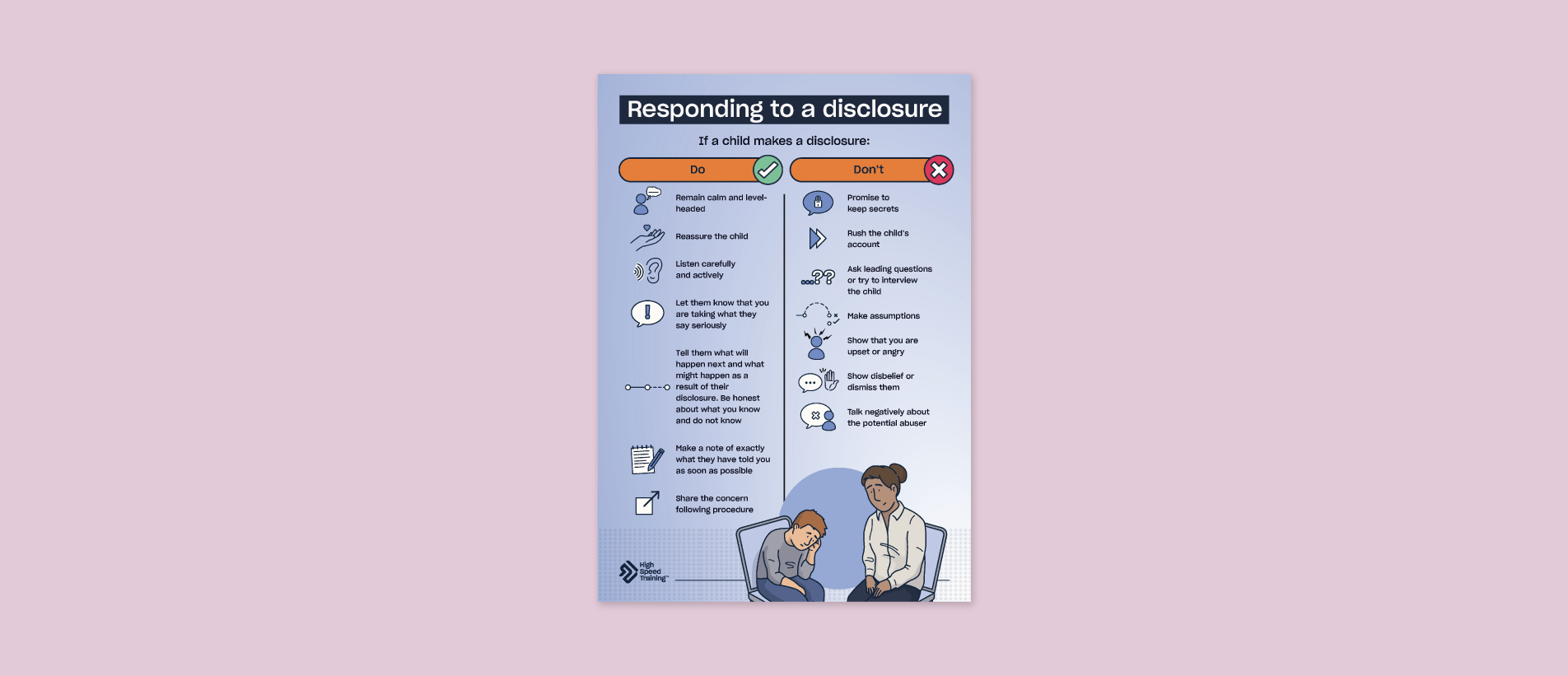
A disclosure can be a distressing event, however by following the correct steps, children and young people can be protected. Knowing how to compassionately and effectively respond to a disclosure enables those with a responsibility for safeguarding children to act in a timely manner and keep children safe from any further harm.
Further Resources:
- Safeguarding Courses
- Child Protection Body Map
- Understanding Why Children May Stay Quiet About Abuse



Post Author

You may also like