
Racism and Discrimination in Schools
 5 min read
School should be a safe and supportive environment for all children and one in which they feel encouraged to learn and build lasting relationships. Unfortunately this is not the case for everyone as many children face regular racism and discrimination at school. Racism in school can all too often be dismissed as ‘just bullying,’ thereby failing to address the harmful views at the heart of bigoted behaviour. However, the severity of racism and discrimination in schools must not be underestimated, nor the impact that it can have on children minimised. In this article we will outline the effects of racism in schools, explore schools’ responsibilities to safeguard pupils from racism and discrimination and offer guidance on how to tackle racism in your environment.
What is Racism in Schools?
The Institute of Race Relations defines racism as the belief or ideology that ‘races’ have distinctive characteristics which gives some superiority over others. Abuse and discriminatory behaviour that is based on such beliefs or ideology is racism. Racism can take many different forms and isn’t always direct insults to someone’s face. It can manifest as policies that are unfavourable to a specific group, microaggressions which are hard to call out as racist or biases that limit access to resources for certain ethnic groups.
Children and young people can be subjected to racism in the same way that adults can. This can result in:
- Verbal abuse, racist comments and name-calling
- Ridiculing cultural and/or religious differences
- Physical abuse and violence
- Cyberbullying and the distribution of racist material
- Making racist jokes
Racism in schools should be recognised as a form of child-on-child abuse. However, when this racist abuse is perpetrated by one child and directed towards another, it is often dismissed as ‘just bullying’ and the bigoted views at the heart of the bullying are ignored. When this happens the child who faced the abuse can feel ignored, misunderstood and isolated, impacting their ability to trust the adults around them. Moreover, any punishment for the child who perpetrated the abuse may only focus on the act itself, such as a physical altercation, rather than challenging the views that led to that behaviour. Since these views are not directly condemned, racist abuse and bullying can simply take on a different form. For example, rather than engaging in physical altercations a bully may instead decide to share racist content online, thereby continuing to bully others due to their race but in a different way.
Mind’s report Not Making the Grade, which explores the nation’s approach to mental health in secondary schools, notes that 55% of young people surveyed from Black and Black British backgrounds experienced racism at school. 57% of young people from mixed ethnic backgrounds experienced racism whilst 36% of young people from Asian or Asian British background experienced the same. Young men from Gypsy, Roma and Traveller communities also shared that they had directly experienced racism at school. It cannot be denied that racism in schools is a prevalent issue that impacts all ethnicities. The report found that the most common experiences of racism faced were stereotyping, verbal abuse and exclusion from activities or opportunities. Mind’s report highlights the mental toll that this can have on young people whilst also recognising that racist abuse is all too often ignored by school staff.
The report detailed the experiences of young people who faced discrimination at school, including being unfairly viewed as aggressive for behaviour that was tolerated when it came from White peers. The adultification of children from different ethnic backgrounds, especially Black children, results in shifted perceptions of their ‘innocence’ leading them to be treated as though they are older than they are. As such, when a Black student shows passion it is more likely to be viewed as ‘aggressive’ behaviour due to pre-existing bias that they are ‘mature for their age’ based on nothing more than their race. This leads many students to repress their feelings in order to avoid being labelled or to avoid racist altercations that may not be addressed by school staff.
Effects of Racism in Schools
It goes without saying that racism has an incredibly detrimental impact on the mental and emotional wellbeing of children and young people. For many children and young people it can make school feel unsafe, making them hesitant to go to school out of fear of facing more racist abuse. This has a direct impact on a child’s ability to learn as they experience prolonged levels of stress and anxiety, negatively affecting their ability to focus, retain new information and make connections with peers.
Being subjected to racism at school can cause a child to:
- Have low-self esteem
- Suffer from anxiety and depression
- Feel isolated and alone
- Self-harm
- Avoid school or put less effort into their studies
- Withdraw from social activities
- Lose trust in institutions that should protect them
- Feel uncomfortable and embarrassed
- Feel sad and frustrated
- Respond angrily which can lead to physical altercations
As mentioned above, when racist bullying isn’t identified as racism it ignores the issue at the heart of the problem. However, a child bullying another child because of the texture of their hair, the colour of their skin or their religious beliefs is racism. Yet, when this is framed as a child ‘not knowing any better’ the significance of their actions is diminished and the victims of their abuse may, justifiably, worry that the same thing will happen time and time again. When children who express racist views are framed as ‘only children’ and their behaviour is seen as the result of not having the knowledge or awareness to act differently, the significance of the racism is diminished. Many teachers may do this with the intention of deescalating a situation or out of the desire to not want to label a child as racist. However, in doing so they dismiss the lived experiences of children who are facing racist bullying and miss an opportunity to teach children why that behaviour is unacceptable.
Mind’s report found that 95% of young people surveyed who had experienced racism felt that more needed to be done to challenge it in schools. Young people need to feel confident that they will be supported and that their school will take meaningful action to support them in the face of racism. When the racist element of bullying is dismissed, children are told they are being ‘overly sensitive’ or perpetrators of racist bullying are let off lightly, young people lose faith in their schools ability to offer meaningful support. This can exacerbate feelings of isolation and frustration causing children to further withdraw from academic life.
Statutory Guidance
In England all state funded schools must:
- Have an anti-bullying policy and a behaviour policy
- Comply with the Equality Act 2010 and not unlawfully discriminate against pupils or prospective pupils on the grounds of race (or other protected characteristics)

In line with the Public Sector Equality Duty (PSED) they must also:
- Eliminate discrimination and other conduct that is prohibited by the Act
- Advance equality of opportunity between people who share a protected characteristic and people who do not share it
- Foster good relations across all characteristics – between people who share a protected characteristic and people who do not share it
- Comply with both specific education law on exclusions, and general law on discrimination, when temporarily or permanently excluding students.
The PSED is a legal requirement for state-funded schools and colleges. It places a general duty on schools and colleagues to have due regard to the need to eliminate unlawful discrimination, harassment and victimisation. By doing this, schools and colleges advance equality of opportunity and foster good relations between those who share a protected characteristic and those who do not.
New Keeping Children Safe in Education (KCSIE) guidance notes that schools and colleges play a crucial role in preventative education. Preventative education prepares pupils for life in modern Britain and creates a culture of zero tolerance for sexism, racism, misogyny, homophobia, biphobia, sexual violence/harassment, derogatory behaviour or other forms of physical violence and conflict. KCSIE guidance also notes that addressing racism is an important part of safeguarding children both in person and online. The internet poses a wide range of risks for children. As these risks are considerable the Department for Education (DfE) categorises them into four areas; content, contact, conduct, commerce. Being exposed to harmful racist content can be classified as a content area of risk and one which children must be protected from and educated about in order to empower them to use technology safely.

Updates to Working Together to Safeguard Children include a responsibility to identify, understand and challenge racism and discrimination. The guidance reinforces expectations on leaders to create inclusive, anti-discriminatory cultures and environments in which it is safe to challenge assumptions and biases that relate to race, ethnicity, sex, disability and sexuality. This builds upon the DfE’s guidance on Preventing and Tackling Bullying which outlines a school’s responsibility to prevent all forms of bullying, including racist bullying. The guidance also emphasises the importance of creating an inclusive environment in which all students feel safe and respected.

Looking for More?
Our wide range of CPD Courses for Teaching and Education will give you the skills to confidently support all students. Courses such as Child Mental Health, Online Safety & Harms and Prevent Duty Training will provide you with the knowledge to uphold your safeguarding responsibilities and support the students in your environment.
How to Tackle Racism in Schools
Tackling the issue of racism can feel like a momentous struggle. Many children who express racist or discriminatory views do not fully understand what they are saying and may be parroting things they have heard online, on TV or from family members. This can make it somewhat impossible to know what a child is being exposed to outside of school that is impacting their behaviour inside of school. However, as mentioned above, schools are well positioned to offer preventative education that empowers children to challenge views that they may be exposed to outside of school. This helps to develop their critical thinking skills which in turn dissuades them from blindly believing or repeating racist rhetoric.
Schools and colleges can tackle racism in a range of ways including:
- Implementing a whole school, zero tolerance approach to racism – A school with a clear anti-racist ethos signals to pupils and staff alike that discrimination of any kind will not be tolerated. This helps to create a culture where children do not face discrimination or, if they do, they feel as though they can report it and that action will be taken.
- Education – The best way to challenge racist stereotypes and biases is through education. Lessons and assemblies can be used to challenge harmful views and explain the root cause of those views. This helps to develop pupils’ critical thinking skills and encourages them to question what they see or are told by others. It’s important to note that the responsibility must not be put on children from different ethnic backgrounds to educate their White peers. It can be beneficial to encourage students to talk about their different cultures and backgrounds to share their lived experiences and offer different perspectives on the world. However, the onus must not be on those students to explain why racism is wrong and it should be teachers and school staff who provide specific, age-appropriate education on racism.
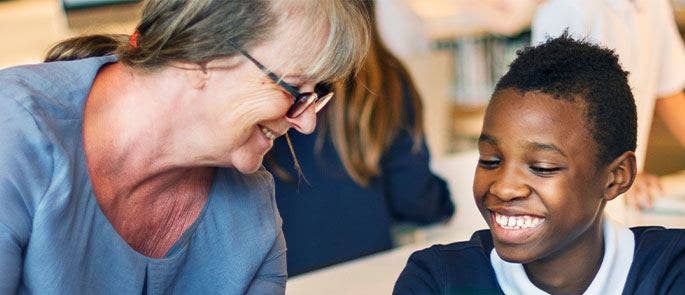
- Listening to pupils – Whilst the onus should not be on students to educate their peers, their lived experiences offer a valuable insight into what they are dealing with and what help they may require. Whilst members of staff may have the best intentions, without accurate insight into how racist behaviour is impacting a student they may unknowingly minimise or trivialise their experience. It’s vital that staff listen with curiosity and empathy in order to offer appropriate support.
- Training staff – Education is not just for students and it’s important that staff also receive comprehensive training. This training can help staff to recognise their own biases that they may not have been aware of and offer them a greater understanding of what some of their students may be experiencing.
- Invest in diversity – Mind’s report notes that it is well documented that there is a lack of ethnic diversity in the teaching profession. 46% of schools in England have no teachers from Black, Asian and Minority backgrounds. When children do not see themselves reflected in positions of authority it can be easy for them to think that they are on their own. Without teachers from similar backgrounds pupils may find it harder to explain why a certain behaviour enacted towards them was racist. For example, someone making a negative comment about a Black student’s hair is a microaggression that a White teacher may not understand and therefore not discipline properly. This can cause some students to stay silent in the face of racism as they know there will be additional barriers to explaining what is wrong.
- Name the behaviour – As mentioned, school staff may be hesitant to label an incident as racist, worrying that it may cause lasting harm to the perpetrator or that it isn’t in fact racist if they ‘didn’t understand’ the context of what they were saying. However, racist behaviour must be named for what it is and staff should avoid minimising language or reframing an incident as banter or a misunderstanding. Naming the behaviour shows that a school is not shying away from an uncomfortable topic but prioritising respect for all and upholding the school’s values and ethos.
If you witness or hear a racist incident you must follow your school policy. Senior members of staff may need to be involved as well as your Designated Safeguarding Lead (DSL). Each school should have its own policy and process for handling incidents of racist bullying. These steps may include:
- Immediately responding and naming the behaviour – Intervene in a calm way and identify racist bullying when you see it. Make it clear that the behaviour is unacceptable and not tolerated in school.
- Ensuring that everyone is safe – Make sure that the pupil involved in the incident is safe and supported. If necessary, separate pupils to avoid further incidents but reassure the victim of the bullying that this is in no way a punishment for them.
- Recording and reporting the incident – Document what happened as objectively as possible. Use clear language, including who was involved and what happened. Don’t detail your own judgements or conclusions and don’t water down the language used.
When racism in schools goes unaddressed, children and young people suffer. Their mental health, self-esteem and academic attainment are all negatively impacted by racist behaviour and an environment that should be safe and supportive instead becomes one of harassment and fear. In order to tackle the harmful impact that it has, school staff must recognise racist and discriminatory behaviour and call it what it is. All children deserve to be treated with respect and dignity. When racism in schools is left unchecked and unchallenged many children unjustily lose this right.
Further Resources:
- CPD Courses for Teaching and Education
- How to Promote Equality, Diversity & Inclusion in the Classroom
- What Parents and Teachers Need to Know about the Manosphere




Post Author

You may also like