
Self-Care Menu for Kids: Free Worksheet
 5 min read
Amongst the hustle and bustle of everyday life it can be hard to remember the importance of self-care. It can be particularly easy for adults to underestimate the importance of self-care for children, often expecting their youthful innocence to negate the need for self-care. However, children, just like adults, can struggle with the pressures and stress of everyday life and ignoring its impact on the life of children can have lifelong negative consequences.
Encouraging children to think about and actively engage in self-care can help reduce stress, build emotional intelligence and strengthen social connections. In this article we will explore what a self-care menu is, why self-care is important for children and how teachers and school staff can support children to create their own self-care menu. We will also provide a free downloadable worksheet which you can use in your classroom to help your students develop their own self-care menu.
What is a Self-Care Menu?
A self-care menu is essentially a list of self-care activities and practices that can help to improve your physical and mental wellbeing. Self-care is the intentional practice of taking time to do things that improve your overall wellbeing, helping to reduce stress, improve health and increase one’s overall quality of life.
The ‘menu’ element of a self-care menu is a means to categorise different self-care activities. For example:
- Starter, Main, Desert
- Breakfast, Lunch, Dinner
- Everyday, Every week, Every month
- Emotional, Physical, Relational
- 10 mins, 30 mins, 1 hour
The categories in a self-care menu will vary greatly from person to person, however when helping children to create their own it may be useful to decide categories for them until they are more confident with forming their own. Categorisations can reflect the length of the activity, the situation in which they may be needed or the regularity of the activity. Whichever categories you choose, avoid adding too many different groups and overcomplicating it as this can overwhelm children and make the concept of self-care seem more like a chore than something they enjoy.
A self-care menu, just like a menu at a restaurant, should be enticing and something that encourages active engagement, not a to-do list of pre-determined activities. A self-care menu for kids can help to teach them the importance of self-care by highlighting the benefits of activities outside of the school environment. Helping a child to develop a self-care menu can be a fun and engaging activity for them and is an example of active learning as they decide for themselves what activities to put in.
The Importance of Self-Care for Children
When helping a child create their own self-care menu you should also explain the benefits of self-care. To a child, self-care can easily come across as simply a means to have fun and whilst this is not inaccurate, it minimises the significance of self-care. Self-care isn’t just about taking 20 mins to play outside with siblings, but recognising how that activity can make a difference to a child’s mental health. Without guidance as to why self-care is important a child is less likely to consistently engage with it.
Self-care for children is important as it:
- Improves mental and physical health
- Increases emotional intelligence
- Develops independence
- Builds social connections outside the classroom
- Supports physical and psychological development
- Reduces stress and anxiety
- Encourages new hobbies
- Teaches children how to build routines
- Builds resilience
- Builds healthy coping strategies
- Improves confidence

Looking for More?
We have a wide range of CPD Courses for Education that can help you to enhance your skills. From Child Mental Health Training to Challenging Behaviour Training, our courses will provide you with the knowledge to confidently support children in your setting.
Using a Self-Care Menu in School
A self-care menu typically involves activities that are enjoyed outside of the classroom. Moreover, many activities may not be suitable during the school day. For example, spending 15 minutes outside when feeling overwhelmed is a self-care activity that can teach children the benefits of physical activity and connecting with nature. However, this isn’t applicable during a History exam. That being said, creating self-care menus can easily be incorporated into the school day by supporting students to develop their own and reminding them to take part in some of the activities in the evening or over the weekend.
Teachers can support children to create their own self-care menus by:
- Suggesting different self-care activities.
- Discussing appropriate self-care activities that they enjoy themselves.
- Encouraging students to explore what activities make them feel good.
- Establishing a routine of asking children about what self-care activities they engaged in at the weekend or the previous evening.
- Highlighting in-school activities that can become self-care activities such as reading or physical exercise.
- Respecting individual differences and recognising that not every child will want to take part in the same self-care activities.
- Showing curiosity in the activities that children say they enjoy as part of their self-care.
- Displaying an example self-care menu so that children have inspiration for their own.
- Developing after-school clubs that encompass self-care activities such as a drama club, book club or swimming club.
Free Self-Care Menu Worksheet
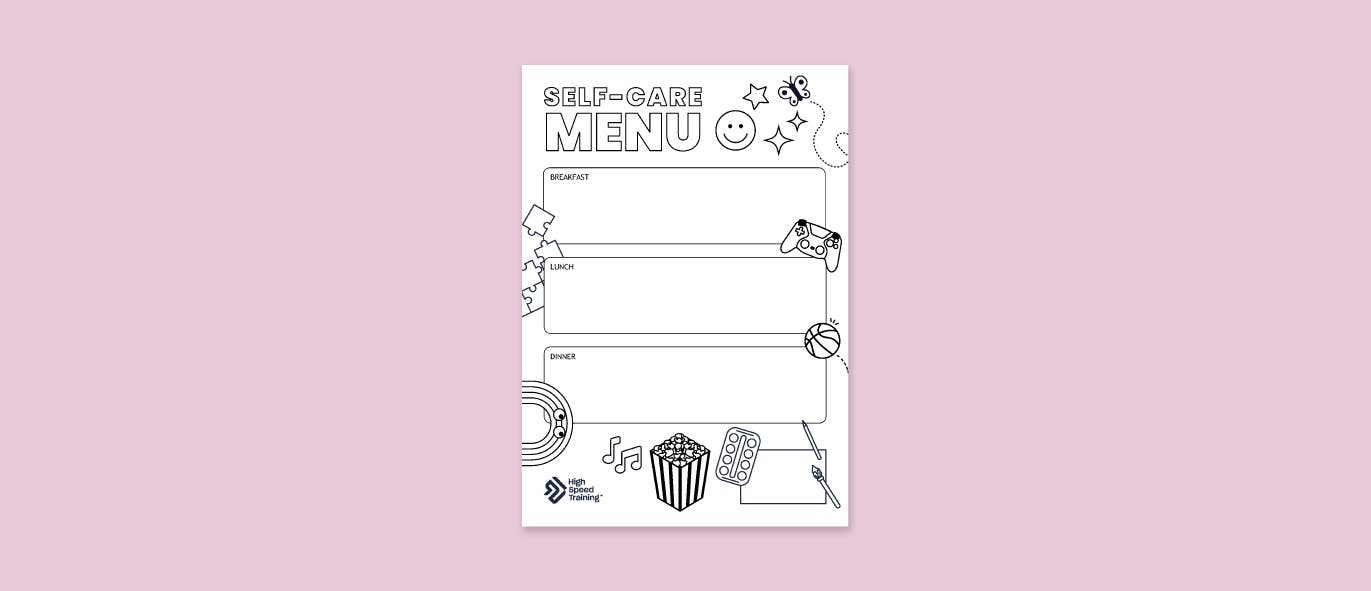
Below you will find a free self-care menu worksheet that you can download and use in your school environment. The worksheet is blank so that students can fill it in themselves, however it is advisable to add a few age appropriate examples for your particular setting to give students a starting point. You may also choose to create your own self-care menu as an example and prominently display it in your classroom so that students have a visual reference guide if they are struggling to come up with their own activities. The template has been split into Breakfast, Lunch and Dinner however these headings are merely an example and can be adapted to suit the needs of your students.
Creating a self-care menu should be a fun activity for children as this will encourage them to take part in the listed activities. Whilst the importance of self-care shouldn’t be minimised, that’s not to say creating a menu can’t be fun! Encourage students to be creative and add colour to their menus or colour in the illustrations. Ask children to volunteer activities and share why they like them as a way to inspire other children and strengthen their sense of community.
A self-care menu for kids can teach them how to regulate their emotions, reduce stress and anxiety and discover new hobbies. The importance of self-care for children should not be underestimated simply because of their age. Teaching children about the significance of self-care can have lifelong benefits, build emotional resilience and introduce them to healthy outlets.
Further Resources:
- Childrens Mental Health Training
- How to Promote Positive Mental Health in Schools
- How to Create a Positive Learning Environment
- Creating a Sense of Belonging in School
- After-School Club Ideas
- Positive Reinforcement in the Classroom


Post Author

You may also like