

Mobile Phones in Schools Debate
 5 min read
Technology continues to play an incredibly important role in modern life. The children of today are being born into a digital world with far more advanced technology than their parents and teachers experienced growing up. To reflect the prevalence of technology in modern life, it’s essential for children to develop strong digital literary skills which enable them to safely engage with technology in order to reap its benefits. For example, technology in schools can be incredibly useful supplements to a child’s education, improving accessibility and facilitating active engagement. However, the use of these devices must not hinder a child’s academic development and many devices, such as mobile phones, can have an undeniably disruptive impact on a child’s education.
There is significant debate about the pros and cons of mobile phones in schools. However, whilst there are some unignorable advantages, the Department for Education (DfE) offers clear statutory guidance on how mobile devices should be used in schools. In this article we will explore the statutory guidance on mobile phones in schools and provide a brief overview of the debate surrounding their use in schools.

Mobile Phone Policy: Free Template
Looking to establish a Mobile Phone Policy in your school? Take a look at our guidance on how to go about this and download our free Mobile Phone Policy Template.
Statutory Guidance on Mobile Phones in Schools
Statutory guidance from the Department for Education on the use of mobile phones in schools was updated in June 2026 with implementation taking effect from 1st September 2026. DfE statutory guidance states that all schools should be mobile phone-free environments by default; anything other than this should be by exception only. This is also reflected in new Keeping Children Safe in Education (KCSIE) guidance that echoes the DfE and explicitly states that schools are expected to implement a policy whereby students do not have access to their phone throughout the school day.
Section 36 of the Children’s Wellbeing and Schools Act 2026 requires that state-funded schools in England have regard to published guidance on mobile phones. This renders the guidance on mobile phones in schools a legal requirement for schools in England. The ban on smartphones in schools in England came into effect on 29th June 2026. As such, schools and trusts in England are now legally responsible for making their environments phone-free during the day.
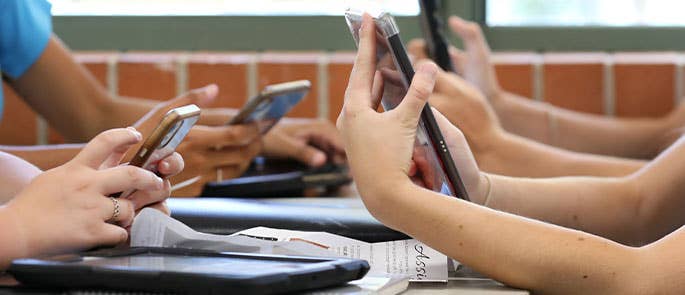
DfE guidance reiterates the importance of schools establishing calm, safe and supportive environments that are conducive to teaching and keeping children safe in education. As mobile phones and similar devices can negatively impact the creation of such an environment, the DfE encourages the prohibition of their use. The DfE notes that as part of a school’s behaviour policy, schools should develop a mobile phone policy that prohibits the use of mobile phones and other smart technology with similar functionality throughout the school day, including during lessons, the time between lessons, breaktimes and lunchtime.
To reflect different maturity levels, the DfE encourages schools to consider whether students in sixth form can have access to their mobile phones at certain times and limited locations. For example, this may include prohibiting the use of mobile phones in front of younger students and limiting their use to a sixth form common area. Special considerations should also be taken for boarding schools and residential schools where appropriate policies should be developed regarding the use of phones during the rest of a pupil’s time at school.
The Impact of Mobile Phones in School
The development of modern technology has brought with it a raft of advantages and disadvantages. Whilst some technological advancements have resulted in increased accessibility and digital learning, other advancements have led to uncontrollable distractions and bullying. Some of the undeniably negative impacts of mobile phones in schools include:
- Distractions – Mobile phones are inherently distracting; social media notifications, apps and games all distract students from their education and can cause endless disruptions to lessons. This in turn can make it harder for students to focus which reduces academic performance.
- Bullying – Mobile phones can easily lead to cyberbullying, bullying that is carried out via social media or the internet. The impact of cyberbullying can be just as harmful as bullying in person. However, the ease with which mobile phones can be accessed can exacerbate the devastating effects of cyberbullying as pupils feel like they cannot escape the harrassment. Mobile phones give students a means to access the internet whenever they want, making them constantly vulnerable to online harassment from other students.
- Safeguarding Issues – Children and young people can be exploited and abused via the internet and social media. The internet gives abusers direct and near enough 24/7 access to their victims without adult supervision or intervention. As mobile phones can easily access the internet this increases the risk of students being exploited, especially if they have not had adequate education on internet safety.
- Health Problems – Excessive mobile phone use can cause numerous health issues such as eye strain, neck problems, disrupted sleep, increased anxiety and repetitive strain injury. Moreover, if students use their phone during break time they are less likely to engage in physical activity. This increases the chances of them becoming sedentary and moving their body less which can lead to injury and limited mobility later in life.
- Wellbeing – Spending more time on a phone typically means spending less time socialising face-to-face with classmates. This can have an adverse effect on a student’s overall wellbeing and lead to increased isolation and social withdrawal. Moreover, the content that students see on their phone may cause them to think negatively about themselves for not having the newest phone or clothes etc. Repeated exposure to this kind of content can be incredibly detrimental to a pupil’s mental wellbeing and self-esteem.

Whilst the negative impact of mobile phones is well documented, it would be short-sighted to suggest that there are no positives. These positives do not outweigh the points listed above nor do they take precedence over statutory guidance. However, they are important to consider and may impact what a school includes in their mobile-phone policy such as whether older students may be permitted to use their phones at certain times and limited locations.
Some reasons why phones should be allowed in some cases include:
- Medical Reasons – For children with medical issues, mobile phones can be an important part of tracking their condition. For example, students with diabetes may track their insulin levels via an app which their parents can also access. In these instances, mobile phones can provide essential information to monitor a child’s health and keep track of any medication schedule that they may be on.
- Research – Mobile phones place the internet in a student’s hands and give them access to a wealth of information. Phones can be used in the classroom to support learning when used as a research tool. This can also be beneficial if there are not enough alternative devices available for all students.
- Caring Responsibilities – Young carers are likely to need regular contact with the family member they care for in case of an emergency. Having a mobile phone on their person enables them to be contactable without the family member they care for having to call the school and attempting to locate a student that way.
How to Implement Mobile Phone-Free Environments
Schools and trusts in England now have a legal responsibility to ensure their environments are mobile phone-free throughout the school day. Arguably the most effective way that schools can do this is by implementing a mobile phone policy, which the DfE advises. DfE guidance states that schools should develop a mobile phone policy that prohibits the use of mobile phones and other smart technology with similar functionality.
The DfE notes that mobile phone policies should be encompassed within school behaviour policies that align with a school’s legal duties and standards relating to the welfare of children. However, that is not to say that schools cannot have a standalone mobile phone policy. A clear and comprehensive standalone policy signals to students and parents that a school is taking their responsibility seriously. A standalone policy also ensures that a school’s stance on mobile phones is clear and easily understandable for all.
An effective policy will set out the rules surrounding mobile phones, which devices the policy includes, the consequences that students will face and any exemptions where applicable. You can find guidance on how to create your own standalone mobile phones in school policy in our article here.

Looking to Learn More?
Whilst mobile phones can be highly beneficial for children, they can also contribute towards poor mental health and wellbeing. Understanding children’s mental health is essential for all teachers: High Speed Training’s online Child Mental Health course will help you learn more and understand how to better support the pupils in your classroom.
Alongside a specific policy, schools can implement a mobile phone-free environment by:
- Teaching about online safety – Educating students about online safety enables them to use it safely. This includes recognising the harms of social media, knowing how to set strong passwords, using the appropriate privacy settings and taking care when gaming online. The aim here is not to scare pupils into not wanting to use the internet, but giving them the tools to navigate it safely. It also empowers students to be more mindful of when and how often they use their phones as they can better recognise the risks that come with excessive use.
- Highlighting the impact of screen time – Giving children a solid ‘why’ behind something makes them more inclined to follow it. As with the point above, the goal is not to scare children so that they don’t use their phones or the internet but to be realistic about potential dangers. This includes informing them of the harm that excessive screen time can cause. Posters, educational activities and awareness days can all be used to highlight the benefits of reducing screen time thereby encouraging students to do so of their own volition.
- Encouraging other ways to pass time – Mobile phones are often the first thing that students (and adults) reach for when they are bored. Access to the internet, gaming apps and social media offer instant gratification and relief from boredom. As such, presenting engaging alternatives can encourage students to spend less time on their phone. This could include running after-school clubs that are intentionally phone-free so that pupils can discover new hobbies which don’t require the use of a phone. Once students see how enjoyable alternative activities can be they are more likely to want to spend less time on their phone as there are more interesting and rewarding real life activities to take part in.
- Working with parents – Parents can help to support a phone-free environment by establishing boundaries at home as well as in school. Teaching parents about the benefits of phone-free time and why managing mobile phone use is important for safeguarding children from harm, enables them to better support a school’s mobile phone-free policy. This way parents can work with schools not against them by echoing a school’s stance on the benefits of no mobile phones in school.
Whilst the debate around mobile phones in schools is an ongoing conversation, statutory guidance clearly states that schools should be mobile phone-free environments throughout the school day. Schools have a legal responsibility to make their setting phone-free to support a calm, safe and supportive environment that is conducive to teaching and learning.
Further Resources:
- Online Safety & Harms
- Screen Time for Children: Advice for Parents
- Internet Safety Posters for Schools
- Why is Cyberbullying Harmful and What Actions Can You Take?
- How to Explain Internet Safety to a Child
- Online Safety and Harms Quiz
- The Importance of Teaching Social Media Safety in Schools
- Technology in Education



Post Author

You may also like