

How to Prepare for a CQC Inspection: Free Checklist
 7 min read
Preparing for a Care Quality Commission (CQC) inspection is an important responsibility for health and social care providers in England. Being well prepared helps care providers demonstrate good practice during an inspection and gives staff the confidence to show how their service supports the people they care for. This article explains what CQC inspections are, what inspectors look for and how providers can prepare effectively. It also includes a practical checklist that managers and staff can use to help ensure their service is inspection-ready.

What is a CQC Inspection?
A CQC inspection is an assessment carried out by the Care Quality Commission to evaluate the quality and safety of health and social care services in England. The purpose of these inspections is to ensure that providers meet required standards and that people always receive safe, effective and compassionate care.
During an inspection, CQC inspectors gather evidence about how a service operates. They then use this information to determine whether the provider is meeting regulatory requirements and to assign ratings that are published for the public to see.
CQC inspections are important because they:
- Help protect people who use health and social care services.
- Identify risks and areas where improvements are needed.
- Promote transparency and accountability within the care sector.
- Provide information that helps the public make informed choices about care providers.
To assess the quality of care, inspectors use five key questions that apply to all services. They ask whether the service is:
- Safe – are people protected from abuse, harm and avoidable risks?
- Effective – does the care provided achieve good outcomes and follow best practice?
- Caring – do staff treat people with kindness, dignity and respect?
- Responsive – are services organised in a way that meets people’s individual needs?
- Well-led – is the organisation well managed with strong leadership and governance?
Inspections may be announced or unannounced. Unannounced inspections allow inspectors to observe services as they normally operate, which helps provide an accurate picture of everyday care.

What do CQC Inspectors Look For?
CQC inspectors assess services using a wide range of evidence. While documentation is important, inspectors are equally interested in how care is delivered in practice and how people experience the service.
During an inspection, inspectors may observe care being provided, speak with staff and service users, review records and examine feedback from families and external organisations. To understand how a service performs, inspectors explore the five key questions in greater detail:
Are They Safe? 

For this question, inspectors look at whether people are protected from harm, abuse and avoidable risks. They examine how providers manage safeguarding concerns, incidents and health and safety hazards. Evidence may include:
- Safeguarding procedures and incident reports.
- Risk assessments and safety policies.
- Medication management systems.
- Infection prevention and control practices.
Are They Effective?
This area focuses on whether people receive care that achieves good outcomes and supports their health and wellbeing. Inspectors may review:
- Staff training records and professional development.
- Care plans and assessments.
- How staff work with other healthcare professionals, such as GPs or therapists.
- Whether care follows recognised guidelines and best practice.
Are They Caring?
The caring category looks at how staff treat people who use the service. Inspectors observe interactions between staff and service users to see whether care is compassionate and respectful. They may consider:
- Whether people are treated with dignity and respect.
- How staff communicate with individuals and their families.
- Whether people feel supported and listened to.
Are They Responsive to Peoples’ Needs?
A responsive service adapts to the individual needs of the people it supports. Inspectors review whether care is personalised and whether services respond appropriately to feedback or changing circumstances. This may involve looking at:
- Personalised care planning.
- Complaints and feedback processes.
- How services support diverse needs such as language, culture or disability.
Are They Well-Led?
Leadership and governance play a major role in maintaining high standards of care. Inspectors examine whether leaders create a positive culture, manage risks effectively and promote continuous improvement. Evidence in this area may include:
- Governance systems and internal audits.
- Staff meetings and communication processes.
- Improvement plans and quality monitoring systems.
The CQC uses what’s known as quality statements within its assessment framework. These statements describe what good care looks like from the perspective of both providers and people who use services. Many of these statements begin with ‘we’, such as ‘We provide care that is safe and free from avoidable harm.’ These statements help inspectors evaluate whether services are meeting expectations in real-world practice.
How to Prepare Staff for a CQC Inspection
Preparing for a CQC inspection should involve the entire team. Staff need to understand what inspectors are looking for and feel confident explaining how they deliver safe and effective care.
Clear communication and preparation can help reduce anxiety and ensure staff are ready to demonstrate good practice during an inspection.
Managers can prepare staff for a CQC inspection by:
- Explaining how the CQC inspection process works.
- Sharing previous inspection findings and improvement plans.
- Encouraging staff to review policies and procedures relevant to their roles.
- Holding team meetings to discuss quality standards and expectations.
Managers can also prepare staff by:
Using mock inspections – mock inspections can be a valuable way to prepare for the real process. They allow managers to identify gaps in documentation, governance or practice before an official inspection takes place. Mock inspections also give staff an opportunity to practice answering questions and discussing their responsibilities.
Empowering staff to speak confidently – inspectors often speak directly with care staff to understand how care is delivered, so staff should feel confident explaining what they do and how they keep people safe. Encouraging staff to share examples of good practice can help demonstrate the quality of care provided.
Common questions CQC inspectors may ask staff
Inspectors often ask practical questions to understand how staff carry out their roles and respond to situations. Preparing staff to answer these confidently can make a significant difference during an inspection. Common questions may include:
- How do you report a safeguarding concern?
- What would you do if you witnessed poor practice?
- How do you ensure people’s dignity and privacy are respected?
- How do you support someone who refuses care?
- How do you report accidents or incidents?
- How do you ensure care plans are followed?
- What training have you received recently?
- How do you support people to make choices about their care?

Want to Learn More?
Ensuring staff are well trained is a key part of preparing for CQC inspections, as it helps staff understand their responsibilities and ensures they have the knowledge needed to deliver safe and effective care. Our range of online Health and Social Care courses can help, including Care Certificate training, Safeguarding training and Deprivation of Liberty Safeguards training.
How to Improve Your CQC Rating
If you receive a rating that you are unhappy then there are steps that you can take to improve your rating. Improving a CQC rating requires a proactive approach to quality, governance and leadership. Organisations that regularly review their processes and have documented evidence of good practice are often better prepared for inspections. By embedding continuous improvement into everyday practice, providers can strengthen their services and improve inspection results over time.
Some practical steps providers can take to improve their CQC rating include:
- Conduct mock inspections – regular, internal reviews help identify gaps and prepare staff for real inspections. Regularly reviewing areas such as medication management, infection control and record keeping helps identify issues early.
- Maintain strong evidence systems – keep clear records of policies, training, audits and improvements to demonstrate compliance. Well organised records make it easier to demonstrate compliance and show inspectors how the service is managed.
- Complete Provider Information Returns (PIRs) thoroughly – these documents give inspectors an overview of how your service operates and where improvements are being made.
- Encourage open communication – create a culture where staff feel comfortable raising concerns or suggesting improvements. This also includes raising concerns via whistleblowing where appropriate.
- Prioritise strong leadership – the ‘Well-led’ category often underpins success in other areas, as good leadership supports safe, effective and compassionate care.
- Invest in regular staff training – ensuring staff are well-trained and confident in their roles supports safer care and demonstrates a commitment to professional development.
- Review incidents and complaints carefully – learning from complaints, safeguarding concerns and incidents helps organisations improve processes and prevent similar issues in the future.
- Act on feedback from service users and families – gathering feedback through surveys, meetings or suggestion forms shows inspectors that the service values and responds to the voices of the people it supports.
CQC Inspection Checklist
Preparing for a CQC inspection requires careful organisation and evidence gathering. Managers should ensure that documentation, governance systems and care practices clearly demonstrate how the service meets regulatory standards. The following checklist, based on the five key questions, can help care providers prepare for an inspection:
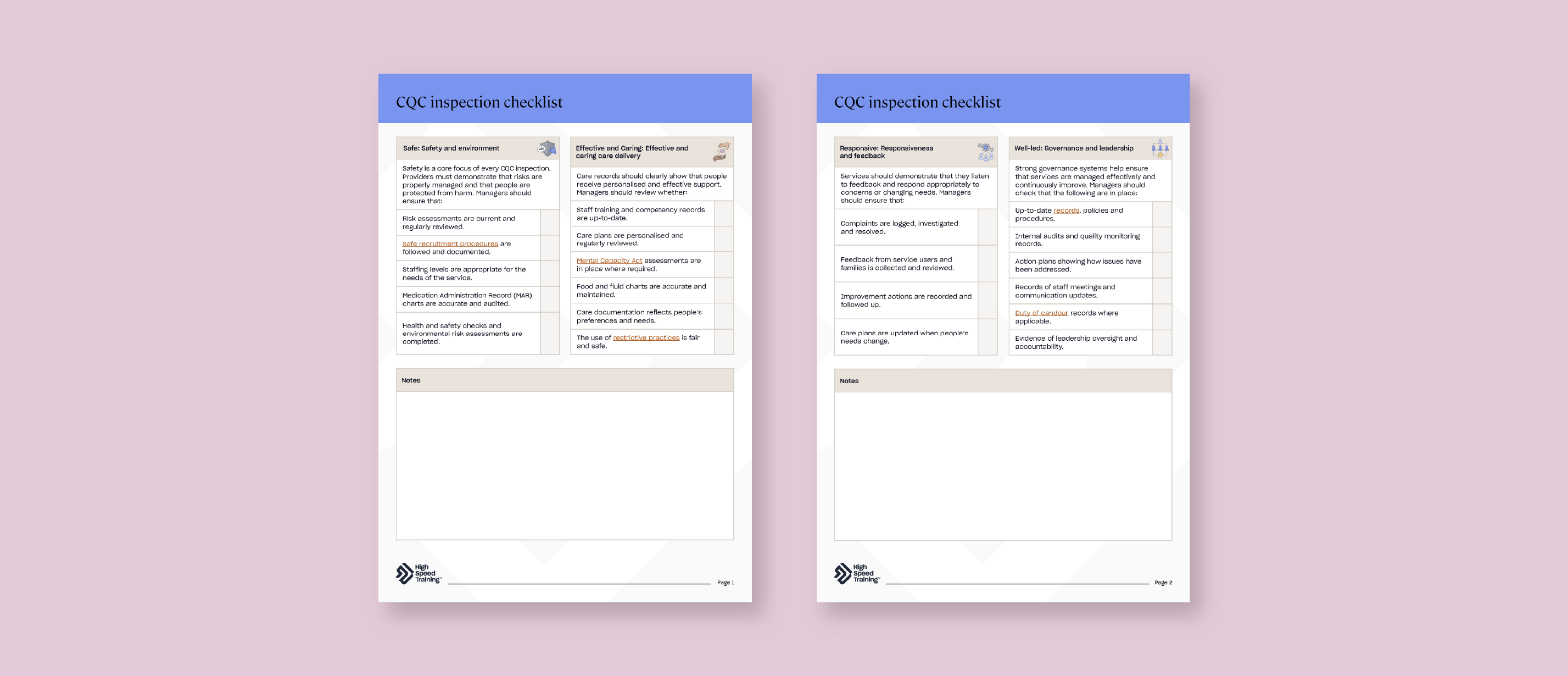
CQC inspections play a key role in maintaining high standards across the health and social care sector. With the right preparation, managers and staff can demonstrate the quality of their work and highlight the positive impact their service has on the people they support.
Further Resources:
- Person-Centred Care Training
- CQC Inspections Explained: Answering Your FAQs
- The Health and Social Care White Paper: Summary of Key Points
- What is the Care Certificate & Why is it Important?
- Promoting Effective Communication in Health and Social Care
- What is a Care Plan & Why is it Important?
- Promoting Independence in Health and Social Care



Post Author