
Kitchen Cleaning Schedule: Free Template
 5 min read
A clean kitchen is integral to maintaining high standards of food hygiene and ensuring that food is safe to consume. Regular cleaning helps to uphold a clean environment thereby reducing the risk of harmful bacteria spreading. Food businesses must ensure that they are doing everything within their power to keep customers safe. Maintaining a clean kitchen is a core part of this responsibility and a cleaning schedule can support businesses to uphold their legal duty. In this article we will outline what a kitchen cleaning schedule is and why it is so important. We will also provide you with a free downloadable template which you can use to create your own kitchen cleaning schedule.
What is a Kitchen Cleaning Schedule?
A kitchen cleaning schedule is a detailed plan of cleaning and maintenance tasks that uphold the cleanliness of a kitchen. A cleaning schedule will typically contain details on what needs cleaning, the regularity of cleaning and what products should be used for cleaning. For example, a cleaning schedule may break down daily, weekly and monthly tasks showing employees what should be cleaned daily, such as food surfaces and chopping boards, what should be cleaned weekly, such as sinks and ovens, and what should be cleaned monthly such as fridges and ventilation systems.

A kitchen cleaning schedule is different to a clean as you go (CLAYGO) policy, however a CLAYGO policy could include some of the daily tasks contained within a kitchen cleaning schedule. Both a CLAYGO policy and a kitchen cleaning schedule set clear expectations to staff that they should be maintaining a clean environment.
Why is a Cleaning Schedule Important for Commercial Kitchens?
Food businesses have a legal responsibility to keep their customers and staff safe. A cleaning schedule is a foundational part of how they can do this as it details what needs to be cleaned and when. A cleaning schedule can also act as due diligence and proof to a visiting Environmental Health Officer (EHO) that a business is taking its legal responsibilities seriously.
During an EHO visit, businesses are assessed in three categories; Food Safety and Hygiene Procedures, Structural Requirements and Confidence in Management. When assessing food safety an EHO will examine how hygienically food is handled and how it is prepared, cooked, re-heated, cooled and stored. If this is done in a dirty kitchen it does not matter how well or safely staff handle food as the environment itself is unhygienic. When assessing a business’ structure, an EHO will examine the physical condition of a business including cleanliness and pest control. A dirty kitchen is a magnet for pests which can spread harmful bacteria and contaminate food, negatively impacting a businesses rating and reputation. Finally, if an EHO enters a dirty kitchen it is unlikely to inspire confidence in management. A cleaning schedule shows that a business has robust processes and systems in place to ensure good hygiene, highlighting that management understands the importance of their legal responsibilities. As EHO visits are typically unannounced, high standards of hygiene must be maintained at all times. A cleaning schedule ensures that a premises is cleaned thoroughly, helping businesses to fulfil their legal obligations, keep people safe and show a visiting EHO that they understand their duty.
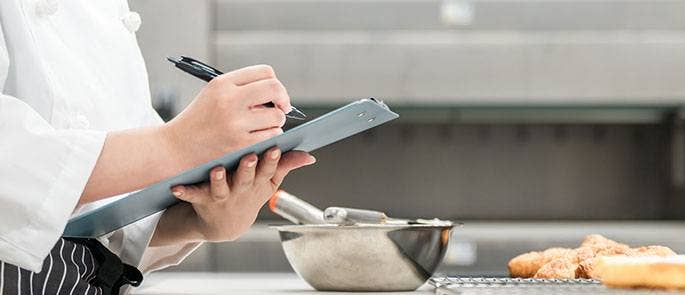
A detailed and descriptive cleaning schedule is also important as it ensures that cleaning is conducted regularly. In a busy kitchen environment it’s easy for equipment to blend into the background or tasks to fall down the list of priorities. Whilst every care should be taken to remember the importance of maintaining high standards of hygiene, mistakes can be made, things can be forgotten and before long equipment is only cleaned when the dirt is excessive. This can quickly make a kitchen an unsafe and potentially hazardous environment. A cleaning schedule therefore reiterates the importance of regular cleaning and ensures that nothing is missed.
A kitchen cleaning schedule is important because it:
- Encourages consistent levels of cleanliness
- Improves and maintains hygiene standards
- Reduces the risk of cross-contamination
- Ensures a clean environment for staff
- Serves as evidence of due diligence

Looking for More?
Ensuring that your staff are well trained enables everyone to understand their responsibilities and play their part to keep people safe. Our wide range of Food Hygiene Training will provide your staff with the knowledge and skill to confidently and competently uphold their duties. Additionally, our Food Hygiene Rating Scheme Resource Pack is filled with invaluable information to help you prepare for your next EHO visit and attain and maintain a high rating.
How to Create a Kitchen Cleaning Schedule
An effective cleaning schedule should be detailed and easy to understand. It should cover what your staff need to clean, what they should use to clean it and how frequently it needs cleaning. It’s likely to be senior management or the business owner who is responsible for creating a cleaning schedule, however it is the duty of every staff member to follow the cleaning schedule.
To create a tailored cleaning schedule it’s a good idea to walk around your premises and make a list of what needs to be cleaned. List every item, every piece of equipment and every surface that needs cleaning. It may be helpful to do this whilst the business is closed so that you can act out an average day without the hustle and bustle of actually being open. During this process pay particular attention to what may need special or additional cleaning. For example, some equipment might need to be partially disassembled before it can be cleaned or some surfaces may need to be disinfected and require different cleaning products.
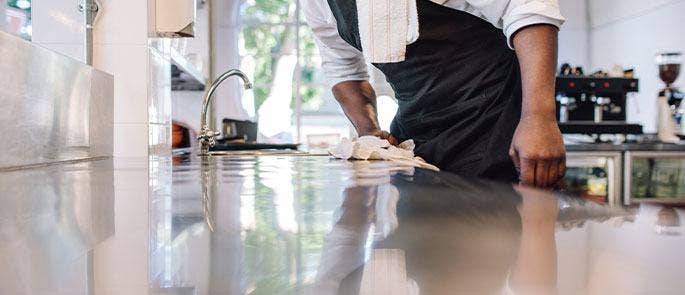
After you have finished your walk through you should go through your list and determine:
- How should this be cleaned?
- What should it be cleaned with?
- How often should it be cleaned?
- Whose responsibility is it to clean this?
You can further categorise your list by grouping items by type such as equipment, surfaces or utensils. Or you may decide to group items by the frequency of cleaning, for example what needs to be cleaned daily, weekly or monthly.
Kitchen Cleaning Schedule Template
Below you will find a free, downloadable kitchen schedule template that you can use to create your own schedule. The template has blank spaces for you to input the cleaning task, the frequency and the initials of whomever completed the task. It’s a good idea to prominently display your cleaning schedule so that it serves as a visual reminder to staff of what needs cleaning and of the business’ expectation to maintain a clean working environment.
You may decide to create specific schedules for different areas and display that schedule in the appropriate environment. For example, bathrooms and Front of House may have different cleaning requirements with little overlap between tasks. As such, you may choose to create a schedule specifically for the bathroom which is kept in the bathroom so that it can be signed upon completion as well as in the staff room/area so that staff remember it needs doing.
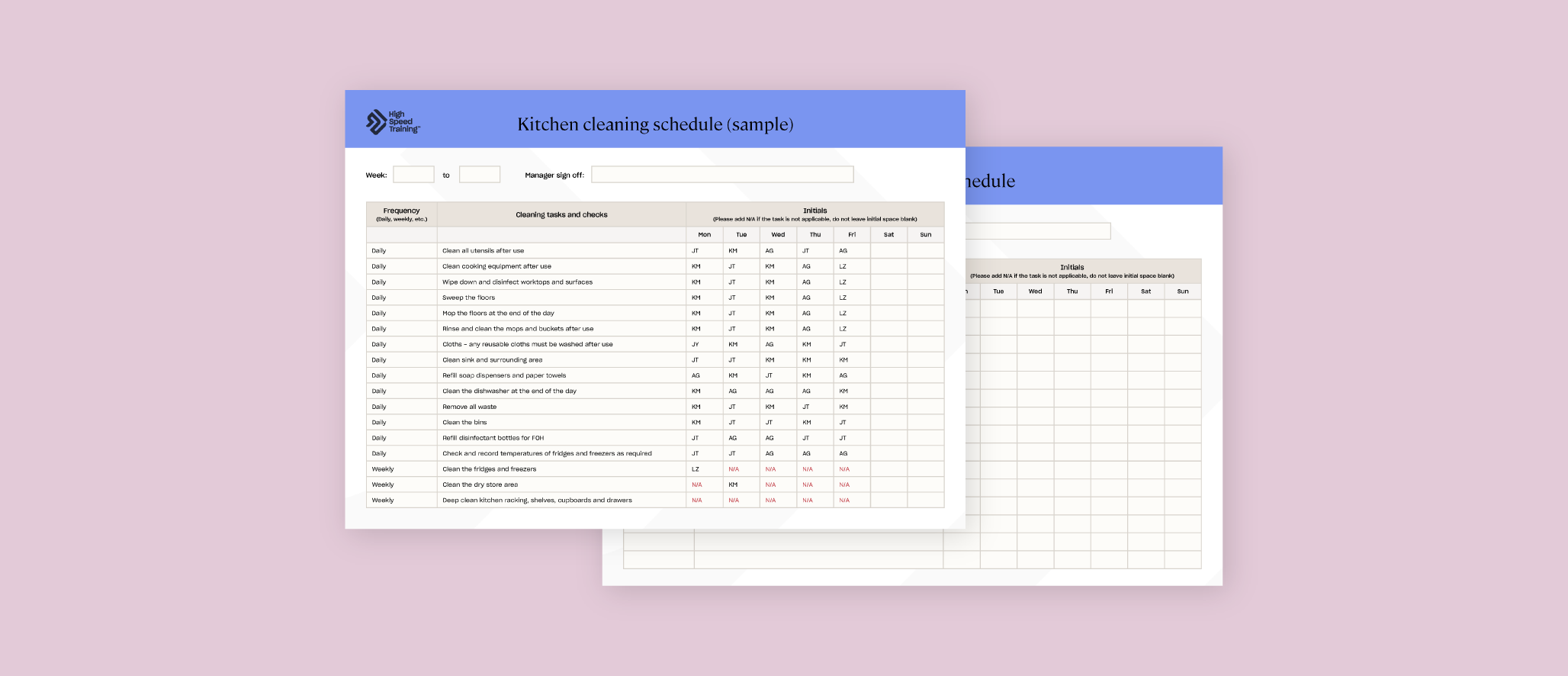
We have also created an example template to show how the template may be used in practice. Remember, in order for a cleaning schedule to be effective it must be tailored to the needs of your environment. As such, avoid copying the example template unless the tasks are relevant to your setting.
A kitchen cleaning schedule helps a business to uphold their legal responsibilities and maintain a clean environment. Cleaning is a core part of food safety and minimises the risk of harmful bacteria spreading. A thorough and detailed cleaning schedule supports the maintenance of a clean environment thereby keeping customers and staff alike safe.
Further Resources:
- Personal Protective Equipment in the Kitchen
- Kitchen Safety Posters for Commercial Use
- Food Hygiene Courses



Post Author

You may also like