
The Importance of Play-Based Learning for Children
 7 min read
Presenting children with different teaching methods can support active engagement with their education. For younger children, play-based learning can be a great way to encourage enthusiasm and excitement for learning in a way that traditional teaching methods do not. Purposeful play can help children develop core skills and build a solid educational foundation that will support them throughout school. In this article we will outline what play-based learning is and why it is beneficial for children. We will also provide examples of play-based learning that can serve as inspiration for play-based activities in your setting.
What is Play-Based Learning?
Play-based learning is a teaching method that places play at the centre of the learning process. As a teaching method, play-based learning recognises that young children often explore and engage with the world through play; whether it be using their imagination to make sense of things around them or using play to take risks and solve problems. Play-based learning supports a child’s cognitive development as it presents them with activities that are meaningful to them, thereby encouraging higher levels of engagement and therefore learning.
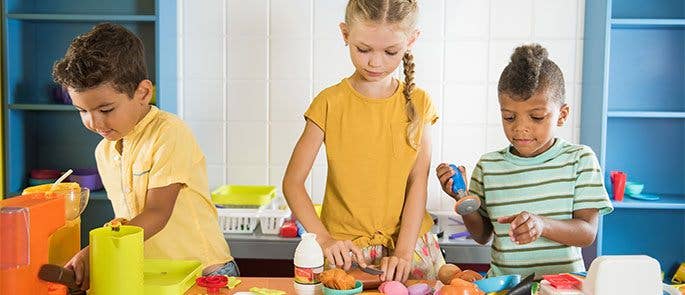
Play-based learning is typically child-led and teacher supported or initiated. Through this approach, children are given the space and autonomy to engage with tasks how they want to, which encourages independent problem solving and creative thinking.
Benefits of Play-Based Learning
There are numerous benefits to play-based learning. These include:
- Cognitive development – Play-based learning supports a holistic approach to learning that supports all facets of a child’s development, including fine motor skills and language development.
- Social skills – As children play they learn how to communicate with their peers and share with others. They can also learn core social skills such as waiting their turn, compromise and even conflict resolution.
- Independence – Play-based learning is typically child-led. Whilst there should be some element of structure provided by an adult, child-led play-based learning encourages children to think for themselves or to ask one another for help rather than a teacher. This supports their independence as they are able to reach a solution, or win a game, by themselves.
- Creative thinking – Play of any kind supports a child’s imagination and creativity. As they play, children explore different solutions and develop their problem solving skills. When learning is presented through play, children are more enthusiastic about thinking outside the box and finding their own way to solve problems.
- Increased self-esteem – Play-based learning provides a safe arena in which children can test new ways of thinking. Giving children autonomy during play-based learning encourages them to approach challenges differently and take risks. When these risks pay off, a child’s self-esteem can improve as they see the benefits of trying new things and being persistent in their efforts.
- Language development – As mentioned, play-based learning helps with overall cognitive development and social skills. Language development is a core part of this as children learn how to communicate with others and adapt their communication depending on who they are talking to or the game they are playing. This can manifest in them communicating the rules with others, deciding how they want to play a game or, in role playing games, taking on the role of another and using language that matches that role.
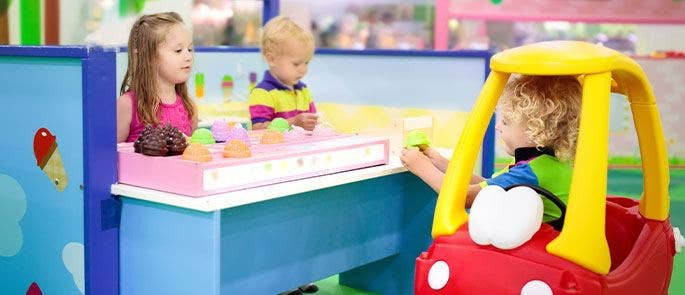
- Increased motivation – Play-based learning can help children to develop a positive attitude towards learning and their education. Many children are eager to play and when this enthusiasm is echoed at school they are more likely to be motivated to engage with the task at hand. Moreover, play-based learning is a way to engage with pre-existing interests that a child has thereby giving the activities more meaning which in turn supports active engagement.
- Emotional resilience – Play can present children with scenarios that they have yet to face in the real world. This gives them the space to see how they might engage with such scenarios and feel more confident should they face it in the future. For example, after playing a game with their peers and losing, a child may feel very disappointed and frustrated. However, as they know they will have the chance to play the game again, they become encouraged to win the next time, recognising that just because they lost in the past doesn’t mean they will undoubtedly lose in the future. This emotional resilience teaches children how to handle emotions such as disappointment and the benefits of perseverance.
- Academic attainment – Play-based learning can help to foster a love of learning as children associate learning with fun. This can help to make challenges less daunting as children are enthusiastic about finding a way to solve them.
- Improved motor skills – Play naturally enhances a child’s motor skills. Activities such as drawing, painting, climbing and running all support a child’s motor skills, enabling them to become more dexterous and by extension, more independent. For example, children may first start painting with their fingers and then move onto using a paintbrush. The more they paint the more comfortable they are using the paintbrush. This can support their hand writing development as they feel confident in holding a pencil in a similar way they would a paintbrush.
Parten’s Stages of Play
In 1929 American sociologist Mildren Parten introduced the theory of six stages of child’s play. As part of her research, Parten observed 2 – 5 year old children for one-minute periods at the same time of day for several days. During her research Parten observed distinctly different ways in which children played alone and with one another. This led her to develop the six stages of child’s play. Though Parten’s research is now almost 100 years old, her work was incredibly impactful and her framework is still widely used today.
Parten identified six stages of child’s play. These are:
- Unoccupied Play
When a child is not playing and is instead observing what is happening around them but not engaging with it.
Examples of this type of play include:
- Looking around a room
- Moving and observing limbs
- Solitary Play
When a child plays by themselves. They may be in close proximity to other children however they play alone with different toys and without interacting with others.
Examples of this type of play include:
- Playing with figures, such as toy cars
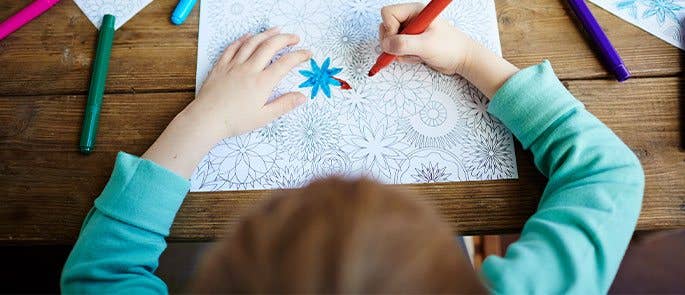
- Drawing or colouring
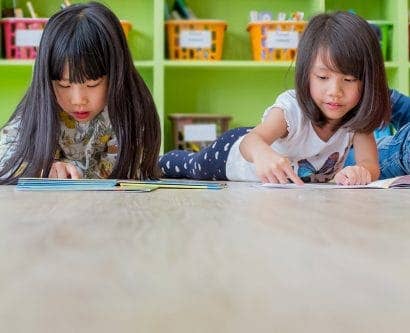
- Looking at a picture book
- Onlooker Play/Behaviour
When a child watches other children playing but does not engage with them, though they may interact by talking to the other children or asking questions. This differs from unoccupied play as the child does show an interest in the activities around them.
Examples of this type of play include:
- Watching others play with blocks and asking what they are building
- Observing others play a made up game to learn the rules
- Parallel Play
When a child plays independently but next to other children who may be engaging in a similar game or activity or using the same resources. Though a child may be playing next to other children, during parallel play they are notably not playing together.
Examples of this type of play include:
- Children sharing materials to draw a picture but drawing entirely different things
- Several children playing individually but in the same room
- Associative Play
When children share resources, such as toys, pencils or a ball, however, the focus of the play is interacting with one another, not necessarily on the play itself.
Examples of this type of play include:
- Multiple children working together to colour in a picture
- Cooperative Play
When a child is interested in the children they are playing with and the activity that they are doing. This type of play is typically rooted in a shared goal or aim and requires higher levels of cooperation and communication between children.
Examples of this type of play include:
- Playground games that put children into teams
- Board games
- Sports

Parten’s theory provides a useful framework through which to examine how children play. However, that is not to say that all children go through the stages sequentially or that a child’s age will limit them from being able to engage in a certain stage of play. For example, cooperative play is rarely associated with young children as it requires more advanced organisational skills than they are likely to have at that age. Nevertheless, that is not to say that young children would be completely unable to engage in cooperative play.
It’s helpful to have an understanding of Parten’s stages when approaching play-based learning as it enables educators to tailor the type of play that they introduce. This can support the implementation of new ideas and concepts by reflecting the stage of play a child or group of children most typically engage in. This can make play-based learning activities more engaging for children, thereby encouraging more active participation.
Examples of Play-Based Learning Activities
Play-based learning is incredibly flexible and it can be used in many different ways to engage children with new topics. Drawing and painting can be used to develop fine motor skills as they become more dexterous with holding pens and paintbrushes. Over time, additional elements can be added to enhance the learning experience. For example, children may be asked to draw an image relating to a book that they have been reading as a class or to colour in a picture of an animal they recently learned about.
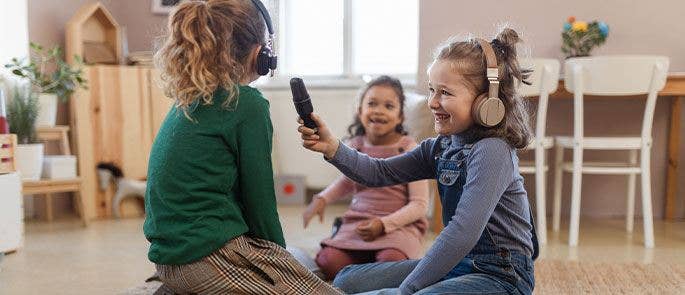
The flexibility of play-based learning supports an incremental approach in which children are given increasing levels of independence and more complex notions to deal with. For example, role play can easily begin as simple dress-up and getting children to think about what they need to wear to look like a specific person such as a nurse or firefighter. This can then be expanded to role playing games in which children mimic these roles, adapting their behaviour to echo the behaviour of others and learning how to put themselves into other people’s shoes.
Below you will find some examples of play-based learning activities that you can introduce in your setting. Each activity can be adapted to suit the different stages of play mentioned above. Play-based learning is most effective when it is child-led and allowing them the space to do so freely helps with their independence and confidence. Depending on the age of the children that you are working with they may need more instruction or guidance, however, where possible, children should be encouraged to engage with the activities independently and as they see fit.
Play-based learning activities that you can introduce into your classroom include:
- Role play and dressing up – Playing pretend supports a child’s emotional and social development as they learn to see things from a different perspective. They also learn how to adapt their communication according to the situation at hand.
- Arts and crafts – Activities such as drawing and painting help develop fine motor skills whilst encouraging children to creatively express themselves. Developing these fine motor skills will support children later on as they learn how to write.
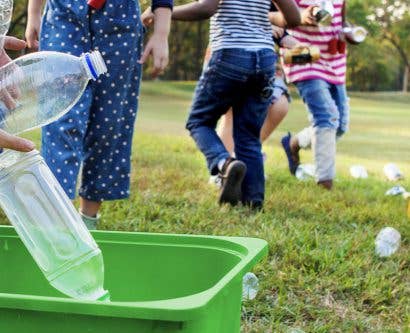
- Physical activities – Playing physical games supports the development of general motor skills such as spatial awareness and physical dexterity. Something as simple as playing catch can help with a child’s hand eye coordination. This can then be elevated by bringing in different elements such as saying the name of a different colour whenever they catch the ball.
- Music and singing – Music is proven to help develop a myriad of different skills. As children engage with music they learn motor skills by playing an instrument, sensory skills by listening to the different sounds and emotional skills by learning how music can help express emotions.
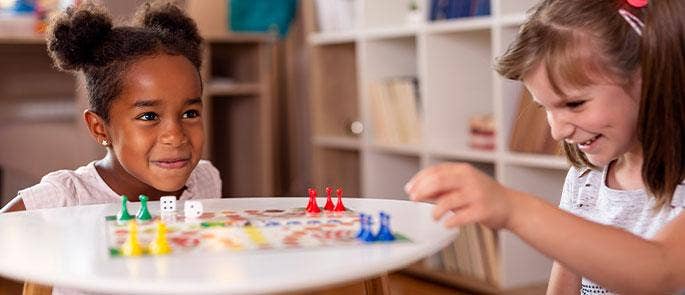
- Board games – Board games help to strengthen a child’s retention skills and ability to work with others. Children must learn and remember different rules and understand that they have to wait their turn. Over time, harder games can be introduced that may have more complex rules.
Play-based learning is a powerful tool that can support a child’s growth and development. It encourages creative thinking and helps to foster a positive attitude towards learning as discovery and curiosity are rooted in fun. Introducing play into the classroom helps children to feel motivated as they are engaging in activities that they enjoy. This supports active engagement whilst developing core skills that will help a child throughout their academic career and beyond.
Further Resources:
- CPD Courses for Teaching and Education
- Curiosity Approach in Early Years: Importance and Ideas
- Supporting Language Development in the Early Years


Post Author

You may also like