

What is Skin Gambling?: A Guide for Parents and Teachers
 5 min read
Gaming is a popular part of many children and young people’s lives, offering opportunities to have fun, socialise and compete with others. However, there are parts of the gaming world that parents and teachers may not be familiar with, including in-game purchases, virtual currencies and skin gambling. Understanding these features can help adults recognise potential risks and have informed conversations with children about staying safe online.

What is a Skin?
A skin is a graphic or cosmetic item that changes the appearance of a character, avatar, weapon or other item in a video game. Skins are usually purely aesthetic, meaning they don’t improve a character’s abilities or change how the game is played, only how the character looks.
Skins can be bought, won or sometimes earned through gameplay. Some skins are more expensive or valuable because they are rare or particularly popular.
Children may already be familiar with the idea of buying skins without realising that they are using real money to purchase virtual items. For example, a child might use V-Bucks to buy cosmetic items in Fortnite, or Robux to purchase items in Roblox. The virtual currency has no cash value itself, but it can be bought using real money.
What is Skin Gambling?
Skin gambling is when players use their skins or other virtual items to place bets on the outcome of a game, competition or event. For example, a player could stake a skin on the result of a football match during a game of FIFA. If they win the bet, they may receive their own skin back along with skins or other virtual items from other players.
Skin gambling can also take place through third-party websites that are separate from the game itself. These sites allow skins to be exchanged for virtual gambling credits to be used in casino-style games, such as roulette or coin-flip games. In some cases, skins or other virtual items can also be exchanged for money.
Children and young people may come across skin gambling in several ways. They might hear about it from friends, see other players discussing it or encounter content about it on video-sharing and livestreaming platforms, like YouTube or Twitch. Influencers and gaming content creators can expose young people to gambling-style activities by showing betting, big wins or valuable skins on their channels.

The Dangers of Skin Gambling
Skin gambling can expose children to risks that go beyond losing virtual items. Children may not fully understand the value of what they are staking or recognise that they are taking part in gambling. Some of the potential risks include:
- Financial loss – a child could lose skins as well as real money through gambling, particularly where virtual items can be exchanged or sold for cash.
- Gambling-related harm – gambling with skins can introduce children to gambling-style behaviours at a young age.
- Scams and fraud – children may encounter websites or individuals claiming to offer valuable skins, gambling opportunities or trades that are not genuine.
- Contact with strangers – third-party sites, gaming communities, livestreams and chat functions can bring children into contact with adults and other people they do not know.
- Exposure to inappropriate content – gambling websites and gaming communities may contain language, advertising or other content that is not suitable for children.
- Pressure to spend – children may feel pressure from friends or online communities to buy, trade or gamble with valuable skins.
- Difficulty understanding virtual value – virtual currencies and digital items can make it harder for children to recognise how much real money they are spending.
How to Keep Your Child Safe When Gaming Online
You don’t need to understand every game your child plays to help them stay safe online, but taking an interest in what they play, who they interact with and what they buy can make it easier to identify potential risks and talk about them with your child.
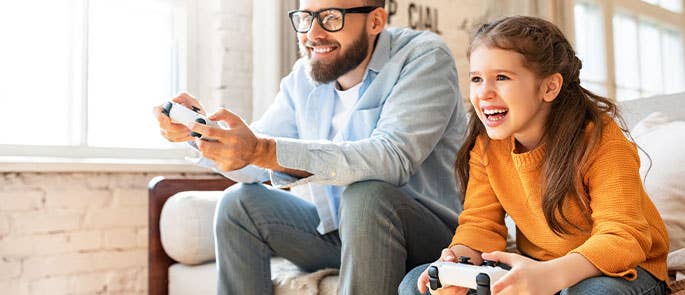
The following steps can help to keep children safe when gaming online:
- Talk about in-game purchases – explain that virtual currencies, such as V-Bucks and Robux, are bought with real money. Agree what your child can and cannot purchase and consider setting a spending limit.
- Check the game’s age rating – PEGI age ratings can help you decide whether a game is suitable for your child. They should be considered alongside the game’s content and features, rather than used as the only measure of suitability.
- Use parental controls – depending on the device and game, you may be able to restrict purchases, control who your child can communicate with, manage screen time and limit access to certain content.
- Check privacy and communication settings – find out whether your child can receive messages, voice chat or friend requests from people they don’t know. Encourage them not to share personal information with strangers.
- Teach children to recognise scams – make sure they know not to share passwords or account details, never click suspicious links and say no to offers that seem too good to be true.
- Talk about gambling – explain that betting involves risking something valuable in the hope of winning something else and that winning is never guaranteed. Make sure your child understands that gambling is different from simply playing a game.
- Encourage them to tell you when something feels wrong – children should know they can come to you if someone asks them for money, personal information, account details or inappropriate images, or if something they see or experience online makes them uncomfortable.
- Report concerns — use the game’s or platform’s reporting tools if your child encounters inappropriate content, suspicious behaviour or harmful interactions. Services covered by the Online Safety Act have duties to provide ways for users and affected people, including parents, to report certain harmful or illegal content.
- Check gaming and device settings regularly – games can change over time and may add new features, purchases, communication functions or content that your child may not have had access to previously.
What Should Teachers Know About Skin Gambling?
Teachers may not see skin gambling directly in school, but children may talk about skins, trading, betting or gaming-related money. Staff don’t need to be experts in particular games to respond appropriately.
If a child tells you they are gambling with skins, losing money or being pressured by another person online, take the concern seriously. Find out enough to understand what has happened and follow your school’s safeguarding and online safety procedures where appropriate.
Schools can also use wider online safety education to help children understand digital spending, scams, gambling, privacy and communicating with strangers. This can help children develop the knowledge and confidence they need to make safer choices when gaming and using other online services.
Gaming can be a positive part of childhood, but children can encounter risks that are not always obvious to parents and teachers. By taking an interest in the games children play, using appropriate parental controls and talking openly about spending, gambling and online interactions, adults can have informed conversations with children and support them to stay safe online.
Further Resources:
- Online Safety and Harms
- How to Explain Internet Safety to a Child
- Online Safety and Harms Quiz
- Screen Time for Children: Advice for Parents
- Parents’ Guides to Social Media Apps
- What is Doomscrolling?: A Guide for Parents and Teachers
- Why is Cyberbullying Harmful and What Actions Can You Take?



Post Author

You may also like