

The 4Rs of Safeguarding
 5 min read
Safeguarding is a key responsibility for anyone who works with children and young people. Whether you’re a teacher, teaching assistant, sports coach, healthcare professional, volunteer or support worker, you have a role to play in helping to keep children safe from harm. One useful way to understand your safeguarding responsibilities is through the 4Rs of Safeguarding: Recognise, Respond, Report and Record. In this article, we’ll explain each of the 4Rs of Safeguarding and how they can help you fulfil your duties and protect children from harm. You can also download our free poster.
What are the 4Rs of Safeguarding?
Safeguarding can involve complex situations, difficult decisions and a wide range of responsibilities. The 4Rs of Safeguarding provide a simple framework that helps ensure important safeguarding steps are not missed when concerns arise.
The 4Rs of Safeguarding are:
- Recognise
- Respond
- Report
- Record
The 4Rs framework reinforces the principle that safeguarding is everyone’s responsibility and that all staff should know how to identify concerns, take appropriate action and contribute to keeping children safe. Importantly, the 4Rs are not just relevant to Designated Safeguarding Leads (DSLs) or senior leaders – every adult working with children should understand how to apply them in practice.

Looking for More?
Explore our range of online Safeguarding Training Courses, including Designated Safeguarding Lead training, Online Safety and Harms, Child Mental Health, Safer Recruitment and more.
Recognise
The first step in safeguarding is recognising when a child may be experiencing abuse, neglect or another safeguarding concern. This can be challenging because concerns are not always obvious. Some children may display clear indicators of harm, while others may show subtle changes in behaviour, attendance, appearance or emotional wellbeing. In many cases, children may not disclose what is happening to them directly.
Professionals should understand the different forms of abuse and neglect and remain vigilant to potential warning signs. These may include physical injuries, emotional distress, behavioural changes, poor attendance, neglect indicators or signs of exploitation.
The recognition stage has become increasingly important as safeguarding risks continue to evolve. The latest Keeping Children Safe in Education (KCSIE) guidance also reinforces the need for staff to understand both offline and online risks that children may face. This includes recognising concerns relating to:
- Online abuse and exploitation.
- Harmful online challenges or communities.
- Exposure to inappropriate or extremist content.
- AI-generated content and manipulated media.
- Misogyny and harmful attitudes towards women and girls.
- Child-on-child abuse.
- Sexual harassment and sexual violence.
- Criminal and sexual exploitation.
- Radicalisation and extremism.

Professional curiosity also plays a key role in recognising safeguarding concerns. This means looking beyond surface explanations, noticing patterns and respectfully exploring whether there may be underlying issues affecting a child’s wellbeing.
Recognise: Best Practice Guidelines
Recognising safeguarding concerns requires vigilance and a child-centred approach. Best practice includes:
- Remaining alert to changes in behaviour, appearance or presentation.
- Understanding the signs and indicators of different forms of abuse and neglect.
- Being professionally curious when concerns arise.
- Considering patterns, rather than isolated incidents.
- Taking low-level concerns seriously.
- Staying informed about emerging safeguarding risks.
- Listening to children and taking their concerns seriously.
Respond
Recognising a concern is only the first step, and all staff must also know how to respond appropriately when concerns arise or when a child makes a disclosure. Responses can have a significant impact on whether a child feels supported and whether important safeguarding information is obtained and shared appropriately.
Sometimes concerns are obvious, such as witnessing an injury or receiving a direct disclosure from a child or young person. In other situations, concerns may develop gradually through observations, conversations or changes in behaviour.
When responding to a safeguarding concern, professionals should remain calm, supportive and focused on the child’s needs. If a child discloses abuse, it’s important to:
- Listen carefully.
- Remain calm and reassuring.
- Take what they say seriously.
- Allow them to speak in their own words.
- Avoid asking leading questions.
- Avoid making promises of confidentiality.
- Explain that information may need to be shared to keep them safe.

Staff should never investigate concerns themselves or attempt to determine whether abuse has definitely occurred. Their role is to recognise concerns, respond appropriately and ensure information is passed to the correct safeguarding professionals, such as the DSL.
Respond: Best Practice Guidelines
An appropriate response can help children feel heard, supported and protected. Staff should:
- Listen without judgement.
- Reassure the child that they have done the right thing by speaking up.
- Focus on the child’s immediate safety and wellbeing.
- Avoid expressing shock or disbelief.
- Follow safeguarding procedures without delay.
- Seek advice from safeguarding leads when required.
- Maintain a child-centred approach throughout.
Report
Safeguarding concerns can’t be acted upon if they’re not shared. Reporting concerns promptly ensures that appropriate action can be taken and that children receive the support and protection they need.
All staff should understand their organisation’s reporting procedures and know who to contact when concerns arise. In schools and colleges, safeguarding concerns will usually be reported to the Designated Safeguarding Lead (DSL) or a deputy DSL. The DSL will then assess the information and determine what action is required.
Depending on the circumstances, this may involve:
- Internal safeguarding support.
- Early help or family help interventions.
- Discussions with parents or carers.
- Referrals to children’s social care.
- Contact with the police.
- Consultation with other safeguarding agencies.

The latest Working Together to Safeguard Children guidance emphasises the importance of multi-agency safeguarding, noting that effective safeguarding relies on professionals sharing information appropriately and working together to support children and families.
There may also be situations where concerns relate to the behaviour of an adult working with children. In these cases, organisations should follow their allegations procedures and seek advice from the Local Authority Designated Officer (LADO) where appropriate.
Reporting concerns promptly helps ensure that emerging needs are identified early and that children receive the right support at the right time.
Report: Best Practice Guidelines
Strong safeguarding practice depends on timely reporting. Staff should:
- Report concerns as soon as possible.
- Follow organisational safeguarding procedures.
- Share concerns even if they seem minor in isolation.
- Escalate concerns if appropriate action is not taken.
- Seek guidance when unsure.
- Understand local referral pathways.
- Recognise when concerns may require multi-agency involvement.
Record
Accurate record keeping is an essential part of safeguarding. Records help build a clear picture of a child’s circumstances and can provide important evidence for safeguarding decisions. Safeguarding records should be completed as soon as possible after a concern arises, while details remain fresh and accurate.
Records should focus on factual information rather than assumptions or personal opinions. They should clearly document what was seen, heard or reported and identify any actions that have been taken.
Effective safeguarding records may include:
- Dates and times.
- Observations and concerns.
- The child’s own words where possible.
- Actions taken.
- Individuals informed.
- Outcomes or next steps.

Good record keeping also supports multi-agency working, as accurate information allows professionals to identify patterns, assess risk and make informed decisions about the support a child may need.
Poor record keeping, on the other hand, can result in important information being missed, delayed or misunderstood. For this reason, safeguarding records should always be clear, objective and completed in-line with organisational policies.
Record: Best Practice Guidelines
Well-kept safeguarding records help protect children and support effective decision-making. Staff should:
- Record information promptly.
- Be accurate and objective.
- Use the child’s own words where appropriate.
- Separate facts from opinions.
- Include dates, times and actions taken.
- Follow organisational recording procedures.
- Ensure records remain confidential and secure.
4Rs of Safeguarding Poster
The 4Rs of Safeguarding provide a simple framework that can help all staff remember the key actions they should take when concerns about a child arise. Whether you work in education, childcare, healthcare or another role involving children, understanding how to recognise concerns, respond appropriately, report information and record accurately is an essential part of safeguarding practice.
We’ve created the poster below as a quick reference guide that can be displayed in staff rooms, offices and training spaces to help keep the 4Rs of Safeguarding front of mind and support a strong safeguarding culture.
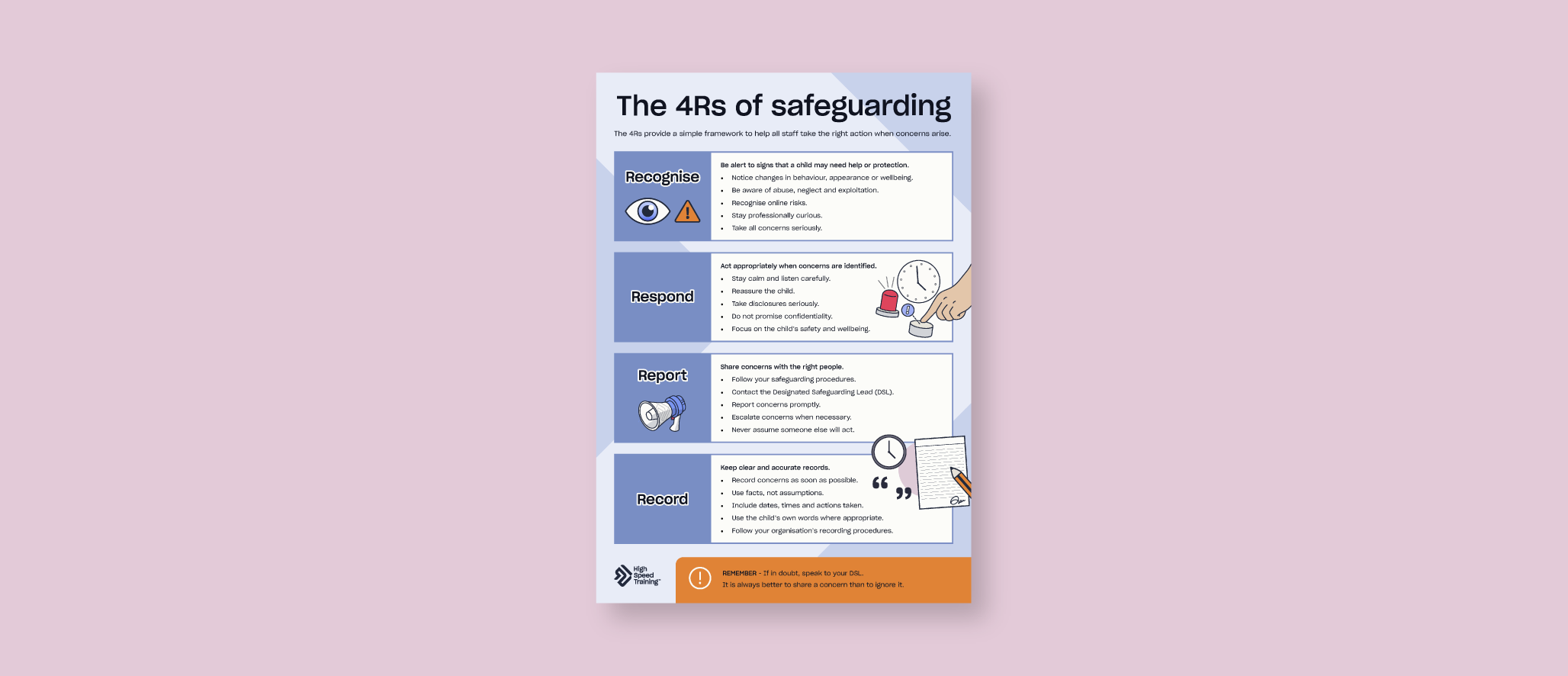
The 4Rs of Safeguarding provide a simple but effective framework for protecting children from harm. By recognising concerns, responding appropriately, reporting information promptly and recording accurately, professionals can help ensure that children receive the support and protection they need.
Further Resources:
- How to Create an Effective Culture of Safeguarding in Schools
- Guidance on the Levels of Need in Safeguarding
- Safeguarding Courses


Post Author

You may also like