What is an Electrical Fire?
 5 min read
Electrical fires can start suddenly and spread quickly, causing serious injury and damage to property. Knowing what causes electrical fires, how to recognise the warning signs and what to do if an electrical fire occurs can help keep you and others safe. In this article, we’ll explain what electrical fires are, the common causes of electrical fires, how to deal with electrical fires and the steps you can take to prevent them at home and in the workplace.
What is an Electrical Fire?
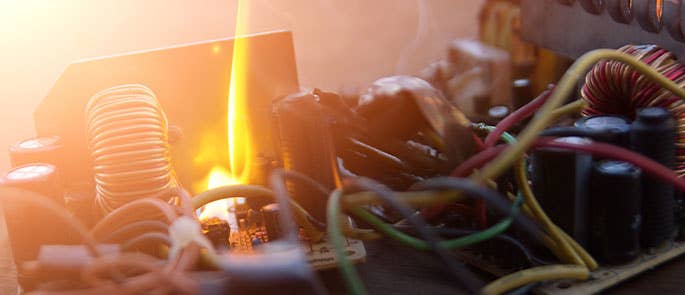
An electrical fire is a fire that starts because of an electrical fault or malfunction. It can occur when electrical equipment, appliances, wiring or installations overheat, spark or produce an electrical arc, igniting nearby combustible materials.
Electrical fires can start in a range of places, including plug sockets, fuse boxes, electrical appliances, extension leads and wiring hidden within walls. They can be particularly dangerous because the source of the fire may still be connected to a live electricity supply, creating a risk of electric shock as well as electrical burns and smoke inhalation.
What Class is an Electrical Fire?
In the UK, electrical fires do not have their own official fire classification. Instead, fires are classified according to the type of fuel involved:
- Class A: Fires involving solid materials such as wood, paper, textiles and some plastics.
- Class B: Fires involving flammable liquids such as petrol, oil and paint.
- Class C: Fires involving flammable gases such as propane, butane and methane.
- Class D: Fires involving combustible metals such as magnesium and aluminium.
- Class F: Fires involving cooking oils and fats, such as those used in deep-fat fryers.
Although electrical fires are sometimes referred to as Class C fires, this is incorrect under the UK classification system. In the United States Class C refers to fires involving energised electrical equipment however this is not the same in the UK.
In the UK, an electrical fire is generally described as a fire involving live electrical equipment. Once the electrical supply has been safely disconnected, the fire is then classified according to the material that is burning.
Causes of Electrical Fires
Electrical fires can happen for several reasons, but they are often caused by faulty equipment, damaged wiring or the incorrect use of electrical appliances. Overheating is a particular concern, as excessive heat can ignite surrounding materials.
It’s important to recognise the early warning signs of electrical problems, such as burning smells, buzzing or crackling noises, flickering lights, scorch marks around sockets and plugs that feel unusually hot. If you notice any of these signs, stop using the equipment immediately.
Some common causes of electrical fires include:
- Overloaded sockets and extension leads – plugging too many appliances into one socket or extension lead can cause overheating, particularly when several high-powered appliances are connected.
- Faulty or damaged wiring – old, loose or incorrectly installed wiring can overheat, spark or cause electrical arcing, potentially starting a fire.
- Damaged plugs, sockets and cables – frayed wires, loose connections, cracked plugs and damaged sockets can create electrical faults and increase the risk of overheating.
- Faulty electrical appliances – appliances with damaged components or internal faults can overheat and ignite, particularly if they are poorly maintained.
- Incorrectly fitted fuses – using the wrong fuse for an appliance can increase the risk of overheating and electrical faults.
- Poor electrical installations – electrical work that has not been carried out correctly by a competent person can create dangerous faults.
- Misused batteries and chargers – damaged batteries, incompatible chargers and incorrect charging practices can cause overheating and fires, particularly with lithium-ion batteries.
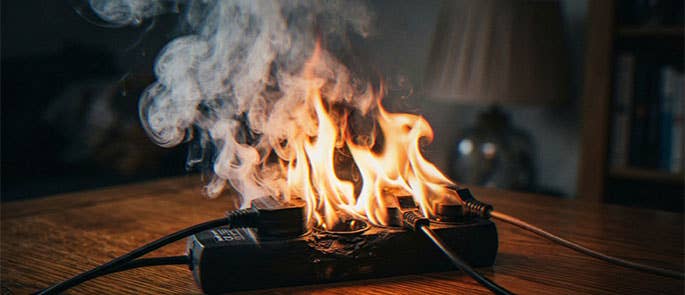
What to Do if There is an Electrical Fire
An electrical fire can be extremely dangerous, so your priority should always be to protect yourself and others. If a fire starts, raise the alarm, get everyone out of the building and call 999 to request the fire and rescue service.
If it’s safe to do so, and without putting yourself at risk, you can also:
- Switch off the electricity supply at the mains or fuse box, if you can reach it safely.
- Unplug the affected appliance if it’s safe to do so.
- Close doors behind you as you leave to help slow the spread of fire and smoke.
- Move to a safe location and do not re-enter the building until the fire and rescue service confirms it’s safe to do so.
You should only consider tackling a small fire if you have received appropriate training, have the correct firefighting equipment and can do so without putting yourself or others at risk. Never use water to tackle an electrical fire while the electricity supply is connected, as water conducts electricity and could cause a potentially fatal electric shock.
What is the Best Extinguisher to Use to Tackle an Electrical Fire?
A carbon dioxide (CO2) fire extinguisher is the most suitable option for tackling a small electrical fire. CO2 extinguishers are designed for use on fires involving electrical equipment and work by displacing oxygen around the fire, helping to extinguish the flames. They also don’t leave behind powder or foam residue, which could cause further damage to equipment.
A dry powder fire extinguisher can also be used on electrical fires. However, these are generally less suitable for indoor use because the powder can reduce visibility, cause breathing difficulties and contaminate equipment. They are also less effective at cooling the burning materials, meaning the fire could reignite.
Never use a water or foam extinguisher on live electrical equipment, as these can conduct electricity and create a risk of electric shock.
It’s also important to remember that fire extinguishers should only be used by people who have received suitable training. Our online Fire Extinguisher Training course helps you to identify the different types of fire extinguishers and how to use them safely.
If you are ever unsure which extinguisher to use or whether it’s safe to tackle a fire, evacuate the building and call 999.
How to Put Out an Electrical Fire Without an Extinguisher
If you don’t have access to a suitable fire extinguisher, do not attempt to tackle an electrical fire yourself. Your priority should be to evacuate the building and call 999.
If it’s safe to do so, switch off the electricity supply at the mains or unplug the affected appliance. However, never approach a fire in order to do this or touch the electrical equipment if you are unsure. Once the electricity has been disconnected, the risk of electric shock is reduced, but the fire may continue to burn.
Never use water to extinguish an electrical fire and never attempt to smother burning electrical equipment with a blanket or other material. Instead, leave the area, close doors behind you and wait for the fire and rescue service to arrive.
How to Prevent Electrical Fires
Electrical fires can be prevented if electrical equipment is used correctly, maintained properly and checked regularly. Whether at home or in the workplace, following good electrical safety practices can help reduce the risk of faults, overheating and fires. Use the following tips to help prevent electrical fires:
- Avoid overloading sockets – check the maximum current rating of sockets, adaptors and extension leads. Never plug one extension lead into another or connect too many high-powered appliances to the same supply.
- Check electrical equipment regularly – look for signs of damage, including frayed cables, cracked plugs, scorch marks and exposed wires. Stop using damaged equipment immediately.
- Use the correct fuses – make sure plugs contain the correct fuse for the appliance according to the manufacturer’s instructions.
- Buy electrical products from reputable suppliers – check that products meet relevant UK safety requirements and follow the manufacturer’s instructions for use.
- Keep electrical equipment away from water – avoid using electrical appliances with wet hands or placing plugs and sockets where they could come into contact with water.
- Avoid leaving appliances unattended – switch off appliances when they’re not in use, particularly those that are not designed to operate continuously. Avoid leaving high-risk appliances, such as washing machines and tumble dryers, running when you are asleep or away from home.
- Use and charge batteries safely – only use compatible chargers, avoid charging damaged batteries and follow the manufacturer’s charging and storage instructions.
- Arrange electrical inspections – have fixed electrical installations inspected by a qualified and competent electrician at appropriate intervals and whenever faults or damage are suspected.
- Keep electrical equipment clean and well maintained – follow manufacturer guidance on cleaning and servicing appliances to prevent dust and debris from contributing to overheating.
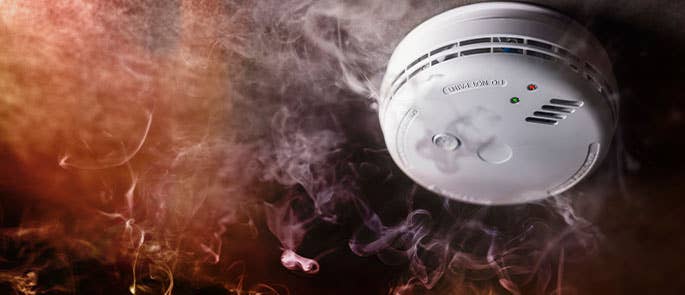
- Make sure smoke alarms are working – fit suitable smoke alarms and test them regularly so that you receive an early warning if a fire starts.
How to Carry Out a Fire Risk Assessment
In the workplace, a fire risk assessment is an important part of preventing electrical fires and keeping people safe. Under the Regulatory Reform (Fire Safety) Order 2005, the responsible person must carry out and regularly review a fire risk assessment of the premises. The assessment should identify potential fire hazards, consider who could be at risk and determine what measures are needed to prevent fires and protect people.
When assessing electrical fire risks, you should consider:
- The condition of electrical installations, appliances, plugs, sockets and cables.
- Whether sockets and extension leads are being overloaded.
- Whether electrical equipment is being used, maintained and stored correctly.
- Whether faulty or damaged equipment is being identified and removed from use.
- Whether suitable fire detection systems and firefighting equipment are available.
- Whether employees understand the fire evacuation procedures and know what to do if an electrical fire occurs.
The findings of the risk assessment should be recorded and appropriate control measures introduced to reduce identified risks. The assessment should also be reviewed regularly. Our online Fire Risk Assessment Training will help you understand how to identify fire hazards, evaluate risks and put suitable control measures in place.
Preventing electrical fires starts with using electrical equipment safely and recognising potential hazards. By following good safety practices and knowing what to do in an emergency, you can help reduce the risk of electrical fires and protect people and property at home and in the workplace.
Further Resources:
- Fire Safety Awareness Training
- Fire Warden (Fire Marshal) Training
- A Guide to Fire Blankets
- Fire Safety Policy: Free Template
- Fire Safety Rules and Regulations in the Workplace
- What Does PASS Stand For? Fire Extinguisher Use and Safety
- Fire Safety Quiz
- Fire Extinguisher Quiz
- Understanding the Different Types and Uses of Fire Extinguishers
- Top 10 Fire Safety Tips In The Workplace


Post Author

You may also like