
Case Study: GOAT
 6 min read
GOAT is a unique bar experience in Nantwich with a team of sports lovers, nostalgia fanatics, and culinary innovators who believe in creating a unique bar experience rooted in the charm of the past and the comfort of today. GOAT is – in their own words – a destination for memorable nights, golden-age aesthetics, and delicious bites.

We interviewed some of GOAT’s key staff members to understand why training is so important to them and how High Speed Training’s courses have been utilised to upskill their team and ensure the safety of both their staff and customers.
Jono Yates, Owner of GOAT
My career in hospitality so far started when I was very young. I worked at a bar, and then I got into media, social media, and digital marketing. My passion has always been food. So I started my own social media account called Only Scrans in 2018, and that blew up in lockdown. I’ve now got over 1.5 million followers on socials. But I think for me, I want my own brick-and-mortar place where people can come in, enjoy the food, enjoy the vibe, and just have a great time. And I love football, I love the whole culture around it and sport. So GOAT made sense to touch all my passion points in one.

Staff Retention and turnover have always been a concern for hospitality – how do you manage this when it comes to training?
When you’re starting from scratch with 36 new members of staff who haven’t even met each other, and they’re expected to all work together on night one, training is key. There are some slightly less experienced, younger members of staff in their first bar job. So training is so, so important to this entire experience. And without it we would be in a bit of a mess.
How did you find the legal requirements when you started the new business?
So Paul, our head chef, is incredibly experienced in all of that side of things; he’s not just an incredible chef, he also brings with him a wealth of experience within the food industry, with great experience of everything that you need to comply with, like legal standards, which I didn’t have a clue about. I thought I could just get in there and be like: ‘Right, what we cooking?’ And it’s not like that. You’ve got to have labels on everything, and everything has got to be earmarked when you open it, and the allergens, I didn’t realise how many people were allergic to stuff until I started my own place. That training element of it can’t be underestimated.
Does online training help in hospitality?
I think with the high level of staff turnover in the hospitality trade, online training is 100% the way forward. For someone who has never worked in a bar before and never experienced that, I think it is quite intimidating. So if you know a little bit more about how to handle certain situations with online training, that’s 100% positive for me.
Do you think training helps with staff development and upskilling?
We want people to come in here at a certain level, and then we want to train them, and then we want to get them to a level where they’re the best in the business. But you can only really show your personality if you know what you’re doing, if what you’re doing becomes second nature, and then you can start not concentrating on every single thing. You can start flourishing a little bit more and come out of your shell a little bit. And I think that’s super important. And again, training for that is just massively, massively important.
Sam Hulme, Owner of GOAT
How important is training?
Training is essential. We can’t be here all the time. Having that training in place, which obviously sets the benchmarks for how we want things to be, is essential.
Does online training help in hospitality?
The fact that it’s online makes it a lot easier because they can do it in their own time. It means the staff can do it on the computer that we’ve got here during quieter periods as well.
Lou, General Manager (GM) at GOAT
My career in hospitality started when I was 18. I’ve seen every side of the business, from pot wash, to bar, team leader, to getting keys for the first time, to then becoming a GM myself. So I’ve seen every different aspect of the business.
When it comes to managing a team in a hospitality business, what do you find is the most challenging?
I think the most challenging aspect is making sure everyone’s on the same page. Especially with the pace that we go at. No day is the same. Everything changes continuously, from laws and regulations to the customers and your business. So it’s all about keeping up with that, being able to act and react to that kind of stuff and making sure our team are all on the same page.
You mentioned the legal requirements and regulations around food hygiene. Did you find any challenges?
The main challenges around legality and food hygiene are making sure we’re up to date and making sure the staff are properly trained. Keeping up with the practices, systems of work, and making sure we’re ticking all the boxes while still providing a good service.
Which courses have you taken with High Speed training, and what was your experience with them?
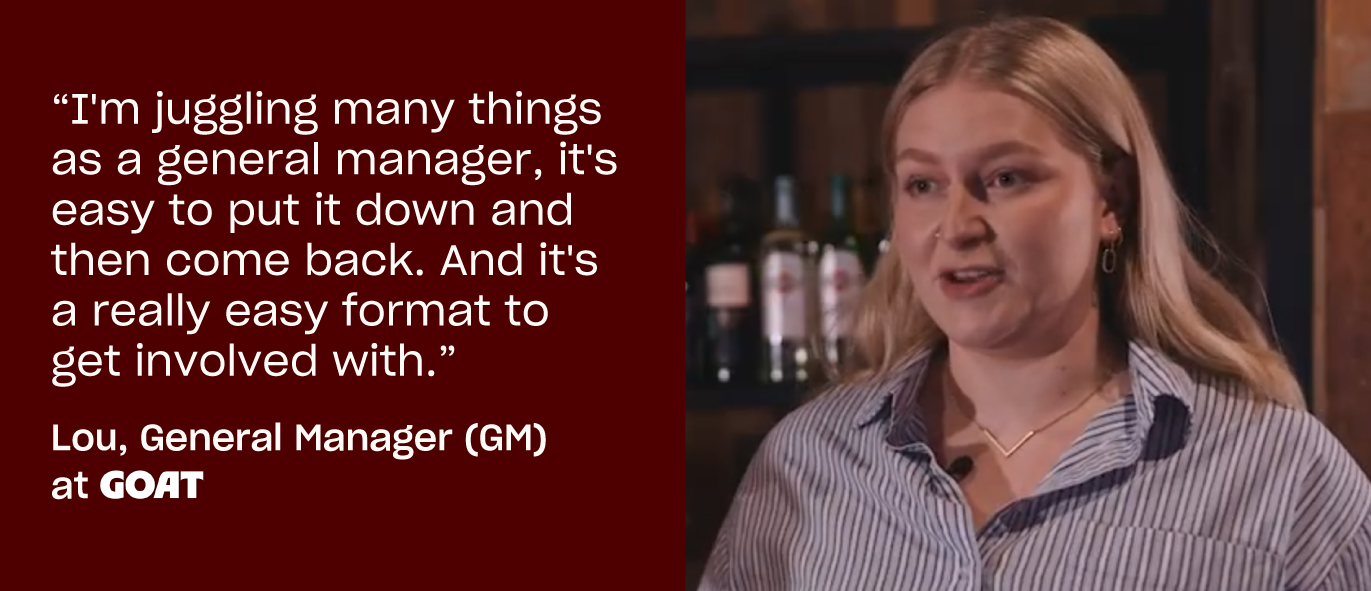
I’ve taken four of the courses. The First Aid, COSHH, Health and Safety Management, and Allergen Awareness. I found them really easy to use. I can go away and come back to them. I’m juggling many things as a general manager, it’s easy to put it down and then come back. And it’s a really easy format to get involved with.
Did you find that your staff had the same thoughts on our training?
It’s great to just be able to pick it up and put it down when you need. If they’re struggling, they can ask for reassurance with the training. We can go over projects because you can revisit modules, which was actually really helpful for them. And then obviously we have our own personal systems of practice which correlate with legislation.
What steps do you take to keep your customers and your staff safe?
We have really good communication here, proper training. So it’s about due diligence, making sure we have eyes everywhere. If something’s wrong, we immediately fix it.
How important is training to you and your team for running a successful business?
Training is really important for running a successful business. I think it gives staff autonomy to make their own decisions and means that we can run a business without having to micromanage everything, which means they can bring their best selves to work. When training can be done anywhere, at any time, it’s really important with rotas and shift patterns. But in the industry, like I mentioned earlier, we’re not all in at the same time, so making sure everyone is on the same page at any given point is really important to us. That’s great.
How do you identify the areas that need training?
Mainly in the interview stage, we can see where they’re at. And then throughout this we have a checklist of basic training that needs to be met before they can work a shift. And then from there, we can just highlight areas that maybe they need a little brush up on or a bit weaker.
Would you recommend High Speed Training?
I would recommend High Speed Training. You can put it down and come back to it any time you fancy, it’s got great depth within the courses, it goes through legislation, legality and best practices and how to put that into your business, which I think is really important in training.
Paul Wilson, Head Chef at GOAT

What’s the most challenging thing about working in the kitchen?
I think the most challenging part of working in the kitchen can be across training time management. Make sure you’ve got things right on time, meetings, making sure that you meet company protocols and standards and policies, and then the added stress of creating new dishes or creating something that’s going to be memorable.
What courses have you taken with High Speed Training?
I’ve taken the Food Safety Course and the Health and Safety Course with High Speed Training. I found them informative, easy to use. They were really well managed. Many gave us the knowledge and the tools to be able to progress in kitchens of busy places.
What role does training play in keeping both your staff and customers safe?
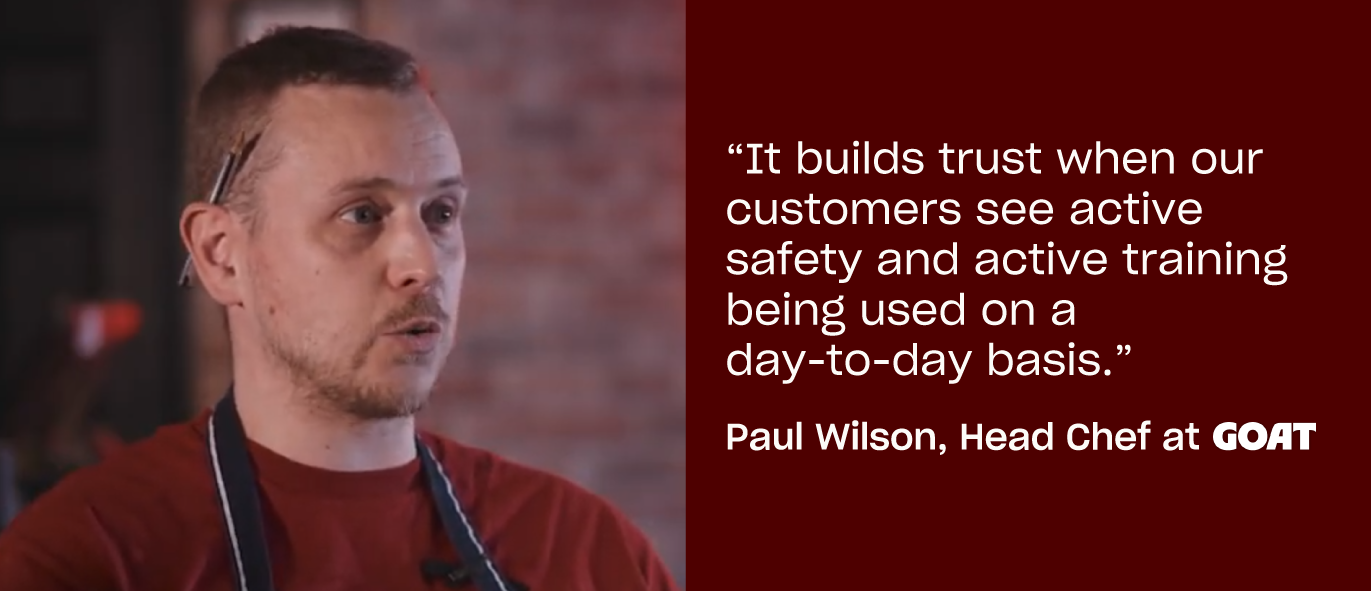
So working in a busy kitchen, the training gives us the knowledge and the skills so we can assess and identify hazards, risk assessment. We can create a safer working environment and promote a safer customer environment as well. And it builds trust when our customers see active safety and active training being used on a day-to-day basis.
How important is it that the training can be flexible and done anywhere, any time?
The flexibility of the training is great within a team and within catering and hospitality. People can’t just stop within a kitchen and go, I’m just going to do training. So to be able to do it on shift, after shift, in the car, on the phone, wherever they are, really helps to be able to get the job and the training done.
How do you identify areas that need training within your team?
It’s more on a personal level. So we work together, we train together. But then if we feel someone is lacking or someone new comes in and just needs a little bit more training, we can put them on the right course and build them from that.
How important is the role of training in staff development?
If people aren’t developing, they can become stagnant and left out of the loop. And you can miss the protocols and the new legalities that are constantly changing within the industry. The training helps massively because it keeps us up to date with all the policies, procedures, and legalities. It keeps us moving forward. It keeps us right on the cutting edge of what needs to be done to keep us legal as a team and to be able to promote a safer awareness for the customers.
What would you say to someone who was looking to do some training with us, why they should do our courses?
If someone were looking to train, I’d recommend High Speed Training. It’s easy to access, easy to use, it’s informative. It gives you all the tools, all the knowledge. It gives you everything they need in one place so people can sit down, take the time and just do it at their own leisure with the flexibility. So they can get the knowledge, the understanding and the practice involved to help them progress with their career.
Further Resources:
- Customer Success Stories
- The Consequences of a Lack of Training in the Workplace
- Online Training Courses


Post Author

You may also like