

A Guide to Job References and How to Use Them
 5 min read
When applying for a new job role, there’s a good chance an employer will ask for references or a reference list at some stage of the recruitment process. References help employers verify your experience, skills and suitability for a position before making a hiring decision. Whether you’re applying for your first job, changing careers or moving into a more senior role, this article will help you understand what references are and how to prepare them to help you make a positive impression on potential employers. You’ll also find a job reference template that can help you organise your information clearly.

What is a Job Reference?
Job references are the information provided by someone about your employment history, qualifications, skills and character to a future employer. Employers often contact referees during the recruitment process to confirm details you have provided on your application or CV.
Understanding what references are is important because they play a key role in helping employers make informed hiring decisions. A reference can provide independent confirmation that you have the right experience, knowledge and personal qualities needed for a role.
Referees are commonly used to:
- Confirm your employment history and previous job titles.
- Verify the dates you worked for previous employers.
- Support information included on your CV or application form.
- Provide insight into your skills and work performance.
- Comment on your reliability, professionalism and attitude.
- Help employers assess whether you are a suitable fit for the organisation.
In the UK, employers must follow data protection laws when handling personal information provided through references. Furthermore, candidates should always ensure they have permission from their referees before sharing their contact details.
Types of Job References
There are several types of job references that employers may accept. The most appropriate option will depend on your work history, career level and the requirements of the role. Understanding the different types of job references can help you choose the most suitable people to support your application and present a complete picture of your experience and abilities. Types of job references include:
Employment References
Employment references are the most common type of reference. They usually come from a current or former employer, such as a manager, supervisor or HR department. These references can confirm your employment details and provide information about your performance at work.
Academic References
Academic references are often used by students, graduates or people applying for training programmes. They are usually provided by teachers, tutors, lecturers or academic supervisors who can comment on your achievements and abilities.
Character References
Character references focus on your personal qualities rather than your work experience. They may come from someone who knows you well, such as a community leader, mentor or volunteer coordinator. Character references are often useful for people with limited employment history.
Professional References
Professional references come from individuals who have worked with you in a professional capacity but may not have been your direct employer. Examples include clients, contractors, colleagues or business partners who can speak about your skills and professionalism.
Volunteer References
If you have volunteered with a charity, community organisation or local group, a volunteer supervisor may be able to provide a reference. This can be particularly valuable if you are entering the workforce for the first time or changing careers.

How Important are Job References?
Many applicants wonder how important references are for jobs and whether they can influence hiring decisions. While references are rarely the only factor considered by employers, they often provide an important final check before a job offer is made.
References can help employers feel confident that the information provided by a candidate is accurate. They can also offer additional insight into how someone performs in a professional environment. For some positions, particularly those involving vulnerable people, financial responsibilities or security requirements, references often form a more significant part of the recruitment process.
Some of the main benefits of providing strong references include:
- Supporting the information included on your CV and application.
- Demonstrating credibility and professionalism.
- Highlighting strengths that may not be fully covered during an interview.
- Building trust with potential employers.
- Reducing concerns about a candidate’s suitability for a role.
- Helping employers make informed recruitment decisions.
Examples of Job References
Choosing suitable references can strengthen your application and make it easier for employers to verify your experience. If you’re unsure who to put as a referee on a job application, the answer will usually depend on your employment history and the type of role you are applying for.
The examples of job referees below are people who can provide employers with valuable information about your work ethic, experience and abilities. Where possible, choose referees who know your work well and can provide relevant information about your skills.
Some common examples of job referees include:
- A current manager or supervisor.
- A previous manager or supervisor.
- A member of your employer’s HR team.
- A former colleague who worked closely with you.
- A client or customer you regularly supported.
- A business partner or contractor.
- A university lecturer or tutor.
- A teacher or school representative.
- A volunteer coordinator.
- A mentor or professional adviser.

How to Write a Reference List for a Job
Creating a clear and professional reference list can save time during the recruitment process. Knowing how to write a reference list for a job ensures employers can easily contact the right people when needed.
Follow these steps when preparing your reference list:
- Choose appropriate referees – select people who know your work, education or relevant experience well. Make sure they are suitable for the role you are applying for.
- Ask for permission – always contact your chosen referees before including them on your list. This gives them the opportunity to prepare and ensures they are happy to provide a reference.
- Include their full details – for each referee , provide:
- Full name.
- Job title.
- Company or organisation name.
- Professional relationship to you.
- Telephone number.
- Email address.
- Use a professional format – present your referees on a separate document using the same formatting as your CV. This creates a consistent and professional appearance.
- Keep information up to date – review your referee list regularly to ensure all contact details remain accurate.
An example of how to write a reference would be as follows:
Jane Smith
Operations Manager
ABC Company Ltd
Line Manager (2022-2026)
01234 567890
jane.smith@example.co.uk
Free Job Reference Template
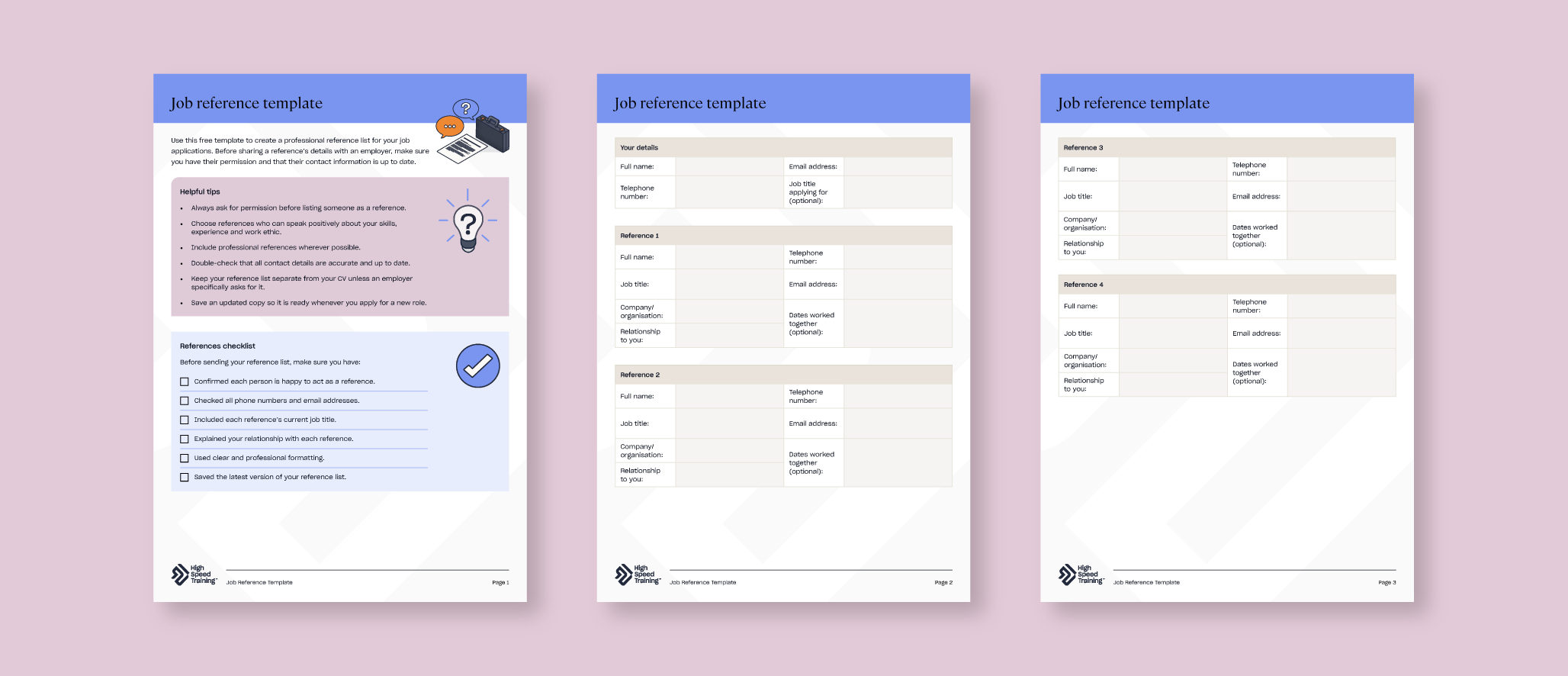
Preparing references doesn’t need to be complicated. Using a job reference template can help you organise your information clearly and ensure you include all the details employers need. Our free job reference template below provides a simple structure that can be customised for different job applications and career stages.
Download our free job reference template using the link below:
References remain an important part of the hiring process across many industries in the UK. Knowing who to choose as a referee and how to present their details can make the recruitment process smoother for both you and potential employers. Not only does it help strengthen your application, but it also helps you approach job applications with confidence.
Further Resources:
- Business Essentials Training Courses
- How to Write Your First CV: Guidance and Top Tips
- How to Use the STAR Method
- How to Stand Out in a Virtual Interview: Preparation Tips
- 10 Employability Skills Employers Look For
- How to Find the Right Career for Me
- Transferable Skills: What Are They and Why Are They Important?




Post Author

You may also like