
Case Study: The Savvy Baker
 5 min read
The Savvy Baker kicked off during lockdown. Owner Savannah started whipping up delicious brownies and delivering them to the doorsteps of friends and family. What started in her tiny flat quickly turned into her own bakery and three cafés across Leeds, Chesterfield, and York, selling delicious brownies, cookies, matcha, and coffee.
We interviewed some key staff members at The Savvy Baker to see how High Speed Training courses have helped them keep staff, customers, and consumers safe since the very start.
Savannah Roquaa, Owner of The Savvy Baker
I currently own the bakery and the [Savvy Baker] cafes, but growing up, I’ve always been around restaurants. I worked in bars, pubs, and restaurants for literally my whole life. I started baking for the first time, and I realised that that was quite a big passion of mine. My favourite thing about working in hospitality and owning the Savvy Baker in general is people’s faces when they see or taste one of our amazing cookies or brownies. We’ve got so much for them to choose from, and I just love watching someone open a box, have a first bite and just really, really enjoy it and do a little happy food dance!

What are the main challenges that you faced when it came to setting up the Savvy Baker?
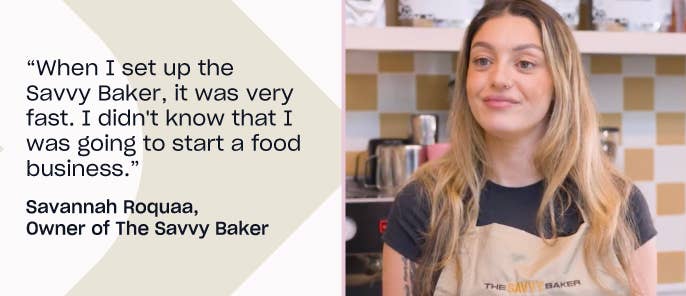
When I set up the Savvy Baker, it was very fast. I didn’t know that I was going to start a food business. So I kind of had to learn as I was going along. There were so many different obstacles, from hiring staff to getting the right ingredients, learning along the way on how to manage a food business, and how to make sure that everything is compliant for that as well. I don’t think a lot of people understand how much goes into the behind-the-scenes of a food business just to make sure that everything comes out perfectly and is to a really high standard, especially with hygiene and things like that.
What’s the role of training in moving from small-scale to manufacturing?
I think moving from my little kitchen at home to having a manufacturing warehouse, training really, really helps a lot with that. It takes a lot of weight off me being able to physically teach all of the staff all of the procedures. It allows me to sort of take a step back. I can massively trust them now, knowing that they have done the correct training and that they are completely compliant with everything.
Do you find any challenges with changing regulations in hospitality?
It’s really important to stay up to date with all regulations and changes. It is hard when things are changing constantly, but I do think that it can be made quite easy, especially with training programmes and things that are quite easy to access, just to be able to get the full team on with that. A lot of the time it is just small tweaks and it is hard sometimes to reintegrate that into your brain, especially when you’re so used doing something one way. But I do think that things change for a reason. And once the team are comfortable with that, it works itself out.
How important would you say that training is when it comes to running a successful hospitality business?
It’s super important to provide training for all of our staff, especially things like Food Hygiene, Allergen Training, Fire Safety, and Health and Safety. Just because in this environment, you’re not only working with your team, you’re also working with customers. So when you’re customer-facing, it’s so important to make sure that everything is really safe, hygiene is on point, all of your staff are up to date with allergen procedures and how to deal with allergens in general. I think that anyone who lacks this training shouldn’t be working in the industry anyway. So it’s a huge thing to be able to have easy access to training regardless of what sector you’re in.
As a manager of training in your business, how would you identify areas that need training?
Whenever we have a new starter in our business, we always put them on a Food Hygiene and Safety and Food Allergen Awareness Training, and we then assess them. We have a probationary period, we watch the member of staff, and if we do find that there’s any areas of improvement or places where they need extra help with, we will always add them to another training course or maybe something of a higher level.
How have you found High Speed Training’s courses?
I first actually took a High Speed Training course in 2020. That was my first one when I started the bakery, and it was actually in lockdown. We couldn’t go out and do things, and I found it really easy to hop onto the website and learn a lot of things within the industry, which I maybe didn’t know before. It’s really great because we also have EHO inspections and things like that, being up to date and knowing exactly what I need to know for those inspections is massively important. So it’s just super convenient to be able to hop online and go through the training and be able to refresh my memory on them as well.

Free Resource Pack
If you want to get prepared for EHO visits, our free Food Hygiene Rating Scheme Resource Pack will provide you with the knowledge to attain and maintain a good hygiene rating. It includes detailed information on the Food Hygiene Rating Scheme scoring system as well as guidance on what a visiting EHO will be looking out for.
How do you manage legal requirements about food safety, hygiene and allergens?
There’s different levels to food hygiene and food safety. I think that when you work in a cafe, a Level 1 or Level 2 for most of the staff for their food hygiene is sufficient, they’re not physically making any of the food. But then, when you get into the catering side of things or the manufacturing side, you do need a higher level for that. You’re handling the food from raw materials, then creating the finished product. So when we have the inspections with EHO, they are much stricter in that environment. You need to have all your paperwork up to date, all of the staff need to be on the highest level of training in those environments to make sure that all the food is perfectly safe for the customers so that when they get brought over to the other staff in the cafes who are just serving them, they’re confident and know that those brownies have been made to the highest standard.
How important is it to ensure your team has the knowledge to keep themselves and your customers safe and happy?
It’s super important for the staff to always have knowledge on food safety in general. It is probably the biggest part of owning a hospitality business. So they need to be up to date, they need to know how to answer questions and they need to be confident that all the products that we serve are safe for customers to consume.
Staff Retention and turnover have always been a concern for hospitality – how do you manage this when it comes to training?
One of the first things that we do when we get a new starter is make sure that they’re up to date with all their training, regardless of if they’ve had training elsewhere. We will always put them on the same course that everyone else has been on, just to make sure that they are up to date with all of their current procedures. Like I said before, the compliance changes quite a lot, so it’s really important that these new starters are one hundred per cent up to date with all of the current guidelines.
Would you recommend the High Speed Training courses and what would you say to someone considering using High Speed Training?
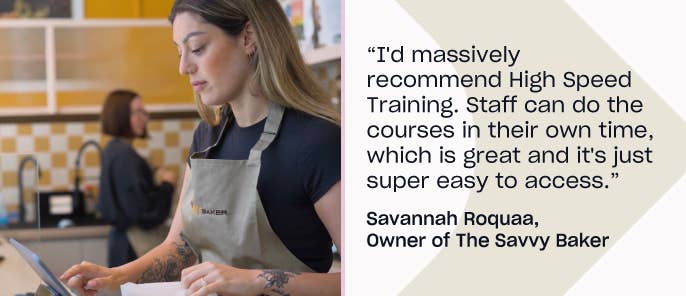
I’d massively recommend High Speed Training. I think the courses are super easy to use. It’s really easy to delegate and pass them on to the staff. They can do them in their own time, which is great and it’s just super easy to access. There are loads of really great resources on the website. I would definitely recommend them for any sector and any training within any industry.
Ayva McNamara, Barista at The Savvy Baker Cafe
I’ve worked in hospitality for six years now. My favourite part is speaking to all of our lovely customers and making their day as good as possible.
When it comes to working in a team in a hospitality business, what do you find the most rewarding?
The most rewarding thing is probably when we see regulars come back time and time again. They know our faces, they know our names, they know how we make their drinks, they know who they want to make their drinks, if they have that preference.
Which courses have you taken with High Speed Training, and what was your experience with them?
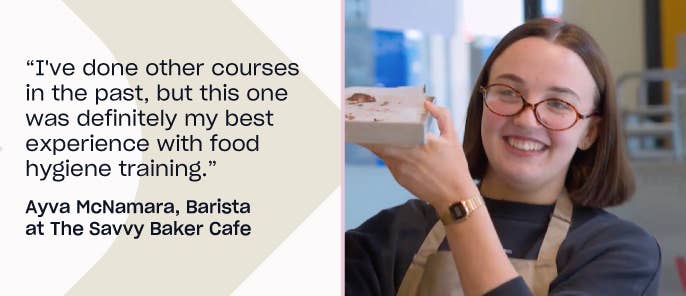
I’ve taken the Food Hygiene and Safety Training. It was such a convenient way to learn. I’ve done other courses in the past, but this one was definitely my best experience with food hygiene training. I just found it so convenient to be able to do it on my phone and be able to learn on the go, and on my breaks. Wherever I was, I’d just be able to whip my phone out and do some more learning, and it was great.
What steps do you take to keep your customers safe whilst working in such a fast-paced environment?
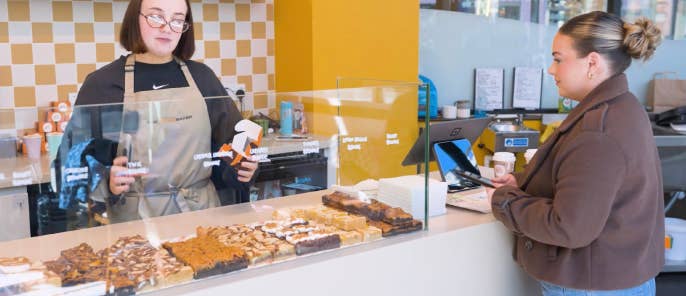
Because we work with so many different allergens, we do have nut brownies and blondies out a lot, and some of the cookies contain nuts as well, and obviously, a lot of things contain gluten. We just need to make sure that we’re doing the best that we can to prevent any cross-contamination, especially with the nut products. We have separate nut tongs that we use for our safety and for the customer’s safety. Of course, we don’t want any injuries or accidents to happen, and we do as much as we can to prevent those.
Jonathan Shaw, Baker at The Savvy Baker
I’ve worked in hospitality for over 10 years in the catering and foodservice industry, either from the front of house, working in customer service, starting as a barista, and then doing front of house supervisor roles in a restaurant. And then I got stuck in working in a bakery. I’ve been here in baking for 7 years.
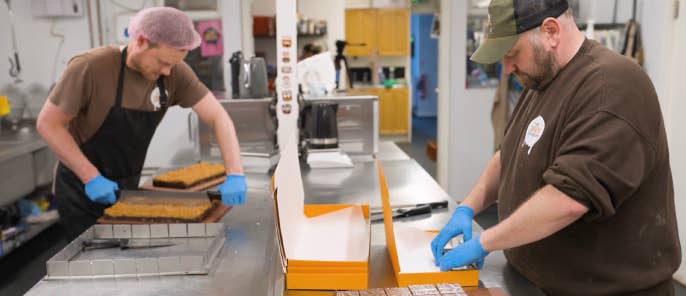
When it comes to working in a team in a big and busy kitchen, what do you find the most challenging and most rewarding?
I would say challenging is when you’re having to adapt to busy days. Obviously, things chop and change all the time. The most rewarding is working with the customers, working with the products – it’s great receiving feedback from the customers and seeing how happy they are.
Which courses have you taken with High Speed Training, and what was your experience with them?
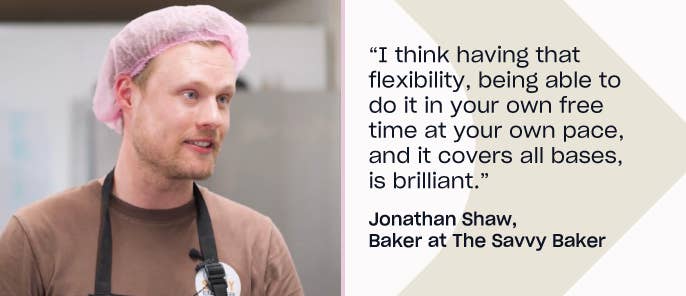
I’ve done the Level 2 Food Hygiene and Safety for Catering. I’ve done that twice. I did that in my previous work as well. I’ve also done Food Allergen Awareness. I think they’re brilliant. I think having that flexibility, being able to do it in your own free time at your own pace, and it covers all bases, is brilliant.
What would you say if someone were thinking about taking the High Speed Training courses?
Yeah, absolutely, I would recommend High Speed Training. It gives you so much variety and being able to study in your own time, and also, if you want to upskill and pick up new courses, it has that whole range for you to do so.
How do you keep the food environment safe and you know how do you keep customers safe?
Making sure we’ve all done the food hygiene course and make sure we are confident in what we are doing, and making sure everything’s clean, wiped down, and making sure it’s a safe working environment for us all. That should show in our products through consistency and through the happiness of our customers.
What do you do to manage allergens when you’re working in a busy kitchen like this?
When working in the bakery and dealing with allergens, we need to make sure all surfaces are sanitised, chopping boards and knives are changed and make sure there’s no cross contamination whatsoever. When we’re working safely it’s safer for all the customers.
Further Resources:
- Customer Success Stories
- The Consequences of a Lack of Training in the Workplace
- Online Training Courses
- Case Study: GOAT


Post Author

You may also like