
Food Labelling: Why Labels Matter and What’s Required
 5 min read
Food labelling provides consumers with important information about the food they are buying, including what it contains, how much there is, how it should be stored and when it should be used. Food businesses must make sure their labels provide the legally required information, are accurate and are not misleading. In this article, we’ll look at why food labelling is important, the main food labelling regulations that apply in the UK and the information you may need to include on food labels.
Why is Food Labelling Important?
Food labels are an important part of food safety and consumer protection. They help people make informed choices about the food they buy and eat, while also helping food businesses meet their legal responsibilities. Food labelling is important for:
Protecting consumer health and safety
Food labels provide information that can help consumers avoid foods that could cause them harm. This is particularly important for people with food allergies or intolerances, who need accurate information about ingredients and allergens. Labels can also provide important storage, preparation and cooking instructions, all of which help consumers handle food safely and reduce the risk of foodborne illness.
Supporting informed choices
Consumers may use food labels to compare products, check ingredients or choose foods that meet their dietary requirements or preferences. Accurate labelling can help people understand what they are buying, including its ingredients, quantity, nutritional content and country of origin where this information is required. Food information such as this must be clear, easy to read and easy to understand. It must also not be misleading.
Meeting legal and business requirements
Food businesses have a legal responsibility to provide certain information about their products. The exact requirements depend on factors such as whether food is prepacked, sold loose or prepacked for direct sale. Failing to provide the required information, or providing information that is inaccurate or misleading, can result in enforcement action.
Supporting traceability
Food labelling can support traceability by helping businesses identify products and batches as they move through the food supply chain. Traceability records allow food businesses to identify where food has come from and where it has been supplied, which can help with withdrawals and recalls if a food safety problem is identified.
Communicating shelf-life
Date labels tell consumers how long food can be kept (the shelf life) and help businesses manage food safely. A use-by date found on a food label is about food safety and is used for foods that may become unsafe to eat after a certain point. Food should not be eaten, sold or donated after its use-by date. A best before date is mainly about quality. Food may still be safe to eat after this date if it has been stored correctly and remains suitable to eat.

Want to Learn More?
Our Food Labelling Regulations Course has been designed by food industry experts to help food businesses understand how to label their food products legally and correctly. It is suitable for all food businesses who package food for sale directly to the consumer.
Food Labelling Regulations
Food labelling in the UK is covered by a range of laws and regulations and the rules vary depending on the type of food and how it is sold. In England, Scotland and Wales, food labelling is mainly covered by retained EU food information law, alongside national regulations. In Northern Ireland, EU food labelling rules continue to apply. Businesses should make sure they understand the specific labelling requirements for the food they supply and how they sell it.
Natasha’s Law
Natasha’s Law came into force across the UK on 1st October 2021. It introduced specific labelling requirements for food that is prepacked for direct sale (PPDS).
PPDS food is generally food that is packaged on the same premises where it’s sold and is intended to be sold to consumers in that packaging. This can include products such as sandwiches, salads and baked goods packaged before being selected by the customer.
PPDS food must be labelled with:
- The name of the food.
- A full list of ingredients.
- Any of the 14 named allergens that are present, emphasised within the ingredients list.
The 14 Named Allergens
Food businesses must provide information about the 14 allergens that are recognised in UK food information legislation whenever they are used as ingredients. The 14 named allergens are:
- Celery.
- Cereals containing gluten, such as wheat, rye, barley and oats.
- Crustaceans, such as prawns, crabs and lobsters.
- Eggs.
- Fish.
- Lupin.
- Milk.
- Molluscs, such as mussels, oysters and squid.
- Mustard.
- Peanuts.
- Sesame.
- Soya.
- Sulphur dioxide and sulphites.
- Tree nuts, such as almonds, hazelnuts, walnuts, cashews and pistachios.
For prepacked food, allergens must be clearly emphasised within the ingredients list, such as by using bold font. Allergen information is also required for food that is sold loose or served in places such as restaurants, cafés and takeaways, although the way this information must be provided differs from prepacked food labelling.
Online and Food Delivery Labelling
Food businesses selling food online, on social media, by phone or through any other forms of distance selling are also covered by the same food labelling regulations.
For most foods, the mandatory information must be available to consumers before they complete their purchase, with the required information also provided when the food is delivered. Allergen information must be available before the food is ordered and when it is delivered. This means businesses using their own websites or third-party food delivery platforms need to make sure their product descriptions, menus and allergen information are accurate and kept up to date.

What Information is Required on Food Labels?
The exact information required on a food label depends on the type of food and how it is sold. For most prepacked foods, however, businesses should use the following as a basic checklist. Not every food needs every item on this list and there are exemptions and additional requirements for certain products. Businesses should check the rules that apply to their specific food.
Labels must be clear, legible, permanent and easy to understand. Mandatory information on most prepacked foods must meet minimum text size requirements, with a minimum x-height of 1.2mm or 0.9mm where the largest surface area of the packaging is less than 80cm².
Before putting a prepacked food product on the market, check that the label contains all the information that applies to that product. This includes:
- Name of the food – the name or description must accurately identify the food and must not be misleading.
- Ingredients list – this should list the ingredients in descending order of weight.
- Allergen information – any of the 14 allergens present as ingredients must be clearly emphasised in the ingredients list.
- Quantitative ingredients declaration (QUID) – the percentage of certain ingredients may need to be stated, particularly where an ingredient is highlighted in the name, words or pictures on the packaging.
- Net quantity – the quantity of food should generally be given in grams, kilograms, millilitres or litres.
- Date marking – include a best before or use-by date where required.
- Storage conditions – include any special storage conditions needed to keep the food safe or to maintain its quality.
- Instructions for use – include preparation or cooking instructions where consumers need them to use the food safely or correctly.
- Business name and address – the label must include the name and address of the food business operator or, in certain circumstances, the importer.
- Country or place of origin – this must be provided where it is legally required, including where leaving it out could mislead the consumer.
- Lot number or other identification – a lot number is generally required to support traceability, although the use-by date can sometimes serve this purpose.
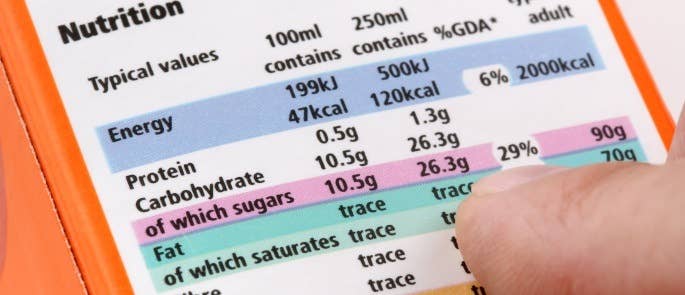
- Nutrition information – nutrition information is mandatory for most prepacked foods, subject to exemptions. Where required, it generally includes energy, fat, saturates, carbohydrate, sugars, protein and salt per 100g or 100ml.
- Warnings and additional mandatory information – certain foods have additional requirements, such as warnings about particular ingredients, sweeteners, caffeine or other substances.
Getting food labelling right helps protect consumers, support traceability and ensure food businesses meet their legal responsibilities. Businesses should regularly review their food labels to make sure the information remains accurate and complies with current requirements, as labels provide important information about safety, allergens, ingredients, storage and shelf-life.
What to Read Next:
- Food Labelling Regulations Training Course
- How to Create an Ingredients List
- Food Allergen Labels: Free Download & Advice
- Food Packaging Materials: Regulations & Different Types
- Clean Label Packaging & Food Trends
- What is Healthwashing in the Food Manufacturing Industry?
- How to Identify Which Foods Contain Gluten


Post Author

You may also like